Summary: The dollar price of a traditional Fourth of July cookout has increased since 2016, but rising wages have more than offset those higher prices. As a result, Americans spend less time working to earn this year’s Independence Day meal than they did a decade ago. Measured in time rather than dollars, the data show that abundance has continued to grow as the population has increased.
Every year, the American Farm Bureau Federation estimates the cost of a traditional Independence Day cookout. The basket includes summer cookout staples such as cheeseburgers, chicken breasts, pork chops, potato chips, pork and beans, fresh strawberries, homemade potato salad ingredients, fresh-squeezed lemonade ingredients, chocolate chip cookies, and ice cream.
Since 2016, the dollar cost of this basket has risen 30.3 percent, from $56.67 to $73.82. At first glance, that suggests celebrating the Fourth of July has become significantly more expensive.
But money prices tell only half of the story. The real question is not how many dollars the meal costs, but how much time people must work to earn those dollars. Since 2016, blue-collar worker hourly earnings increased 50.4 percent, from $21.48 to $32.31 per hour.
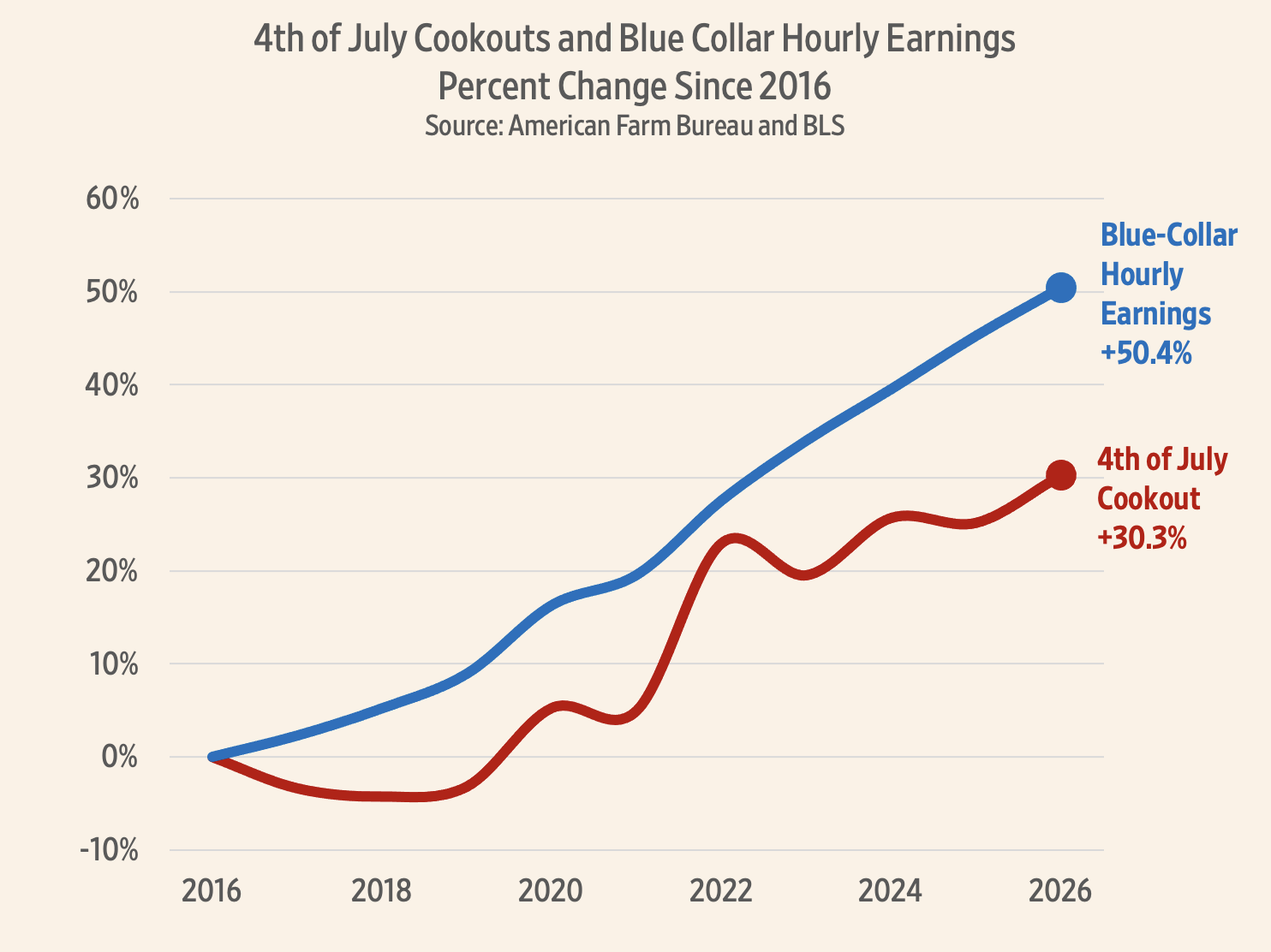
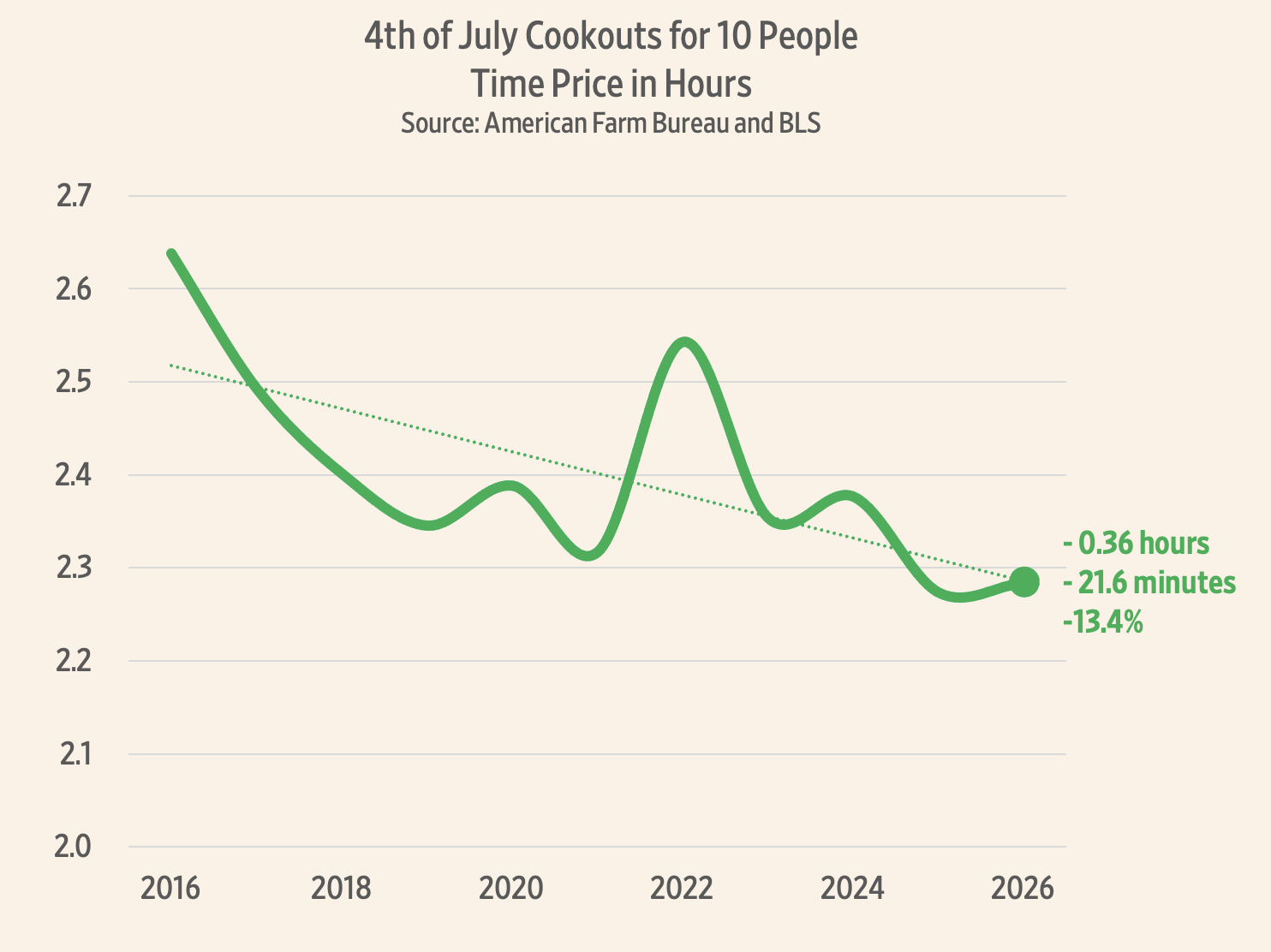
Because wages rose faster than prices, the time price of the cookout actually fell 13.4 percent—from 2.64 hours of work in 2016 to just 2.28 hours today, a savings of 21 minutes.
Another way to measure progress is to ask: How much more does the same hour of work buy? We call this the abundance multiplier. Compared with 2016, the same amount of work today buys 15.5 percent more.
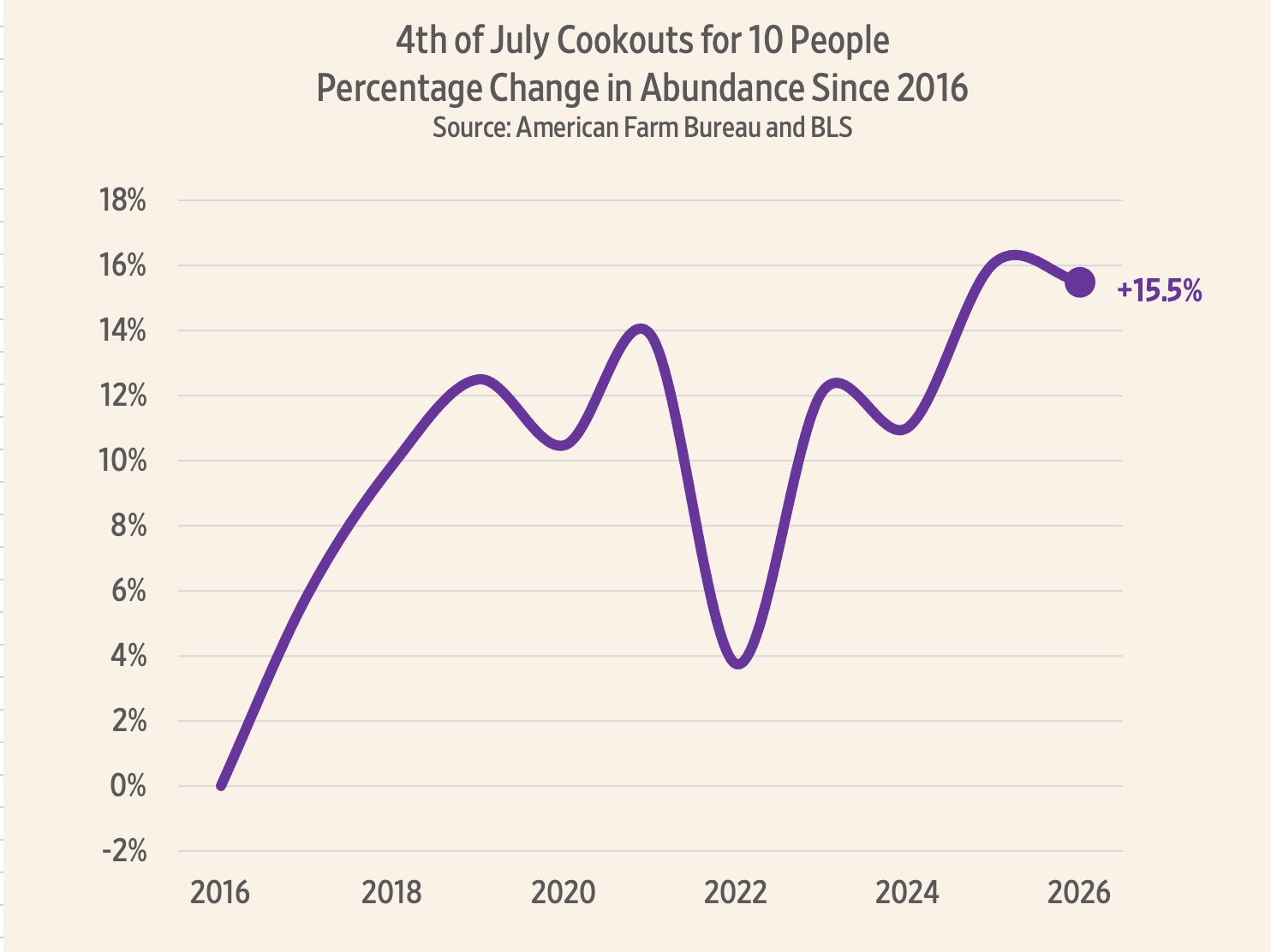
America added 22 million people between 2016 and today, a population increase of 6.8 percent. Yet abundance didn’t merely keep pace with population—it grew 2.28 times as fast. Every 1 percent increase in people produced a 2.28 percent increase in cookout abundance. That’s the signature of superabundance: on average, every additional person contributes more than they consume. Even though there are 22 million more of us, we’ll actually spend 7.5 percent less time working as a country to pay for our celebration compared with 2016.
Americans may spend more dollars, but they spend less of their lives earning this year’s Independence Day feast.
Government money printing during the COVID-19 pandemic did cause a temporary spike, but we have returned to the long-term trend of decreasing time prices and increasing abundance.
This year saw a slight reversal. Compared with the record-low time price in 2025, food prices increased 4.1 percent while blue-collar hourly earnings rose 3.5 percent. As a result, the time price of the cookout edged up by just 0.5 percent—less than one minute of additional work. Even after that small increase, the Independence Day cookout remains substantially more affordable in time than it was a decade ago.
Find more of Gale’s work at his Substack, Gale Winds.