A version of this article was published at Libertarianism.org on 11/14/2023.
Progress through the Ages
Though progress is an essential ingredient of modern life, it is an ideal that has only been acknowledged, discussed, and debated extensively in the last two hundred years. At first, it might seem odd to say large swathes of people did not always think deeply about progress. But this view ignores that the vast majority of our distant ancestors used the same tools in their daily lives that their ancestors, from hundreds of years in the past, had used in their time.
Broadly speaking, the Greeks and Romans viewed civilization like any other living organism; it grows then dies like all living things. The expected historical norm was the cyclical rising and falling of civilizations. Though some, such as the Epicurean philosopher Lucretius, theorized briefly about progress, this was an idiosyncratic line of inquiry at the time. Medieval thinkers viewed their age as a dark period in the shadow of an illustrious past. The word “progress” was alien to the human lexicon for thousands of years.
But this changed dramatically with the Enlightenment, a European intellectual movement characterized, in part, by a new confidence in the power of reason to catalog, observe, and experiment upon our natural environment. An advocate for Enlightenment ideals and ambassador for liberalism in its early days, Anne Robert Jacques Turgot, was among the earliest to examine the dynamics of progress. Importantly for classical liberals and libertarians alike, Turgot was the first to establish the connection between freedom and progress. Turgot believed without freedom, human progress would revert to cycles of development and decline.
Turgot’s Life, Education, and Career
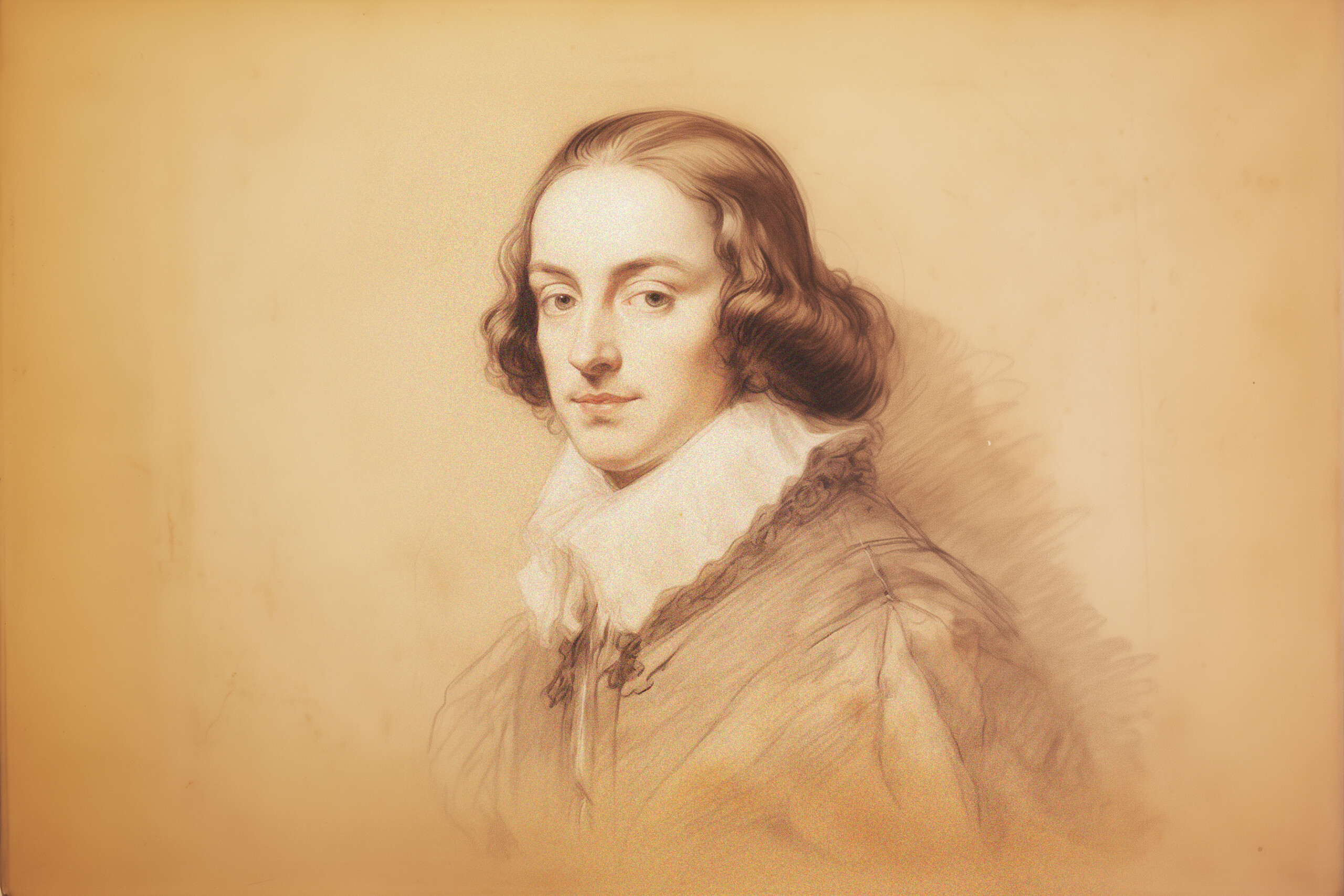
Turgot was born in Paris to a distinguished Norman family that had long served the French monarchy as royal officials. Turgot’s father was Michel Michel-Étienne, a Councillor of the Parliament of Paris and one of the senior administrators in the city of Paris. His mother, Dame Madeleine-Françoise Martineau, was a renowned intellectual and aristocrat.
Turgot, as the youngest son in his family, was expected to join the church, the usual career path for a younger son in 18th-century Europe. He began studying at the Sorbonne in 1749, but after a year, he decided he could not become a priest because he refused to conceal his beliefs that were at variance with the teachings of the church. Turgot was suited to being a student; he studied voraciously, reading history, literature, philosophy, and the natural sciences, interests he would maintain until his death.
Sorbonne Lectures: Early Ideas on Progress
While studying at the Sorbonne, Turgot made his intellectual gifts known and was elected by his fellow students to the position of Prieur. This mostly honorary position called for an occasional speech to be delivered publicly. The content of these speeches was inspired by Turgot’s interaction with Bishop Bossuet and his idea of “universal history.” Turgot’s innovation was to give a secularized account of humanity’s universal history. Turgot, like the ancients, accepted that all things live and then die. However, he maintained that humans have a unique capacity for language and memory, allowing them to pass down knowledge that accumulates incrementally over the centuries, leading to ever-increasing stores of knowledge for the whole of humanity. Though this may seem like a simple idea today, for the time, it was revolutionary, and these speeches established Turgot at a young age as France’s foremost thinker on progress.
One of his speeches now survives as an essay entitled “A Philosophical Review of the Successive Advances of the Human Mind.” It is debatable whether Turgot is the first person to theorize about progress, but we can say with certainty that Turgot is best known for identifying the relationship between freedom and progress.
Turgot’s “A Philosophical Review of the Successive Advances of the Human Mind”
Unlike his inspiration, Bishop Bossuet, Turgot articulated a secular account of progress. Turgot does not entirely exile God from the discussion, but he relegates God to being a prime mover rather than a prime intervener in human affairs. For Turgot, progress does not come from divine providence but is a uniquely human phenomenon.
Turgot defined stages of civilizational development, beginning with hunting, then pastoral, and finally agricultural. Two years prior, in 1748, in The Spirit of the Laws, Montesquieu had done the same. However, Montesquieu used these stages to illustrate how topography and climate influence human activity. Turgot’s stages are not separated by varying climates but by human developmental differences. Turgot argued human activity and civilization are influenced not only by climate and topography but also by degrees of social development, progress is not a mere descriptive conclusion; in Robert Nisbet’s words, “it is a method, a logic, of inquiry.”
Where Does Progress Come From?
For Turgot, the natural world is an unending cyclical succession of death and life —whereas human civilization shows signs not of constant decay but rather ever more vitality. Humans are unique creatures because of their capacity for language, writing, and memory. Because of these capacities, the knowledge of particular individuals becomes “a common treasure-house which one generation transmits to another, an inheritance which is always being enlarged by the discoveries of each age.”
All humans have the same potential for progress. However, nature distributes our talents unevenly. Our talents are made practical by a long chain of circumstances. Turgot wrote, “Circumstances either develop these talents or allow them to become buried in obscurity.” But from this infinite variety of circumstances, progress slowly develops unequally at first, but its benefits spread to the whole human species over time.
Humans’ collective capacity for memory means that even amidst war, famine, and disaster, they can preserve and continuously improve their knowledge of the world. Writing prophetically before the economic miracle of liberalism, Turgot says, “Amid all the ignorance, progress is imperceptibly taking place and preparing for the brilliant achievements of later centuries; beneath this soil the feeble roots of a far-off harvest are already developing.”
Progress Requires Experimentation
Unlike many of his philosophical contemporaries, Turgot greatly admired artisans and mechanics, people who worked with their hands to create new machines. Unlike Rene Descartes, Turgot did not believe the greatness of his century came from a superior set of ideals, attributing it instead to new inventions. Ultimately, Turgot believed we were indebted to artisans rather than philosophers for much of the comforts in our daily lives.
Behind all science lies experimentation. Turgot understood he could not give a complete account of how progress would unfold because a large part of it was down to chance and unique circumstances. He wrote, “Any art cultivated over a period of centuries is bound to fall into the hands of some inventive genius.” Turgot elaborates, “Chances lead to a host of discoveries, and chances multiply with time. A child’s play can reveal the telescope, improve optics, and extend the boundaries of the universe in great and little ways.” This might seem like fanciful thinking, but when Alexander Fleming discovered penicillin, it was due to a simple mistake that yielded a crucial element of modern medicine, while Edison had to experiment over 1000 times before creating an effective light bulb which thereafter illuminated the entire world. There is no set path for progress to take. That is why we must leave people the maximum freedom to experiment and try new ideas to maximize future progress.
Obstacles to Progress
Turgot feared the main impediments to progress were conventional thinking and concentrated interests that benefited from the status quo. Turgot believed a concentration of power in any area would lead to stagnation and decay in all aspects of life, whether cultural, economic, or political. Inherited ideas, or what John Stuart Mill would later call, “dead dogma,” stop people from appreciating new knowledge. Turgot recommended we follow the facts because, “The greatest genius will not question a theory unless he is driven by facts.”
Turgot’s Laissez Faire Economics
After his time in the Sorbonne, Turgot turned his attention to politics. In 1752, he started climbing the political ladder as a substitut and later a conseiller in the Parliament of Paris. While living in Paris, he frequented salons, gathering places for intellectuals to come together to debate and discuss ideas. While attending, Turgot met the intendant of commerce, Jacques Vincent de Gournay, the man perhaps best known for popularizing the term laissez-faire economics. In an effort to promote the study of economics, de Gournay gathered a group of young men, including Turgot.
During this time, Turgot became acquainted with physiocrats such as Quesnay, who argued that the state should not regulate commerce to promote economic growth, but leave markets free. Inspired by his mentor de Gournay and his friends like Quesnay, Turgot became one of the foremost advocates of free trade in France, if not the whole of Europe, before the days of Adam Smith.
When de Gournay died in 1759, Turgot wrote a fitting eulogy that summarized de Gournay’s beliefs while expanding Turgot’s own positions on how best to run an economy. The result is a short essay entitled “In Praise of de Gournay,” where Turgot develops his laissez-faire philosophy.
Establishing the Idea of Economic Liberty
Turgot’s eulogy is the most complete statement of his economic beliefs that survives. Speaking on his mentor’s behalf, Turgot argues that, “The general freedom of buying and selling is therefore the only means of assuring, on the one hand, the seller of a price sufficient to encourage production, and on the other hand, the consumer, of the best merchandise at the lowest price.” Turgot, like de Gournay, believed that if people were left free to make their own decisions, there would not be anarchy like people expected, but instead harmony. Individuals, driven by self-interest, make their own decisions with the information available to them, and by acting on their own interests, they unwittingly promote the interests of the whole of society.
Many of the regulations governments impose are attempts at stopping fraudulent sales or scams. Turgot wrote that, “To suppose all consumers to be dupes, and all merchants and manufacturers to be cheats, has the effect of authorizing them to be so, and of degrading all the working members of the community.” On top of regulations, the government imposed a long list of different taxes on every kind of labor. Turgot believed a more concise and understandable tax system would help repair France’s then-failing economy.
Turgot’s thinking on spontaneous order anticipates that of later scholars like F.A. Hayek. Turgot argues that complex systems, such as economies or whole societies, emerge and organize without central planning. The idea of spontaneous order challenges the misconception that only top-down, state-run authorities can craft efficient and free societies. Turgot asserts that the doctrine of laissez-faire “was founded on the complete impossibility of directing, by invariant rules and by continuous inspection a multitude of transactions which by their immensity alone could not be fully known, and which, moreover, are continually dependent on a multitude of ever-changing circumstances which cannot be managed or even foreseen.” In short, almost 200 years before Hayek’s “The Use of Knowledge in Society,” Turgot was arguing that an individual, group of individuals or even an entire government would never have access to the mountains of information required to “manage” the economy.
Like his mentor, Turgot was for free trade and a government that mostly stayed away from trying to manage the minutiae of the economy. Turgot believed people did not need to be managed; quite the opposite, their productive energies needed to be unleashed upon the world.
Political Career
Though a prominent theoretician on economic and philosophical matters, Turgot was never an academic. Though academically gifted, Turgot wanted more than for his ideas to be discussed in salons; he wanted them to be implemented for the benefit of France. In 1761, Turgot was appointed as the tax collector of Limoges. Turgot eliminated complicated taxes and abolished the despised corvée, a form of unpaid labor demanded in lieu of taxes. Throughout his time in Limoges, Turgot dedicated himself to removing obstacles in the way of the poorest in society earning their daily bread. By 1773, when Turgot left, Limoges was one of France’s more prosperous areas; as a reward for his achievement, he was appointed as Controller General of France by Louis XVI.
With his new position, Turgot had ambitious plans. He aimed to implement several economic reforms, including free trade, reducing the lower classes’ financial burdens, and removing feudal privileges. Turgot’s reforms faced strong opposition from powerful concentrated interest groups among the day’s nobility, clergy, and guilds. Ultimately, Turgot resigned in 1776, never holding a political position again. He spent his final years at his family estate, buried in his studies and correspondence, dying at the age of fifty-four.
Turgot’s Importance to the History of Liberalism
Though unsuccessful in his reforms, Turgot’s efforts put laissez faire and liberalism on the political map. They were no longer mere theories but practical policies. The writings of Turgot are still valuable because they help remind us of a simple yet fundamental truth: that progress consists not in merely more capital goods but in an ever-increasing store of cumulative knowledge. His writings also illustrate that progress was a relatively rare phenomenon before the Enlightenment, only experienced in brief glimpses by select pockets of the human population. Despite being a busy and politically engaged figure, Turgot’s ideas nonetheless had a massive impact on the intellectual history of the Western world.
Legacy of Turgot
It is difficult to overstate the impact of Turgot’s ideas and work as a politician. He has garnered many admirers, including the economist Joseph Schumpeter and libertarian thinkers like Murray Rothbard. Turgot’s career in economics was brief but brilliant. Thinkers like Turgot, his mentor Vincent Gournay, and his friend François Quesnay were responsible for France being among the first countries to implement laissez faire economic policy and for integrating liberal ideas into the public consciousness. Without the intellectual and political efforts of people like Turgot, liberalism and economic freedom might have remained obscure ideas relegated to a select group of obscure intellectuals.