Summary: A famous grocery run in Home Alone appears to illustrate how much nominal prices have risen since the film came out in 1990. But a look at sticker prices alone misses the bigger picture. When costs are measured against what people earn, everyday food looks far more affordable than it once did. Thanks to rising nominal wages and ongoing innovation, modern households enjoy far greater abundance, even when nominal prices appear higher at first glance.
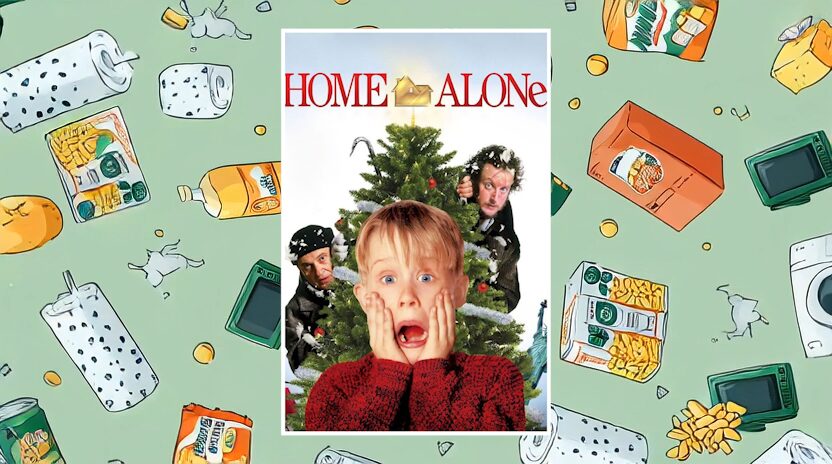
In the 1990 movie Home Alone, eight-year-old Kevin McCallister went grocery shopping. He bought a half gallon of milk, a half gallon of orange juice, a TV dinner, bread, frozen mac and cheese, laundry detergent, cling wrap, toilet paper, a pack of army men, and dryer sheets. His bill came to $19.83.
Professor Christopher Clarke at Washington State University does an annual price analysis of Kevin McCallister’s shopping basket and estimates that today’s price for those items would be around 114.5 percent higher ($42.54) than was the case in 1990. But, as my readers know quite well, things can become more expensive and more affordable at the same time. How is that possible? It’s possible because wages typically increase faster than prices. In the past 35 years, blue-collar hourly wages have increased by 207.7 percent, from $10.32 per hour in 1990 to $31.76 today.
Kevin’s basket in 1990, in time prices, would have cost 1.92 hours compared to 1.34 hours today. The time price of Kevin’s basket has fallen by 30.2 percent. For the time it took to earn the money to buy the basket of goods in 1990, you get 1.432 baskets today. Grocery abundance has increased by 43.2 percent.
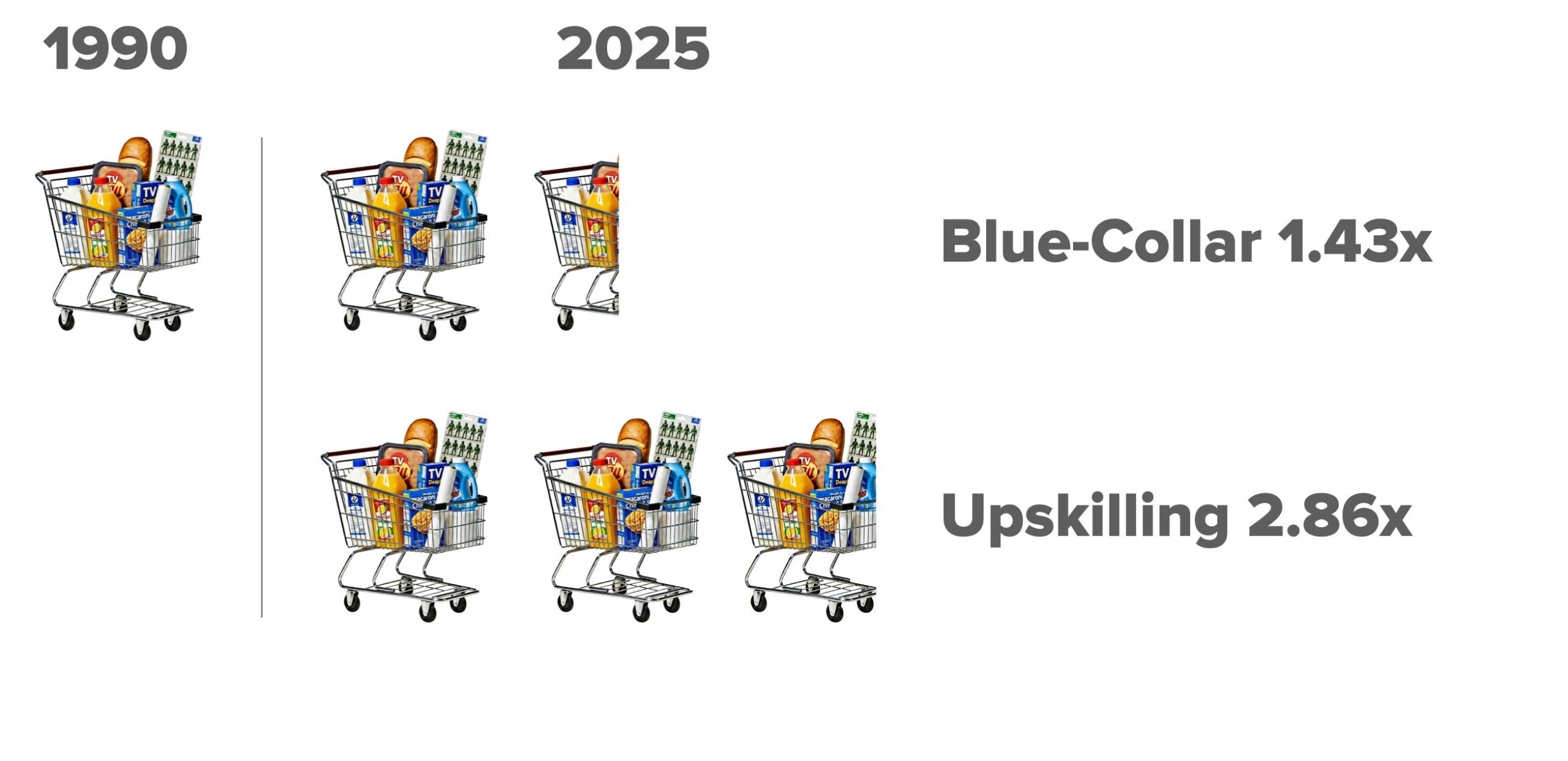
If you got your first job in 1990 as an entry-level worker and have been upskilling for the past 35 years and are now an average worker, your hourly wage rate increased 511.3 percent: from $6.03 an hour in 1990 to $36.86 an hour today. Your grocery basket time price fell by 65 percent, giving you 2.86 baskets today. Your grocery abundance has increased by 186 percent.
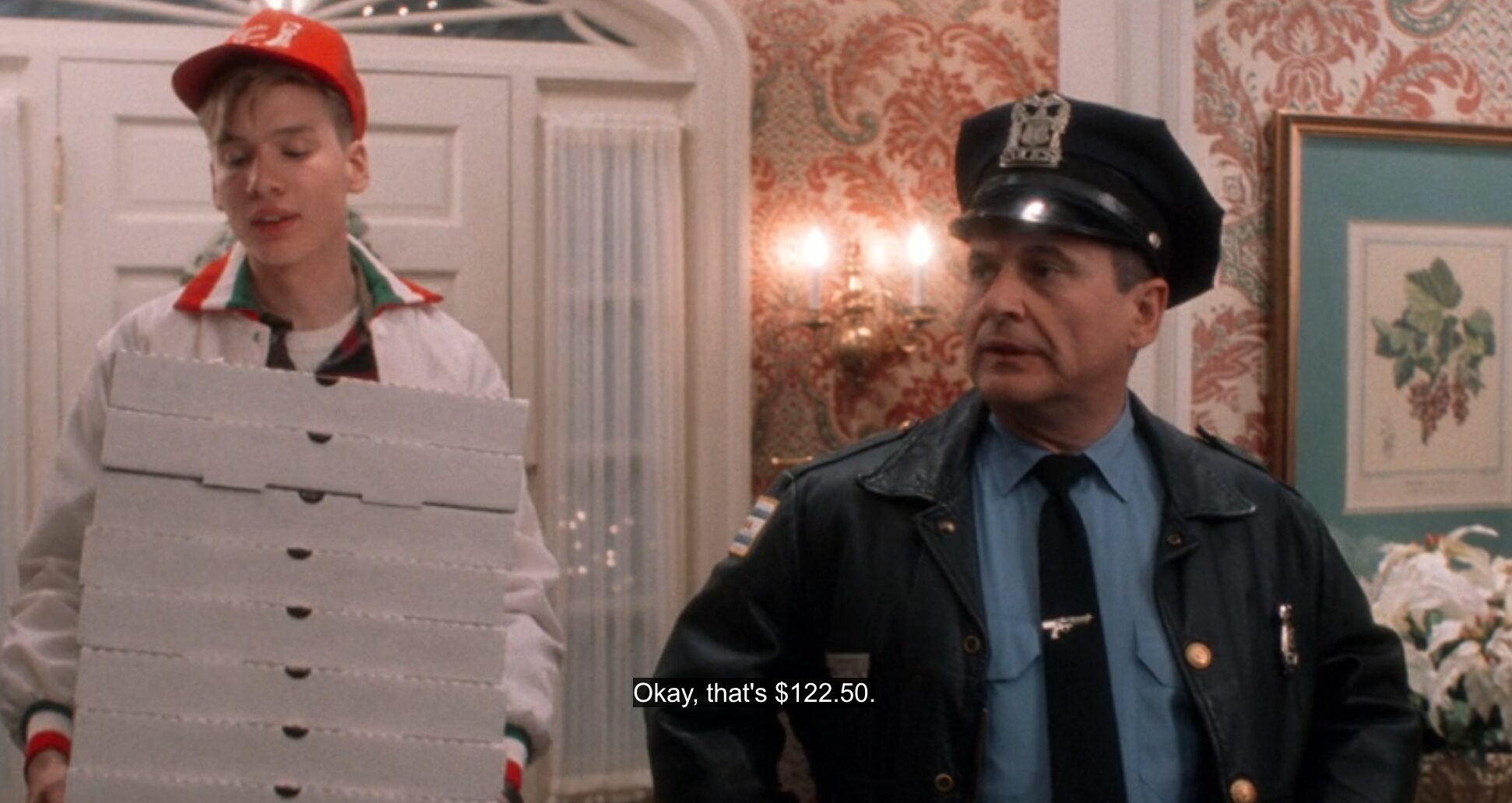
In the movie, the McCallister family also orders 10 pizzas, and the bill comes to $122.50 (plus tip). That would put the time price for 1990s blue-collar workers at 11.87 hours, or about one hour and 11 minutes per pizza.
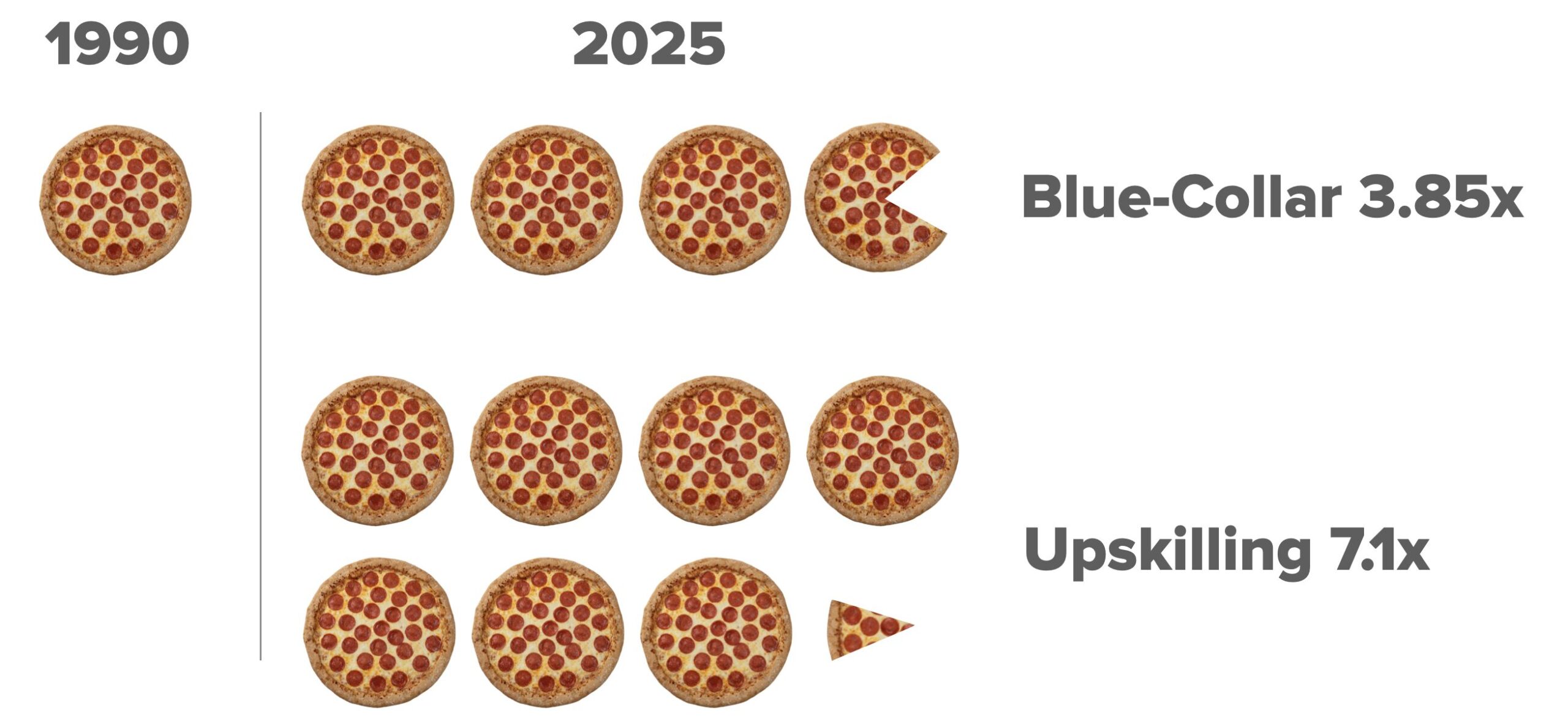
Professor Clarke did a price check on how much 10 classic cheese and pepperoni pizzas cost at a Little Caesars pizzeria near the McCallister’s home today—it comes to only $98.09 (plus tip). The nominal price has actually shrunk! That would put today’s time price at 3.08 hours for the 10 pizzas, or about 18.5 minutes per pizza. The time price has fallen by 74 percent. That means that for the time it took to earn the money to buy one pizza in 1990 you get 3.85 pizzas today. Pizza abundance has increased by 285 percent. If you are an upskilled worker, your pizza time price fell by 85.9 percent, giving you 7.1 pizzas today for the time price of 1 in 1990, thus increasing your abundance by 610 percent.
Hopefully you didn’t forget to count the kids before taking off on Christmas vacation this year! And remember, life can become more abundant every day if people are free to innovate.
Find more of Gale’s work at his Substack, Gale Winds.