Summary: Iceland has long thrived through innovation and freedom. Its history is one of transforming scarcity into strength and discovery. Joining the European Union could trade entrepreneurial vitality for bureaucratic constraint and regulation. Iceland’s story proves that wealth flows not from the ground, but from the boundless resource of human imagination.
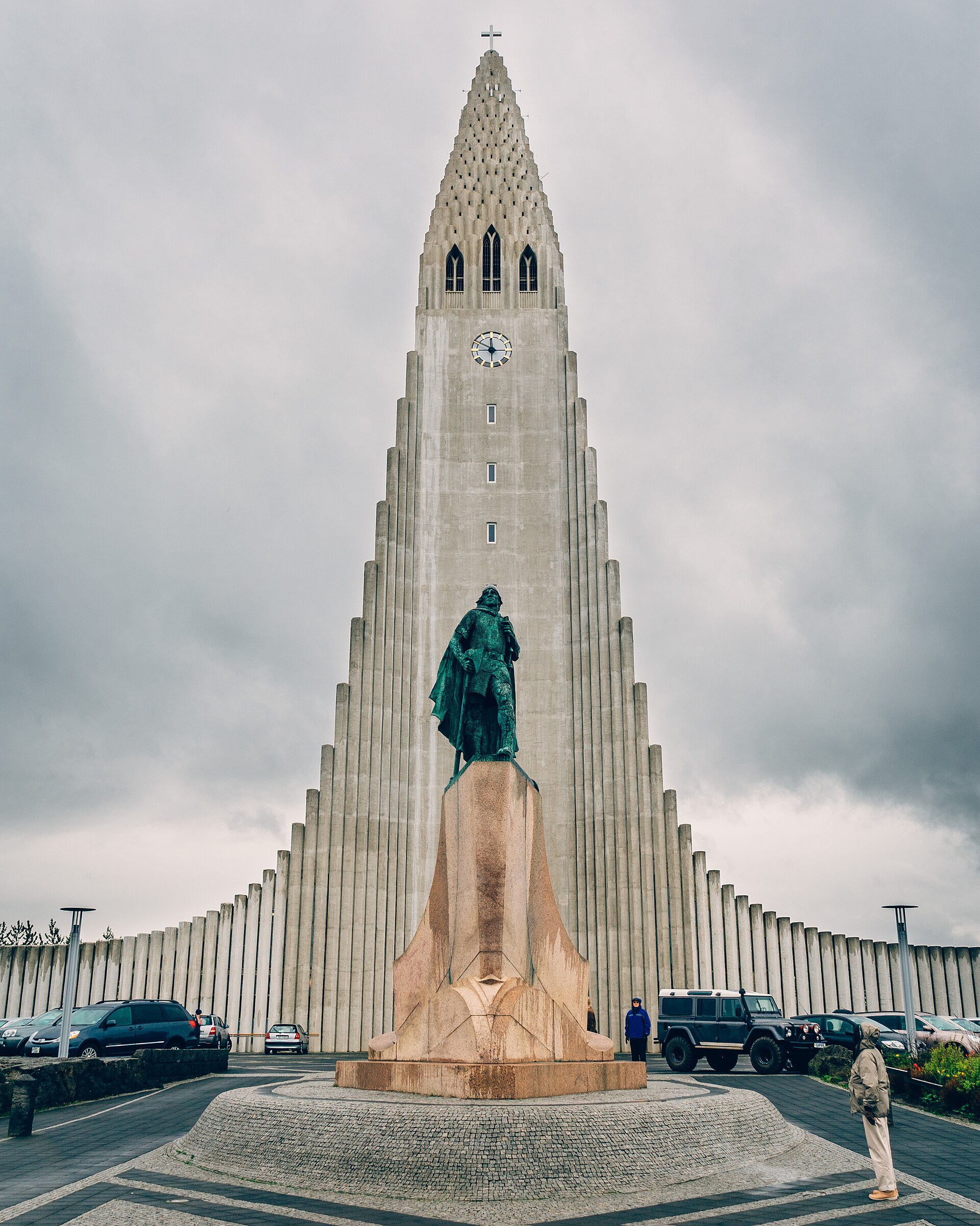
I recently had the pleasure of visiting Iceland, a country of about 390,000 people. The place feels like a mash-up of Hawaii and Alaska, with a land area roughly the size of Kentucky. Iceland has around 130 volcanoes, with about 30 considered active. Along with the volcanoes there are around 500 earthquakes per week. Many of these are microquakes (below a magnitude of 2.0) that go unnoticed, but about 44 a year register a magnitude of 4.0 or higher within 180 miles of the island.
The International Monetary Fund projects Iceland’s GDP per capita to reach $81,220 in 2025, adjusted for purchasing power parity (PPP). This compares to $89,110 for the US and $64,550 for the European Union (EU).
The purpose of my visit was to talk about why Iceland should or should not join the EU. The event was hosted by Students for Liberty Europe and RSE, the Icelandic Centre for Social and Economic Research. What does this topic have to do with our book, Superabundance?
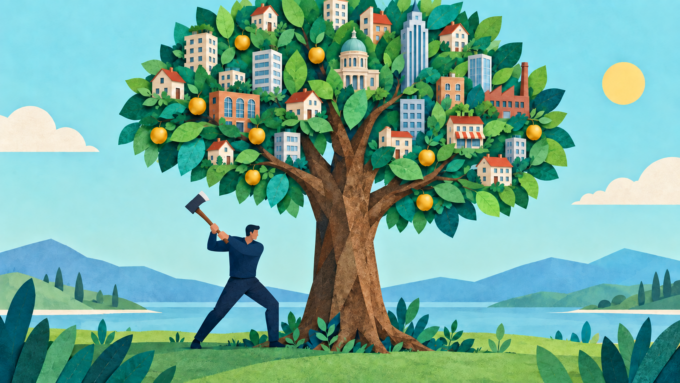
In our book we argue that we’re experiencing a period of superabundance, where personal resource abundance is increasing faster than population growth. This period started about 200 years ago after millennia of stagnation. We attribute this in large part to people recognizing that the freedom to innovate lifts humanity out of poverty. Innovation is the discovering and sharing of valuable new knowledge in markets. Around 1820, the planet’s dormant entrepreneurs began to blossom and bear fruit. But Iceland has been innovating much longer than 200 years.
Iceland can be considered a creation of entrepreneurs. It was first settled around 874 CE by Norse explorers, primarily from Norway, led by Ingólfr Arnarson, who is traditionally recognized as the island’s first permanent settler. He established his homestead in what is now Reykjavík (“Smoky Bay”), named after the steam rising from nearby hot springs.
Throughout history, the creators have fled the takers—escaping oppression to found new realms of freedom where ideas could multiply and wealth could grow. This is the ancient rhythm of renewal that gave birth to America. The settlers of Iceland were largely Vikings, along with some Celtic slaves (it was typical of the times to enslave defeated peoples) and settlers from the British Isles. Drawn by the island’s fish and grazing land, they sought independence from Norway’s consolidating monarchy.
By 930 CE, the settlers established the Althing, one of the world’s oldest parliaments, at Þingvellir, creating a system of governance where chieftains met annually to settle disputes and make laws. This marked the start of the Icelandic Commonwealth, a decentralized society without a king.
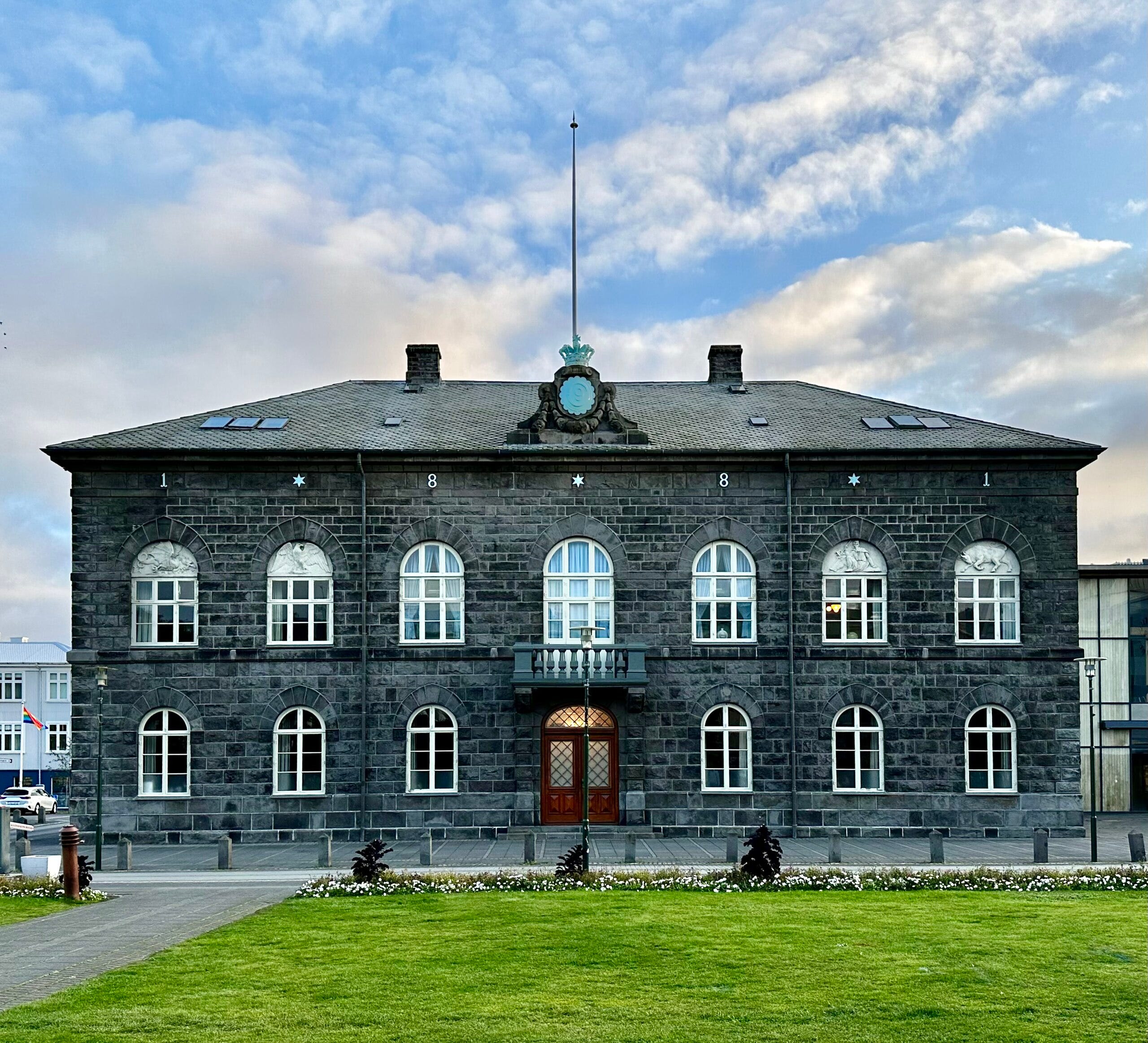
The population grew to around 50,000 by the 11th century, sustained by farming, fishing, and trade. The Commonwealth lasted 332 years, until 1262, when internal conflicts and external pressure from Norway led Iceland to pledge allegiance to the Norwegian crown, ending its independence. This set the stage for centuries of foreign rule, first by Norway and later Denmark. Iceland finally achieved full independence 682 years later, in 1944, establishing the modern Republic of Iceland.
Wealth Is Knowledge and Growth Is Learning
Superabundance is based on the ideas of Julian Simon and George Gilder. Two of the book’s key principles are that wealth is knowledge and growth is learning. These apply directly to Iceland—a nation that turned scarcity into strength and desolation into discovery. With little arable land and few natural endowments, Icelanders learned that the ultimate resource was not in the soil or the waters but in the capacity to imagine and create.
When oil shocks hit in the 1970s, Iceland had little domestic energy. Rather than surrender to scarcity, Icelanders turned to what they had in superabundance. They drilled not for fossil fuels but for fire beneath the earth, turning volcanic fury into light and heat. Today, nearly all of Iceland’s power flows from geothermal and hydroelectric abundance—proof that energy, like wealth, begins not with matter but with knowledge.
And from this same well of ingenuity emerged a national symbol—the Blue Lagoon. The world-famous pools and spa were born from the overflow of the Svartsengi geothermal power station, where geothermal brine spilled into a lava field and transformed an industrial by-product into a national treasure. What began as an accident became an emblem of Icelandic creativity—a living harmony of mind and matter, fire and water.
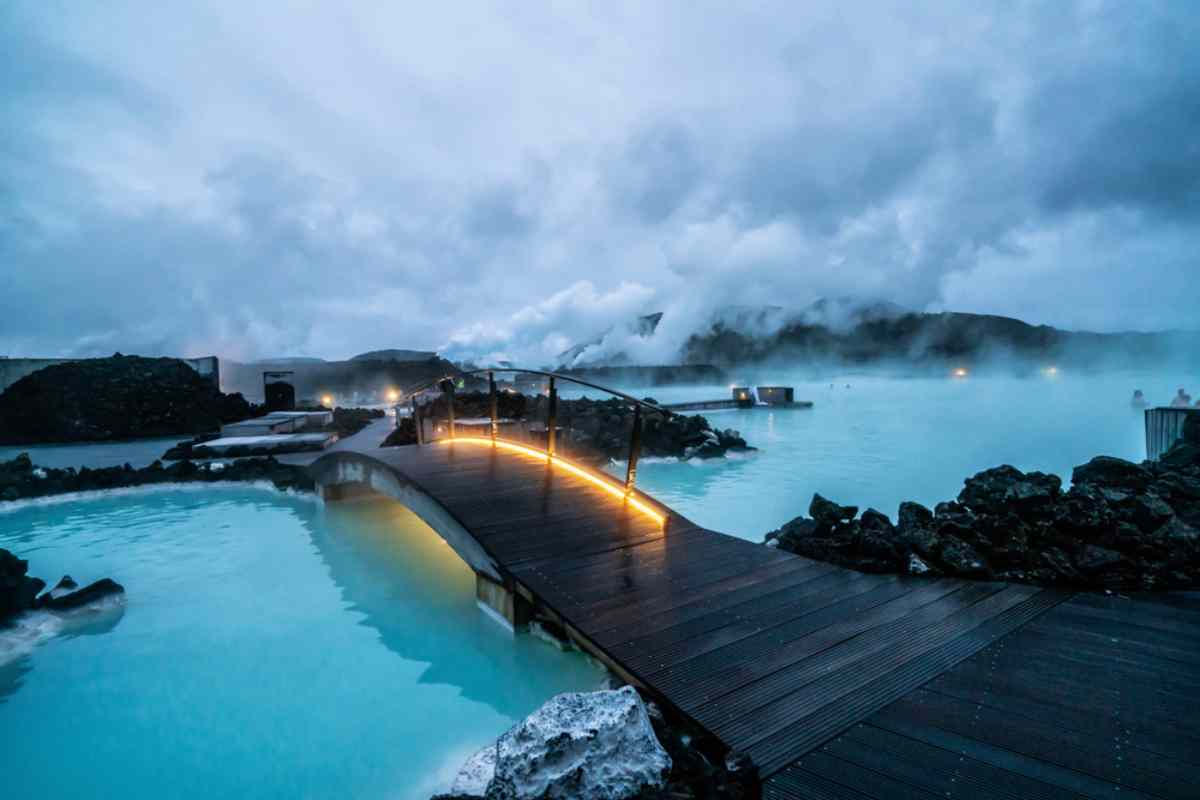
The Blue Lagoon reminds us that wealth is not drawn from the ground but flows from the fountain of human imagination, where even the castoffs of creation can shimmer with new light. In Iceland, energy is not merely harnessed—it is redeemed.
In the early 20th century, Iceland was a country primarily reliant on imported coal to meet its energy needs. The first hydropower station was built in 1904, and today there are 15 stations producing 73 percent of the nation’s electricity. Geothermal represents the other 27 percent.

Abundant, affordable, and reliable energy is one of the fountainheads of modern civilization, turning ingenuity into prosperity. Yet Europe’s leaders, in their zeal to perfect nature, have turned against the very forces that sustain it. By dismantling coal, nuclear, and gas in favor of windmills and solar panels, they are not advancing progress but reversing it, replacing mastery with dependence and innovation with austerity. The continent that once ignited the Industrial Revolution now flirts with a new age of scarcity—an empire of entropy cloaked in virtue. The great tragedy is the belief that prosperity can be preserved by suppressing the freedom that created it. Prosperity follows those who dare to learn from the world, not those who try to silence it.
For Iceland to thrive, it must continue to unleash its creative energy—to innovate, to speak, and to let knowledge flow as freely as its geothermal springs. Iceland is proof that wealth is not in the ground but in the mind. When faced with the scarcity of matter, Icelanders discovered the infinite power of knowledge.
That same spirit of redemption drives Iceland’s modern economy. From deCODE genetics, which unlocked the secrets of the Icelandic genome, to Össur, whose prosthetics restore mobility with grace and precision, Iceland exports ideas more than goods. Its renewable energy now powers data centers and digital frontiers, where bits replace barrels and imagination fuels growth. And in the northern village of Ísafjörður, Kerecis has turned the skin of cod—once discarded as waste—into a life-giving biomaterial that heals human wounds across the world.
Iceland reminds us that every economy is a learning system, and every act of enterprise a revelation. Growth is not a race for resources but a search for truth—the discovery of new knowledge that multiplies as it is shared. In this sense, Iceland has learned its way into wealth, proving that in the long dialogue between man and nature, the mind is the great multiplier.
The story of Iceland is the story of civilization itself. Every act of creation is an act of learning, a small echo of the divine mind that made the world intelligible. Wealth in its truest form is not measured in metals or markets but in moments of revelation—when knowledge transforms scarcities into abundances. Iceland proved the eternal law of creativity: that human learning, illuminated by faith and freedom, can turn even the coldest rock—or the humblest fish—into a beacon of light.
Choose Wisely
So why would a nation of entrepreneurs and innovators want to be subject to a union of regulators and bureaucrats? As of 2024, the number of staff working for the European Commission is over 80,000 across all 76 EU bodies. That would be one regulator for every 4.8 Icelanders. The future of Iceland lies with leaders like Thor Jensen, Björgólfur Thor Björgólfsson, Fertram Sigurjonsson, Heiðar Guðjónsson, and Bala Kamallakharan, not armies of Brussels bureaucrats.
To secure its future, Iceland must remain a beacon of open inquiry and energy creativity. It should champion innovation over ideology—embracing every technology that multiplies human capability rather than constrains it. By coupling free markets with free minds, Iceland can continue to illuminate a path from scarcity to superabundance, showing the world that the greatest renewable resource is human creativity itself.
Choose wisely, Iceland. Your history is watching.
Find more of Gale’s work at his Substack, Gale Winds.