Summary: A century ago, people used large ice blocks and wooden cabinets to keep food cold. Today, electric refrigeration is more affordable, easy, and reliable thanks to technological innovation. The shift from ice blocks to electrons shows how human ingenuity can transform necessities from costly burdens into everyday conveniences.
In 1925, households kept food cool with iceboxes—wooden insulated cabinets chilled by a block of ice. Depending on size and quality, they typically cost between $15 and $50. With entry-level workers earning about $0.25 an hour, a $35 icebox carried a time price of 140 hours.
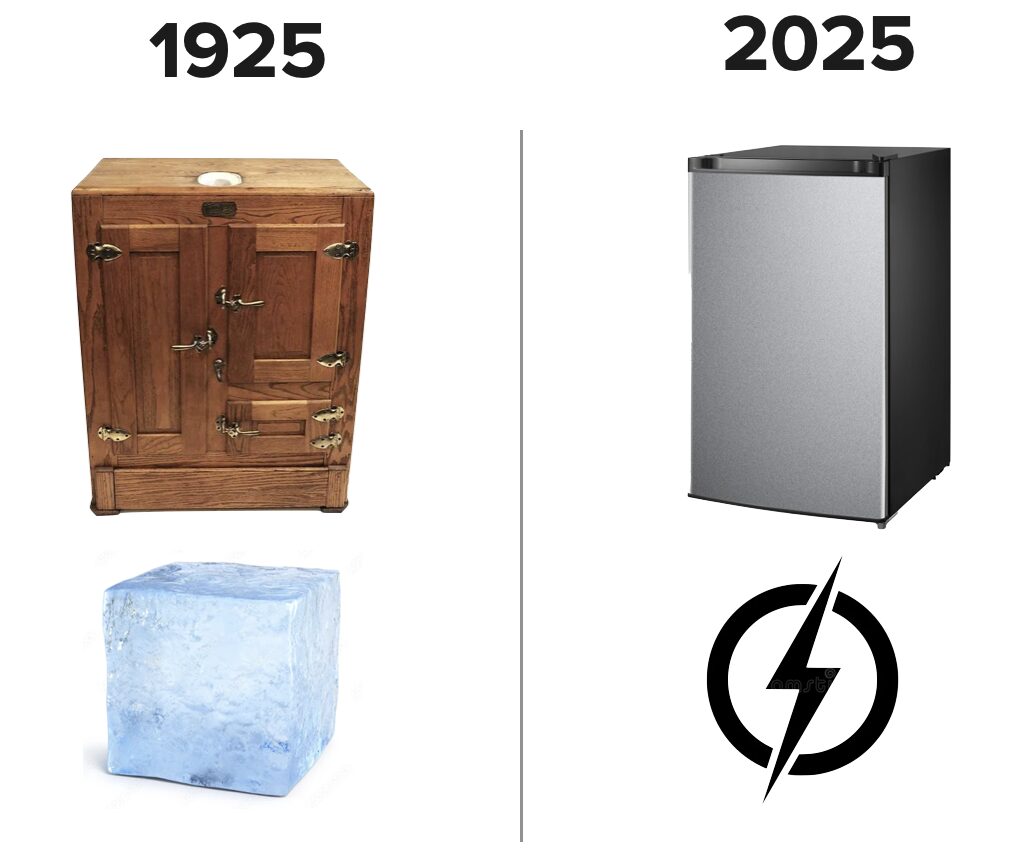
Today, a 4.4-cubic-foot mini fridge at Walmart sells for about $184. Entry-level workers in limited-service restaurants earn roughly $18.75 an hour, bringing the time price down to just 9.8 hours.
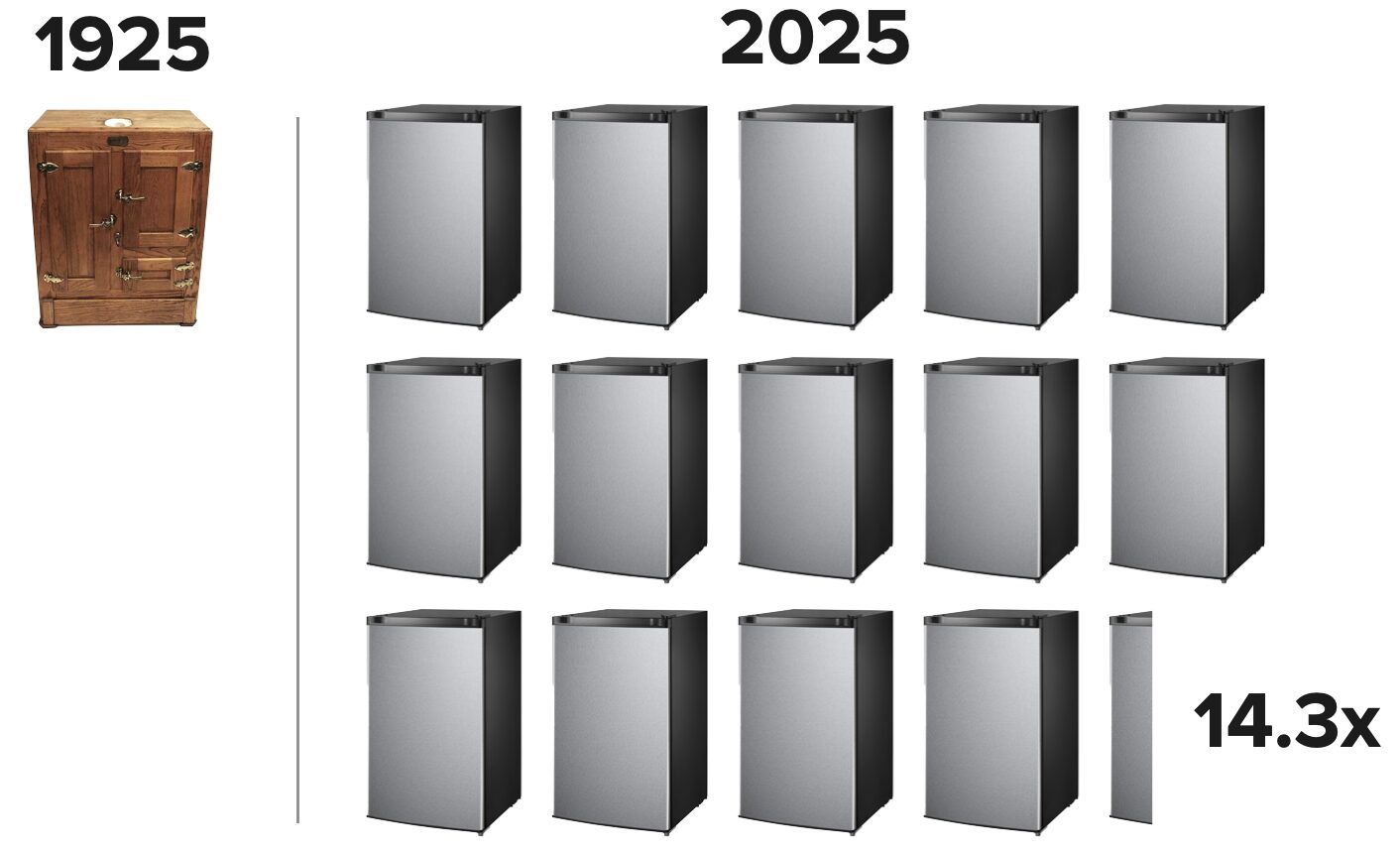
For the time it took a worker in 1925 to earn the money for one icebox, a worker today can buy 14.3 mini fridges.
The 1925 icebox didn’t actually come with any ice. The price of a 100-pound block of ice in 1925 was typically $0.25, and that could double during “ice famines” caused by mild winters. At $0.25 an hour, a 100-pound block of ice would cost one hour and would generally last for three to seven days. If the ice block lasted five days that would be a time price of 12 minutes a day.
The Walmart mini fridge requires 269 kilowatt-hours (kWh) per year, or 0.74 kWh per day. Residential electricity runs around $0.12 per kWh, so a year’s supply of electricity for cooling will cost $32.28, or 1.72 hours for entry-level workers. Spread out over the year, it would require 17 seconds a day.
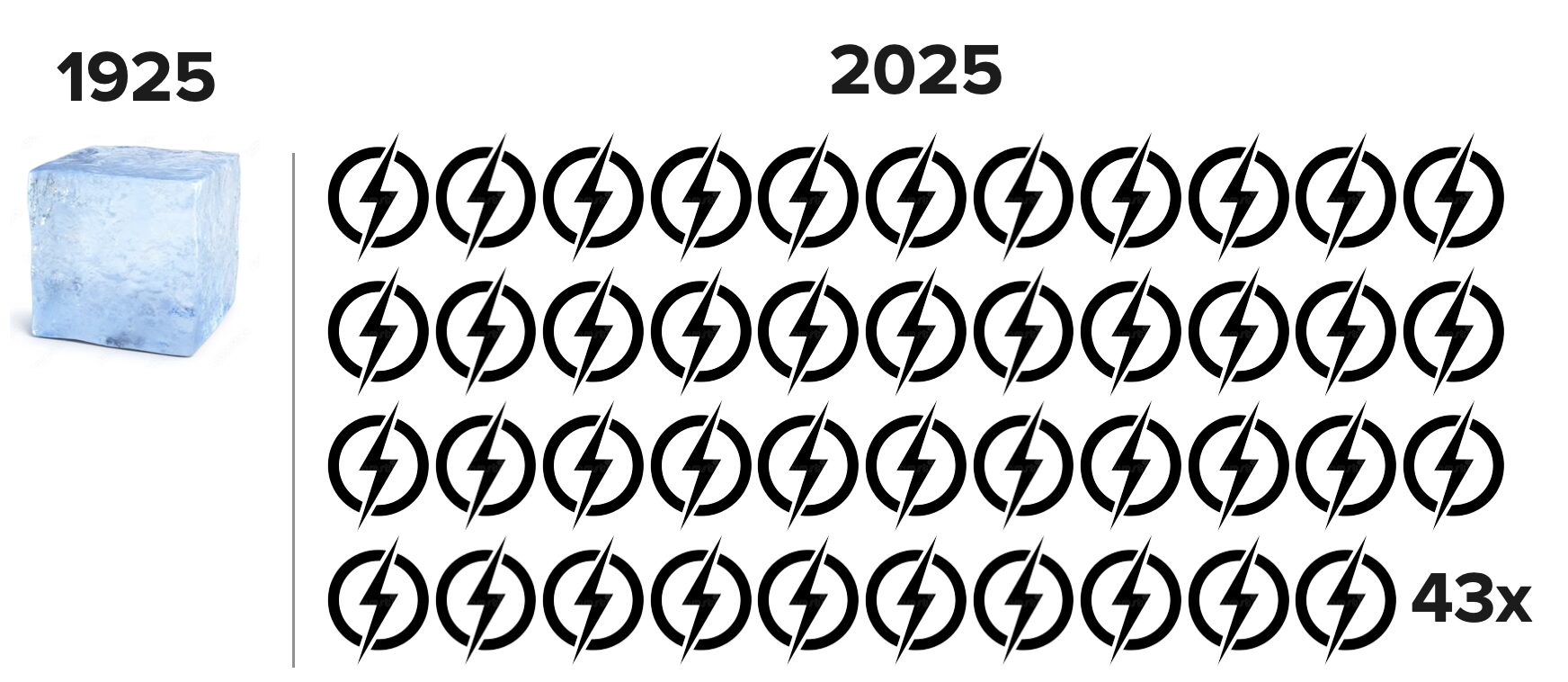
For the time it took a worker in 1925 to earn the money to buy ice cooling for a day, workers today get 43 days of electric cooling.
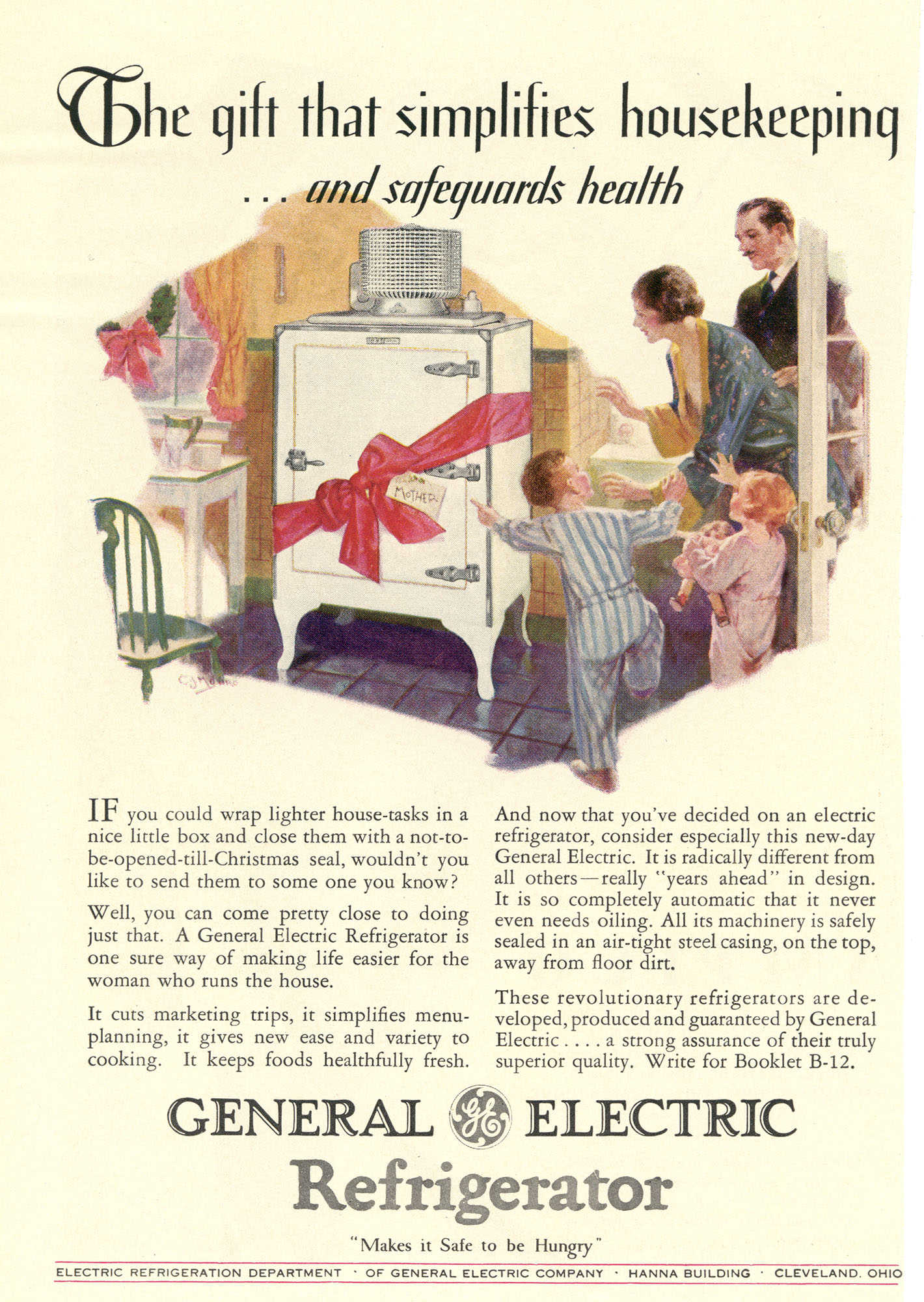
Electric refrigerators entered American homes in 1927 when General Electric introduced the iconic “Monitor Top,” named for its resemblance to the USS Monitor, a Civil War ironclad warship. The unit sold for $525. With entry-level workers earning $0.25 an hour, the time price came to an extraordinary 2,100 hours. Today, the Walmart mini fridge costs 9.8 hours of work. The time price has fallen 99.53 percent. For the time it took a worker in 1927 to earn enough money for one electric refrigerator, a worker today can buy 214 mini fridges—a stunning increase of 21,300 percent in refrigeration abundance, compounding at 5.62 percent a year.
The US population has tripled from 116 million in 1925 to 348 million today. For every 1 percent increase in population, personal refrigerator abundance has increased 106 percent (21,300% ÷ 200% = 106%).