Summary: A century ago, Christmas gifts often required major sacrifice, as most families devoted much of their time and income to basic survival. Today, material progress has transformed gift-giving into something easily affordable. While the meaning of generosity endures, Christmastime has been changed from a season defined by scarcity into one shaped more by choice and plenty.
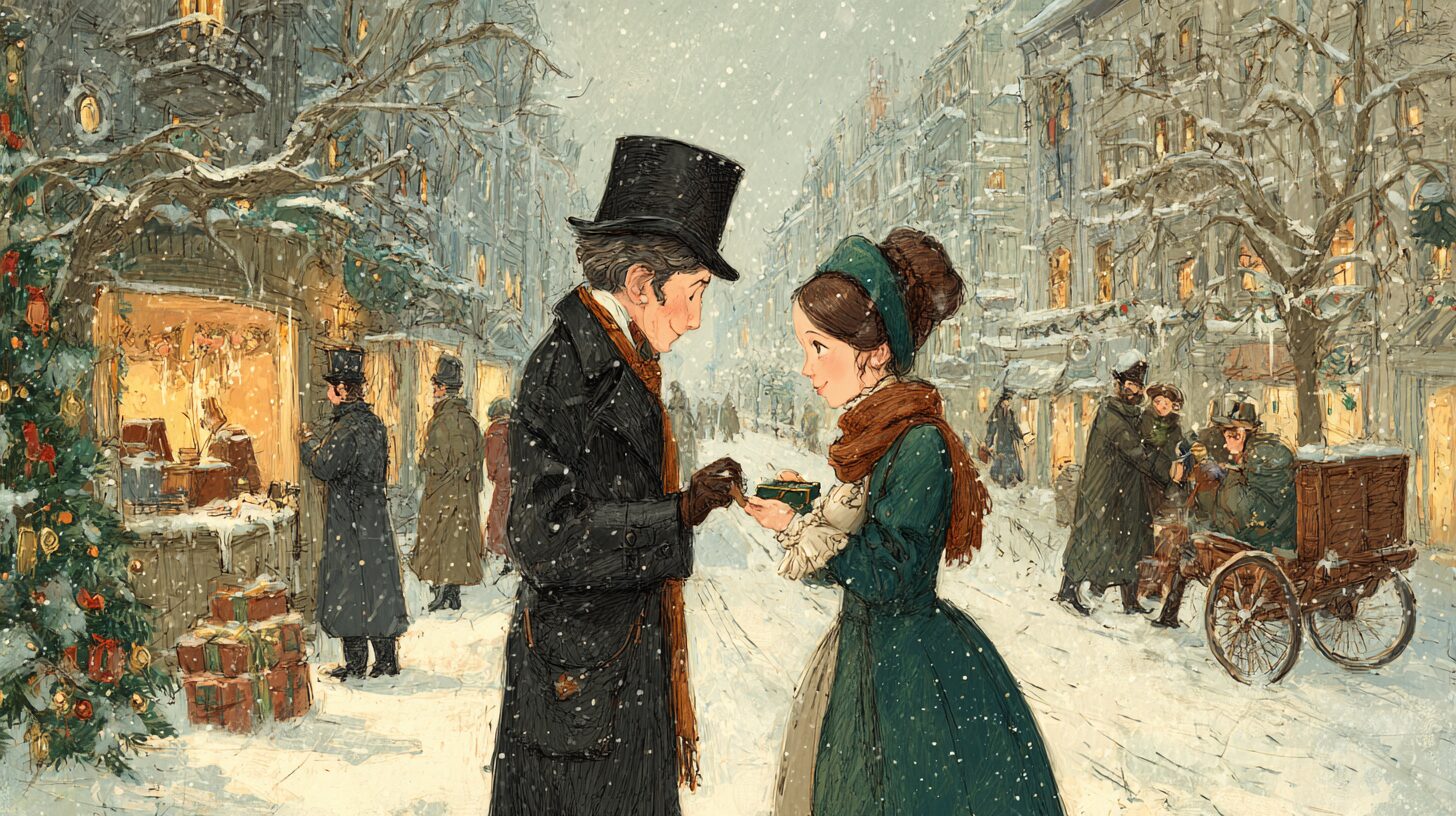
On a cold December day in 1905, the American writer O. Henry (William Sydney Porter) introduced the world to two poor young lovers with hearts of gold. In “The Gift of the Magi,” Della cuts her beautiful knee-length hair to buy her husband Jim a gold chain for his watch. Meanwhile, Jim sells his watch, a magnificent family heirloom, to buy his wife a set of ornate combs for her hair. Their love for each other motivated them to sacrifice their prized possessions in the spirit of Christmas giving.
We still read the story because the emotion is timeless, but the material world its characters inhabit has almost vanished. In 1905, the average American household did not have electricity or running water, let alone the opportunity to buy gifts manufactured worldwide with two-day Amazon delivery. Light came from candles or kerosene. Water was carried or pumped. Heat required daily labor and fuel. Most time and wages went towards basic survival.
According to the U.S. Bureau of Labor Statistics, households on average spent over 42 percent of their average wages on food in 1901. In O. Henry’s story, Jim is said to have spent $8 of his $20 weekly income, or an additional 40 percent, on renting not a whole home or apartment, but a mere furnished room for him and his wife. That left $3.60, or $132 in 2025 dollars, for everything else—firewood or coal for heating and cooking; candles or kerosene for lighting; soap, lye, and cleaning supplies; replacement shoes and work clothes as they wore out; basic medical care and medicines; postage and newspapers; and the ever-present risk of emergency expenses. And, of course, Christmas gifts.
Before modern manufacturing, the most basic items required many hours of work. A comb could cost half a day’s labor—a watch chain, several days’ worth. Contrast that with today, when the very ease of gift-giving can feel almost embarrassing. The time price of a comb—once measured in hours—is now measured in minutes. A watch chain that would have taken a week of labor to afford in 1905 can now be purchased with a single hour’s wages.
Material abundance has accelerated so dramatically that some of us now worry not about whether we can give but whether we are giving too wastefully—plastic toys used once, novelty items that break by New Year’s, and holiday packaging that fills recycling bins to the brim. Where Jim and Della confronted problems of scarcity, we confront problems of prosperity.
Today, because material goods demand so little labor, the most meaningful gifts often return to the immaterial: a sentimental note, a memorable experience, or a handcrafted gift. That doesn’t mean you shouldn’t wish for those noise-canceling headphones or a virtual-reality headset. The modern economy offers goods that would have been fantastical luxuries or science fiction for our ancestors. But goods as gifts become even more meaningful when their purchase involves saving, budgeting, and sacrifice. Thankfully, buying a meaningful gift rarely requires giving up one of the few prized assets a household owns.
This Christmas, during a season when gifts can be purchased in minutes and delivered in hours, it is worth remembering O. Henry’s landscape of scarcity. Our world is richer not only in goods but also in freedom and choice.