01 / 05
The Liberating Power of Energy

Blog Post | Energy & Environment

The Liberating Power of Energy

Robert Zubrin shows the strong link between energy abundance and human freedom.

Summary: This article reviews The Case for Nukes by Robert Zubrin, a book that defends nuclear power as a clean and scalable energy source that can help humanity overcome the challenges of climate change and resource scarcity. The author also praises Zubrin’s broader argument that energy abundance is a liberating force that bolsters economic freedom and frees people, especially women, from grueling labor.


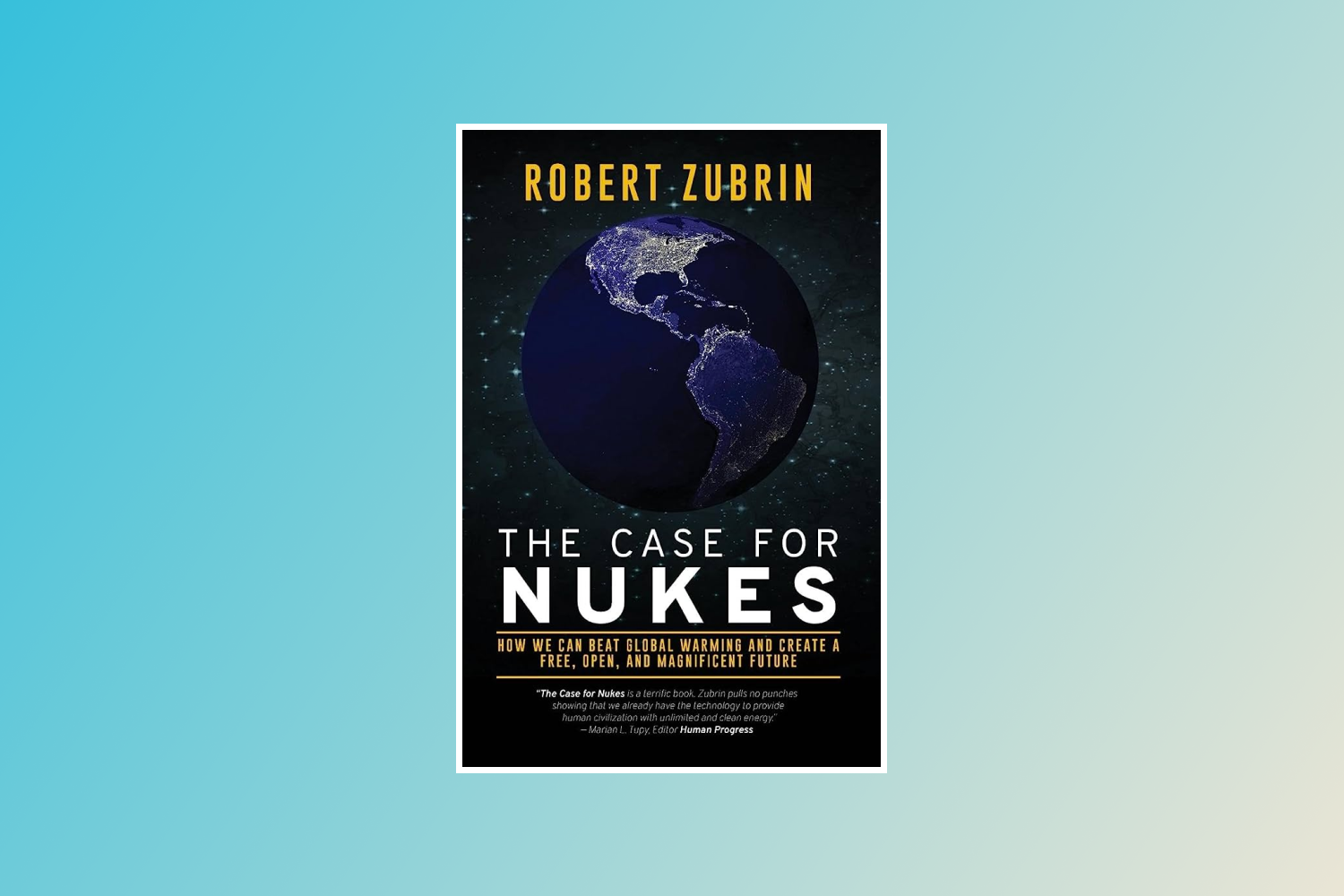
Refreshingly pragmatic and nonpartisan, The Case for Nukes: How We Can Beat Global Warming and Create a Free, Open, and Magnificent Future (Polaris Books, 2023) by Robert Zubrin offers a sweeping history of energy technology advances. It also provides a taxonomy of the enemies of nuclear power, including Malthusians and “degrowth” advocates who would, ironically, limit the world’s only scalable clean energy technology in the name of protecting the environment. The book launches a compelling and detailed defense of one of humanity’s most promising yet misunderstood sources of energy. Policy makers across the political spectrum would be wise to heed Zubrin’s call to reform and liberalize what he calls the “regulatory whipsawing and strangulation of the nuclear industry.”

Zubrin pulls no punches, refusing to play games of political tribalism (i.e., opining that climate change “has become politicized to the point where opposing parties have chosen to either deny it or grossly exaggerate it”). While he presents nuclear energy’s potential to lower emissions as a huge positive, he also notes, “The existential threat facing humanity is not climate change. It is the ideologies of despair.”

Specifically, when people see the world as a zero-sum battle over scarce energy and limited resources, such desperation can curtail freedoms and even produce unthinkable atrocities. As Zubrin writes, “If the belief persists that there is only so much to go around, then the haves and the want-to-haves are going to have to duke it out, the only question being when.” He frames producing ample energy as not only an economic but also a moral imperative.

Although the book’s main point may be to promote nuclear power as a solution to some of society’s problems, Zubrin’s most gripping insight lies not in the specifics of its case for nuclear energy but in its broader dual thesis about the relationship between energy abundance (regardless of the energy’s source) and freedom. He writes that energy technology “is the foundation for freedom.” He posits both that free societies are better able to produce energy and that access to more energy liberates mankind. 

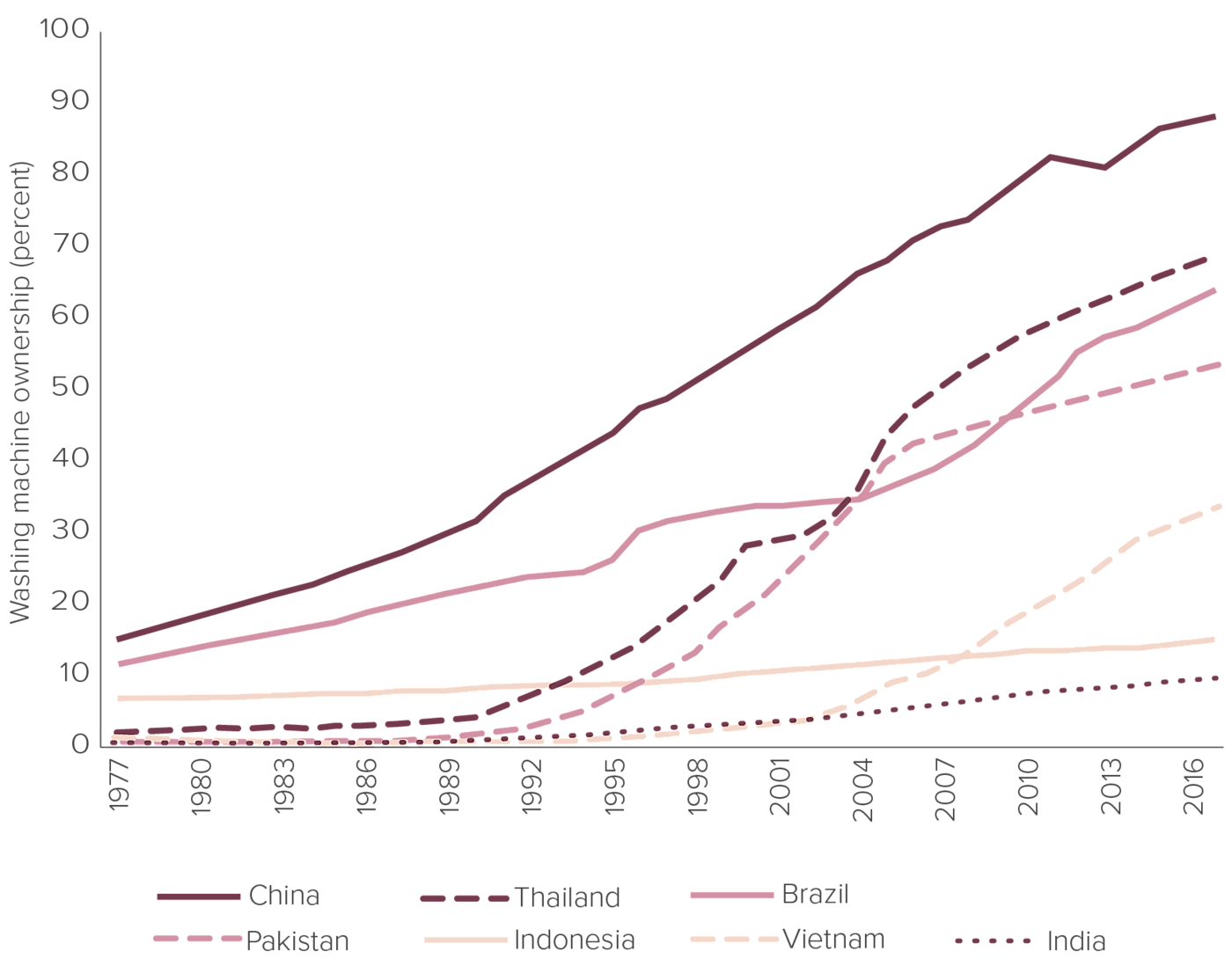
Zubrin tells of how, as civilization has become increasingly energy-intensive, our employment of energy has liberated humanity—particularly women—from grinding labor. “Powered mills had the same significance for women of the Twelfth Century as washing machines did for those of the Twentieth,” Zubrin claims. He quotes the ancient Greek poet Antipater of Thessalonica, who praised the water wheel’s reduction of women’s work hours with these words:

Hold back your hand from the mills, you grinding girls. Even if the cockcrow heralds the dawn, sleep on. For Demeter [the goddess of harvest and agriculture] has imposed the labors of your hands on the [water] nymphs, who leaping down upon the topmost part of the wheel, rotate its axle; with encircling cogs, it turns the hollow weight of the Nisyrian millstones. If we learn to feast toil-free on the fruits of the earth, we taste again the golden age.

The water wheel saving women from waking at sunrise for the mind-numbing task of grinding grain to make bread is just one more example of how technological advances throughout history have arguably benefited women even more than men.

Harnessing energy and mechanizing labor has unshackled countless individuals from exhausting toil—a liberating process that is ongoing in many countries as more households gain access to electricity and labor-saving devices such as laundry machines. Given how many tasks now delegated to electric machines traditionally fell to women, perhaps it is unsurprising that many prominent advocates of an energy-abundant future fueled by nuclear power are women, or as Zubrin alliteratively puts it, a “fine friendly force of fierce feminine fission freedom fighters.”

Of course, as Zubrin would likely agree, energy access alone does not create freedom, even if it may help to counter the scarcity mindset that is so often freedom’s enemy. One need only look to the Gulf petrostates featuring both massive oil fields and authoritarian political systems to find proof that energy abundance is insufficient to spread liberalism or gender equality.

Oil-rich Saudi Arabia did not even issue driver’s licenses to its female citizens until five years ago. It is clear that freedom leads to energy abundance. It is more doubtful that energy abundance necessarily leads to freedom broadly understood—although it at least defuses scarcity-based rationales for limiting human liberty. (Sadly, authoritarians have invented many other justifications for restricting freedom.)

While energy abundance and freedom may be somewhat mutually reinforcing, if humanity were to pick only one, the choice seems clear: institutions and policies of freedom. History shows that free people in lands devoid of natural resources can innovate their way to high living standards. (As Zubrin points out, “It is human ingenuity that turns natural raw materials into resources.”)

Consider Hong Kong’s whirlwind free market transformation from a barren island into a gleaming metropolis in the 1950s and the 1960s. Freedom is the wellspring of prosperity and innovation, and the energy needed to power modernity. As Zubrin notes, when it comes to environmental challenges, once again, “Freedom is not the problem. Freedom is the solution. Prosperity is not the problem. Prosperity is the solution.”

Zubrin also writes that “human progress must and will inevitably entail continued exponential growth of human power generation.” Whether humanity generates that power with nuclear reactors or finds an even better solution, the relationship between many aspects of freedom and energy is worth pondering.

Zubrin’s book shows the urgency of unleashing energy abundance. He argues convincingly that a future of bountiful energy could help preserve the liberty that scarcity often imperils. Embracing freedom is the surest way to power the future.

This article first appeared in Reason.
IEA | Energy Prices

Manufacturing Efficiency Gains Reduce Battery Prices

“Average battery prices declined by 8% in 2025, supported by continued improvements in manufacturing efficiency, advances and shifts in battery chemistries and technology, and intensifying global market competition. Relatively low critical mineral prices also contributed to downward cost pressure, although lithium and cobalt experienced notable price increases over the year. The recent increase in lithium and cobalt prices – if sustained – could put upward pressure on battery costs as stockpiles of minerals purchased at lower prices are being drained…

Over the past few years, the average battery price has decreased across all regions, but regional price disparities have widened. In 2025, battery pack prices in China were 30% lower than in North America, and 35% lower than in Europe, compared to a respective 20% and 25% in 2022.”

From IEA.

New York Times | Energy Prices

Cheap Solar Is Transforming Lives and Economies Across Africa

“South Africans like Dr. Booley have found a remedy for power cuts that have plagued people in the developing world for years. Thanks to swiftly falling prices of Chinese made solar panels and batteries, they now draw their power from the sun.

These aren’t the tiny, old-school solar lanterns that once powered a lightbulb or TV in rural communities. Today, solar and battery systems are deployed across a variety of businesses — auto factories and wineries, gold mines and shopping malls. And they are changing everyday life, trade and industry in Africa’s biggest economy.

This has happened at startling speed. Solar has risen from almost nothing in 2019 to roughly 10 percent of South Africa’s electricity-generating capacity.”

From New York Times.

Blog Post | Economic Freedom

What Richard Nixon’s Real Scandal Should Have Been

A decade of price-control misery

Summary: When President Nixon imposed wage and price controls in 1971, it created chaos. Gas shortages, rationing, and angry customers became daily realities, teaching one young gas station attendant how disastrous top-down economic planning can be. A decade later, when markets were finally freed, supply returned and abundance followed. The lesson endures: politicians create scarcity, but entrepreneurs and free markets create plenty.


Shortly after I turned 15, President Richard M. Nixon managed to make my life miserable. On Sunday August 15, 1971, against the advice of his economic counselors, and in total repudiation of his party’s campaign platform, he announced on national TV that he was suspending the gold standard, imposing a 10 percent tariff surcharge, and imposing wage and price controls.

At the time, I didn’t know a thing about macroeconomics. What I did know was how to make customers happy at my dad’s gas station: Fill their tanks fast, wash their windows, and send them off with a smile.

Nixon’s decision not only shook the foundations of global finance—it trickled all the way down to a teenager pumping gas on Main Street, teaching me firsthand how government policy can reach into everyday life. Nixon’s policies caused a decade of artificial shortages and almost destroyed my father’s business. As Robert Bleiberg, editor of Barron’s, noted at the time, “Price controls, as their advocates have claimed all along, do work like magic. They can make things disappear in the twinkling of an eye.” For me, Nixon’s policies meant no more happy customers, which translated to no more tips.

Like many gas station owners at the time, my dad decided to attempt rationing his limited allotment of fuel by restricting sales to only five gallons per customer. After waiting in line for sometimes more than an hour, most customers were furious to be told that they could only buy five gallons of gas. They took their anger out on their lowly attendant, not on the perpetrator of the calamity living in the White House.

The president, along with the politicians and corporate leaders who cheered for price controls, never had to face the fury of my customers. They could make sweeping decisions from behind their podiums and boardroom tables without ever paying the price for being wrong. As Thomas Sowell once put it, “It is hard to imagine a more stupid or more dangerous way of making decisions than by putting those decisions in the hands of people who pay no price for being wrong.”

Price controls tied the hands of domestic producers while leaving foreign suppliers, such as OPEC, untouched. The result was the opposite of what policymakers had intended. Instead of fueling independence, the policies throttled domestic supply and handed foreign oil giants the keys to America’s energy future.

In 1981, just eight days after taking office, President Ronald Reagan swept away the federal price and allocation controls on domestic oil and refined products. Overnight, my decade of gas-line misery came to an end. Prices did rise—but for the first time in years, people could fill their tanks without rationing, limits, or fear of empty pumps. I learned a key lesson: Politicians create scarcities, entrepreneurs create abundances.

When oil prices surged in the early 2000s, entrepreneurs and markets responded with a wave of innovation. Breakthroughs such as horizontal drilling and hydraulic fracturing unlocked vast new oil reserves, unleashing a surge of supply. America’s unique system of private ownership of subsurface mineral rights—rather than government control—supercharged this revolution by giving landowners a direct stake in production. The results were astonishing: The United States, whose oil industry was once thought to be in irreversible decline, has become a net exporter of petroleum products.

Since 1950 the average time price for a gallon of gasoline has been around six minutes for blue-collar workers. We’re actually around five minutes today. The United States has some of the lowest gasoline time prices on the planet.

Yes, we’ve had periods where the price has spiked, typically due to political turmoil, but time and again, innovation and markets have responded by creating greater abundance. Julian Simon predicted such would be the case, as long as politicians and bureaucrats don’t impose “solutions” that have counter-productive consequences.

Nixon resigned on August 8, 1974, to avoid impeachment for his crime of covering up the Watergate break-in. But to me, his darker crime wasn’t in a hotel—it was in every gas station in America. His Soviet-style controls left behind a nation of frustrated, unhappy customers and pump attendants who bore the real cost of his misguided policies.

Find more of Gale’s work at his Substack, Gale Winds.

World Health Organization | Energy Consumption

Energy Access Has Improved across the world

“Almost 92 percent of the world’s population now has access to electricity, in contrast to 87 percent in 2010. In 2023, increases in the number of people with access to electricity outpaced population growth, raising the rate of global access to 92 percent and reducing the number of people without electricity to 666 million—19 million fewer than the previous year…

The greatest growth in access between 2020 and 2023 occurred in Central and Southern Asia, while the pace of progress in Sub-Saharan Africa calls for significant acceleration.”

From World Health Organization.