
Sign up for our newsletter to receive these posts in your inbox.
Energy & Environment
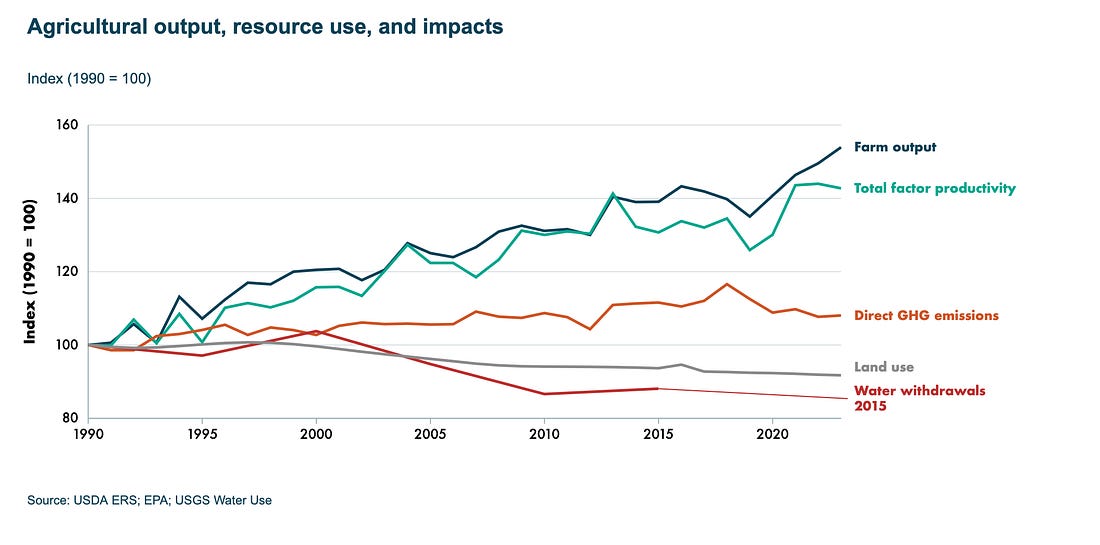
- A new data visualization tool from the Breakthrough Institute illustrates how US agriculture has become increasingly productive while using fewer natural resources and reducing its environmental impact per unit of output. Drawing on decades of data from the US Department of Agriculture, the Environmental Protection Agency, the US Geological Survey, and other sources, the tool shows that:
- US agricultural output increased by more than 50 percent between 1990 and 2023, while greenhouse gas emissions rose by just 8 percent and agricultural land use declined by roughly 8 percent.
- Freshwater withdrawals for irrigation and livestock fell by approximately 20 percent between 1980 and 2015.
- The amount of soil eroded per acre of cropland per year declined by roughly a third between 1982 and 2022.
- The share of nitrogen inputs taken up by harvested crops rose from roughly 50 percent in 1980 to more than 70 percent in 2023. Excess nitrogen left behind after harvest can wash into waterways or seep into groundwater, contaminating drinking water and fueling harmful algae blooms.
- Methane emissions per unit of natural gas produced in the Permian Basin fell by roughly 60 percent between 2018 and 2024, according to a new study based on satellite observations. The researchers estimate that total methane emissions from Permian producers remained relatively stable over that period, even as natural gas production in the region more than doubled.
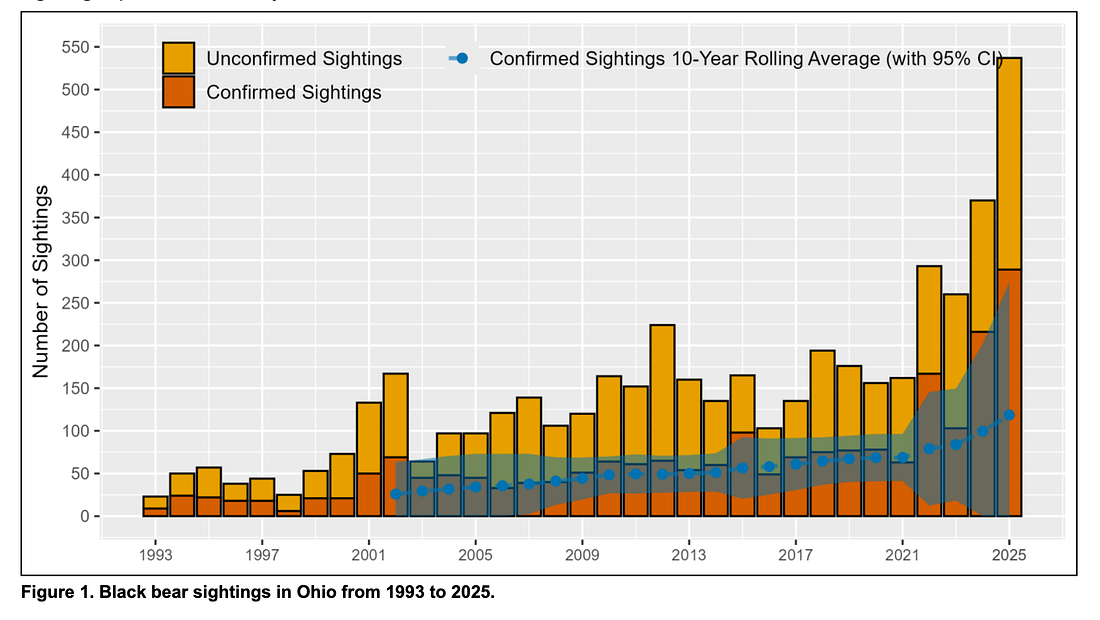
- Black bear sightings in Ohio have surged in recent years. Between 2022 and 2025, Ohioans reported nearly 1,500 bear sightings to the state’s Department of Natural Resources, more than twice as many as during the preceding four years. Black bears, once common in Ohio, vanished from the state in the mid-1800s. Wildlife officials believe that most of the recently sighted bears are males wandering in from Pennsylvania and West Virginia, but females with cubs have been confirmed every year since 2018, suggesting that the bears may be beginning to reestablish a breeding population.
- Researchers have developed an AI system that can identify individual wild birds by their songs. Earlier approaches worked only on a known set of birds or needed high-quality recordings of each one. The new system needs no labeled recordings of individual birds and correctly identified 96 percent of ovenbirds it had not been trained on, potentially making it possible to track individual wild birds over years without capturing or tagging them.
Health & Demographics
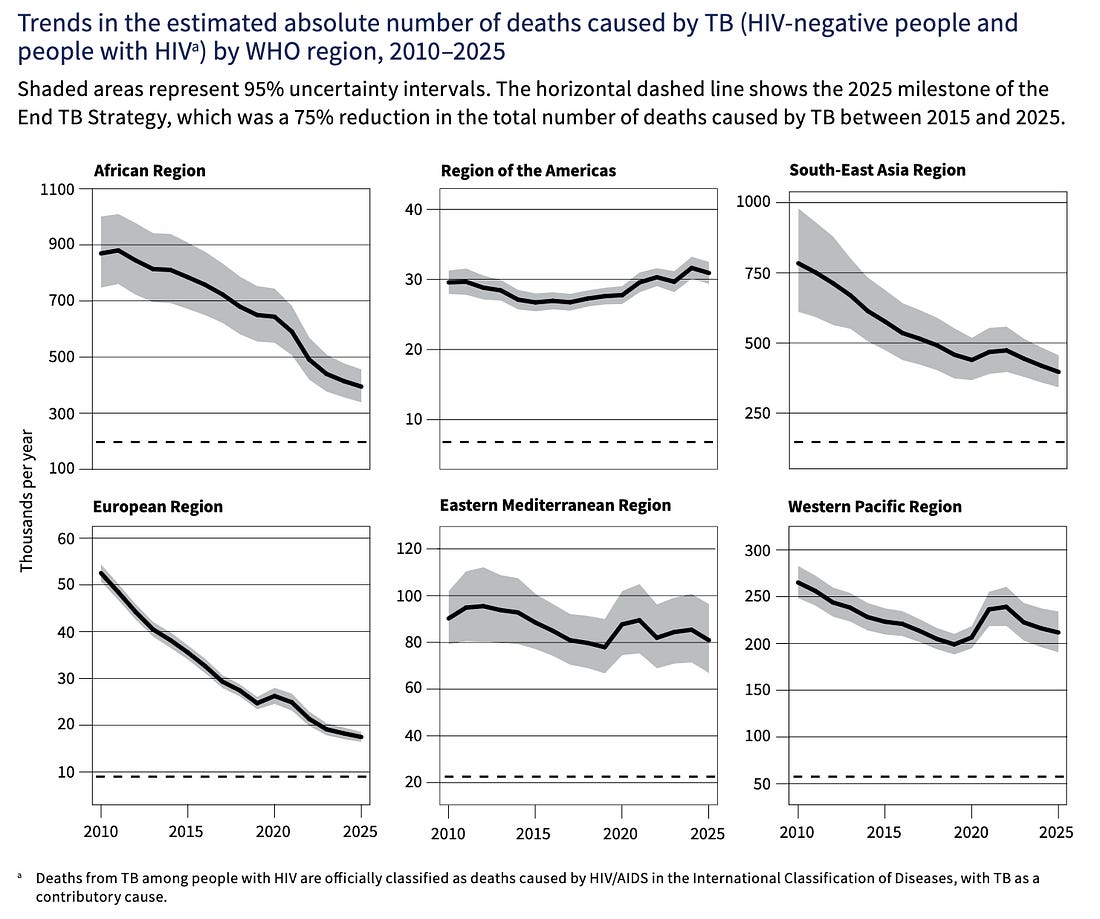
- Global tuberculosis deaths nearly halved between 2010 and 2025, according to a new World Health Organization report, falling from an estimated 2.09 million annual deaths to 1.13 million. Roughly 90 percent of that reduction occurred in the WHO’s African and South-East Asia regions.
- The World Health Organization recently validated that Eritrea has eliminated trachoma as a public health problem. Trachoma is an eye infection that can cause blindness after years of repeated infections. Earlier this year, the WHO estimated that 1.2 million people worldwide suffered from the advanced, potentially blinding stage of the disease.
- The latest results from the Healthy Minds Study, a large mental health survey of US college students, show that self-reported depression, anxiety, and suicidal thoughts have declined for four consecutive years. Between the 2021-22 and 2025-26 academic years, the share reporting severe depression fell from 23 percent to 16 percent, the share reporting moderate or severe anxiety fell from 37 percent to 30 percent, and the share reporting suicidal thoughts fell from 15 percent to 10 percent.
- For the first time, a clinical trial has shown that reducing tau protein tangles can slow cognitive decline in Alzheimer’s patients. The Phase 2 trial tested an experimental drug that blocks the genetic instructions that tell brain cells to produce tau protein, which can accumulate into harmful tangles in the brains of Alzheimer’s patients. Patients receiving the lowest dose of the drug, who showed the largest benefit of the three dosing groups, experienced 54 percent less cognitive decline on a standard test over nearly two years compared with patients initially given a placebo.
- Daraxonrasib, a groundbreaking pill for pancreatic cancer that nearly doubled median survival compared with chemotherapy in an earlier trial, has now shown promising results when combined with chemotherapy. In a study of 61 patients with advanced pancreatic cancer, the combination shrank tumors in 37 patients (61 percent), including five whose tumors became undetectable after treatment.
- An experimental cancer vaccine significantly extended survival in a Phase 3 clinical trial involving 126 patients with acute myeloid leukemia, an aggressive form of blood cancer. Patients who received the vaccine survived a median of 24 months, compared with 14.7 months among those who received standard care. The vaccine is designed to prevent leukemia from returning after treatment and was tested in patients in remission whose cancer had returned at least once before.
Science & Technology
- You can now order lab-grown chicken at several restaurants in California. The meat comes from UPSIDE Foods, a California-based company that has begun selling its cultivated chicken at prices it says are comparable to premium organic chicken.
- SpaceX caught Starship’s upper stage during last weekend’s test flight, the first time an orbital rocket’s upper stage has been recovered after returning from space. Recovering the ship intact will let SpaceX assess whether it can be refurbished and flown again.