
Sign up for our newsletter to receive these posts in your inbox.
Economics & Development
- Poverty in Rwanda has fallen sharply since 2017, alongside improvements in child health and nutrition. According to figures highlighted in a recent UNICEF statement, the share of Rwandans living below the national poverty line fell from an estimated 39.8 percent in 2017 to 27.4 percent in 2024. Extreme poverty more than halved over the same period, falling from 11.3 to 5.4 percent.¹ Stunting among Rwandan children under five fell from 33 percent in 2020 to 27 percent in 2025, while under-five mortality fell from 45 deaths per 1,000 live births in 2019–20 to 36 in 2025.
- The US Department of Housing and Urban Development has recorded the largest annual decline in homelessness since national counts began in 2007. According to the agency, the homeless population fell by 6.3 percent between January 2025 and January 2026, a reduction of over 47,000 people, though homelessness remained above pre-pandemic levels.
Energy & Environment
- Targeted human intervention can save species even when their populations have fallen to extremely low levels. A recently published study reviewed every bird and mammal species whose wild population is known to have dropped below 50 individuals at any point since 1950. Of the 51 of those species that received direct support from conservationists, 61 percent recovered to a population of at least 100, compared with just 2 percent of the species that received no direct support.
- Antarctic blue whales are gradually recovering from near-extinction. A new study combining historical whaling records, population surveys, and photographic identification estimates that the population grew nearly tenfold between 1973 and 2024, from 418 to 4,018, though it remains at just 1.9 percent of its pre-whaling size.
- Kemp’s ridley sea turtles, the world’s most endangered sea turtle species, laid 697 nests along the Texas coast in 2026. In 1978, when efforts to reestablish the species in Texas began, the state saw about one Kemp’s ridley nest every three years.
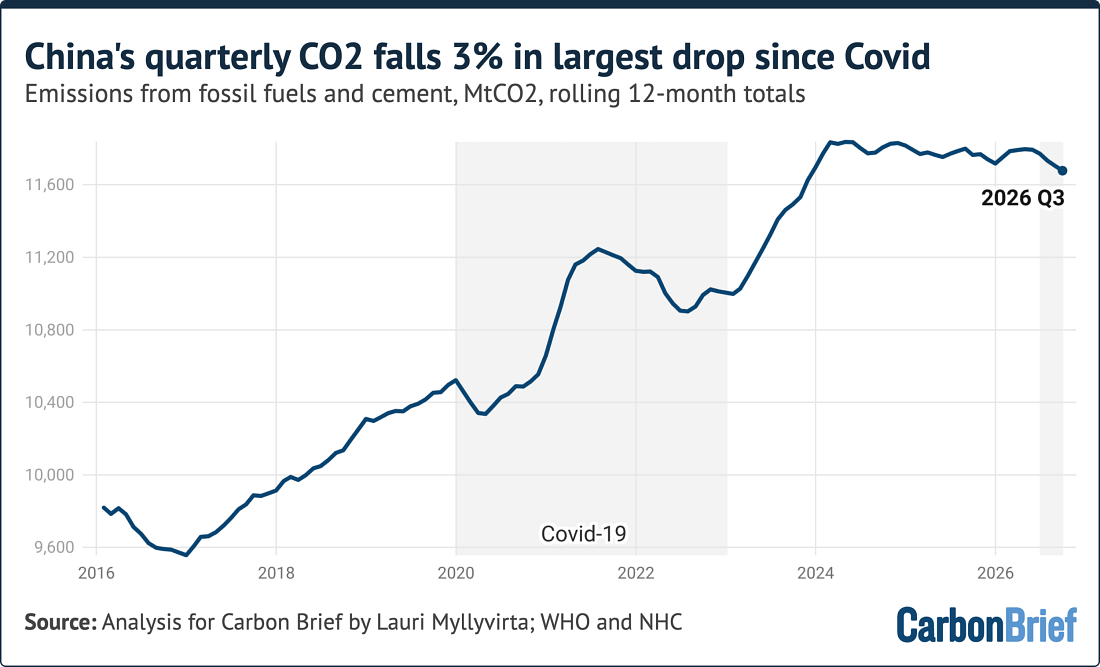
- China’s carbon dioxide emissions have been flat or falling since early 2024, according to a recent analysis from Carbon Brief. The analysis credits the expansion of clean energy, growing electric vehicle adoption, declining coal-fired power generation, and slower growth in energy demand.
Health & Demographics
- US traffic deaths continued to fall in the first half of 2026. Preliminary figures from the National Highway Traffic Safety Administration show 16,750 traffic deaths in the first six months of the year, down 2.5 percent from 17,175 over the same period of 2025, even as total vehicle miles traveled increased by 0.8 percent.
- The number of long-term health conditions attributable to COVID-19 may have been substantially overstated. A recently published study compared two methods of attributing health conditions to COVID-19 using insurance claims from nearly 245 million US patients. A method common in earlier long COVID studies, which compares people diagnosed with COVID-19 with those who were not (many never tested), attributed 286 of the 614 conditions examined to COVID-19 between four months and one year after infection. However, because people with health problems are more likely to seek medical care and get tested for COVID-19, that method risks exaggerating the effects of the virus. When the researchers restricted the comparison to people who had been PCR-tested, the number of conditions linked to COVID-19 over the same period fell to just five. In the second year after infection, the earlier method linked 369 conditions to COVID-19, while the test-based method linked none.
Science & Technology
- Google DeepMind has released AlphaGenome 2, the successor to its AI model that predicts how genetic variants (differences in DNA sequence) influence which genes are active and how strongly. While the original model predicted how genetic variants affect gene activity in tissue samples that mix many types of cells, AlphaGenome 2 can make those predictions for individual cell types. In a benchmark test involving 28 types of immune cells, the new model identified 30 percent of genetic variants responsible for changes in gene activity, up from 16 percent for the original model. That improvement could help researchers pinpoint the genetic causes of diseases and develop new treatments.
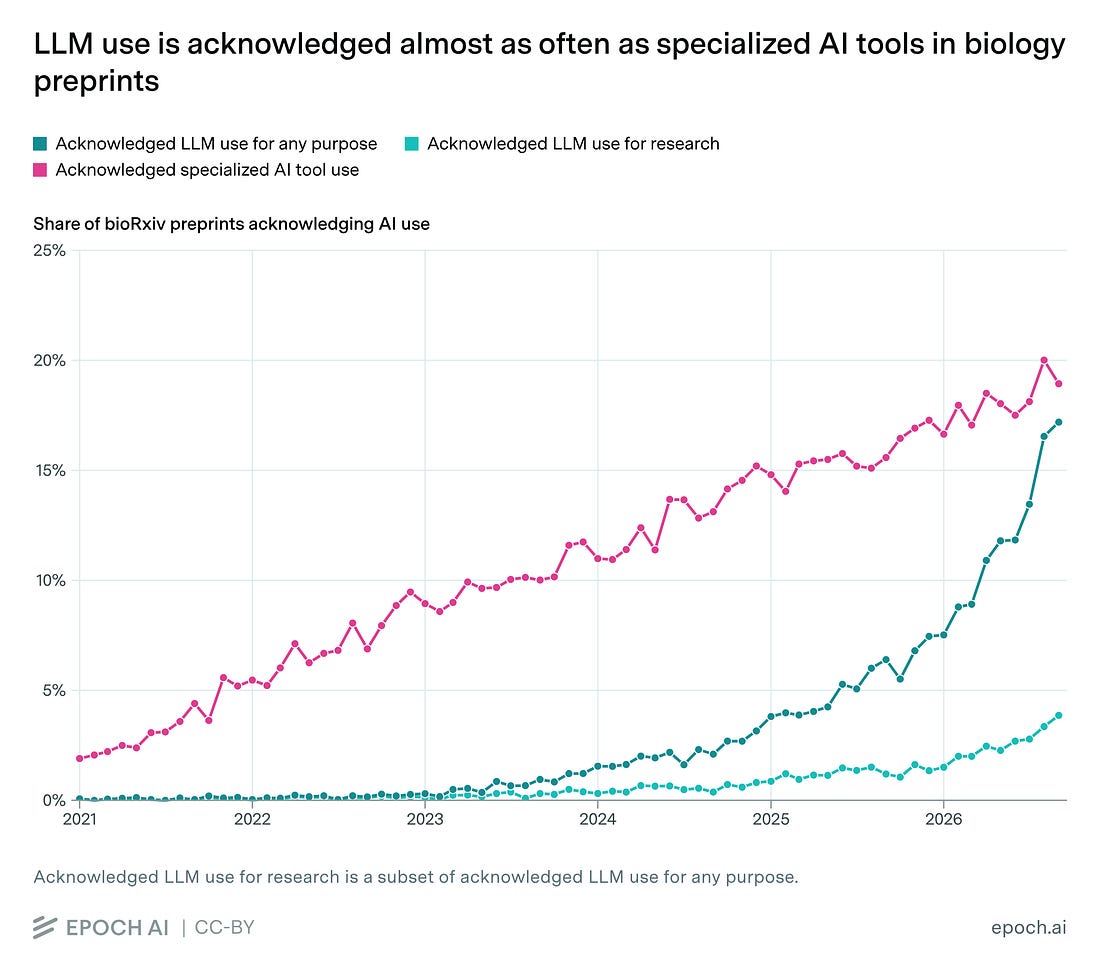
- Specialized AI tools like AlphaGenome and AlphaFold have become increasingly common in biological research. According to a recent analysis by Epoch AI, the share of biology preprints acknowledging the use of AI tools designed specifically for biological research rose from about 2 percent in January 2021 to 19 percent in September 2026.² General-purpose large language models have been adopted even faster. According to the same analysis, the share of preprints acknowledging LLM use rose from less than 1 percent in early 2023 to 17 percent in September 2026.
Violence & Coercion
- Chicago is on track to record even fewer homicides in 2026 than in 2025, when its homicide total was the lowest in 60 years. According to the Chicago Police Department, the city recorded 356 homicides between January and October this year, down from 370 over the same period in 2025 and 510 in 2024. Robberies, burglaries, and carjackings were also down over the same period compared with 2025, by 21 percent, 8 percent, and 26 percent, respectively.
1 In Rwanda, a household is considered in extreme poverty if it cannot afford enough food to meet its basic nutritional needs.
2 “Preprint” refers to a research paper made publicly available before going through formal peer review.