Summary: Today marks the second installment of a new series of essays on HumanProgress.org written by Dr. Stephen Davies titled “Critiques of Progress.” Each of the fifteen essays in this monthly series will examine the origins, nature, and validity of recurring critiques of the modern world. This essay examines the old complaint that modern life has drained the world of meaning and argues that, where this complaint holds at all, it is a result of prosperity and freedom. You can read the first part of this series here.
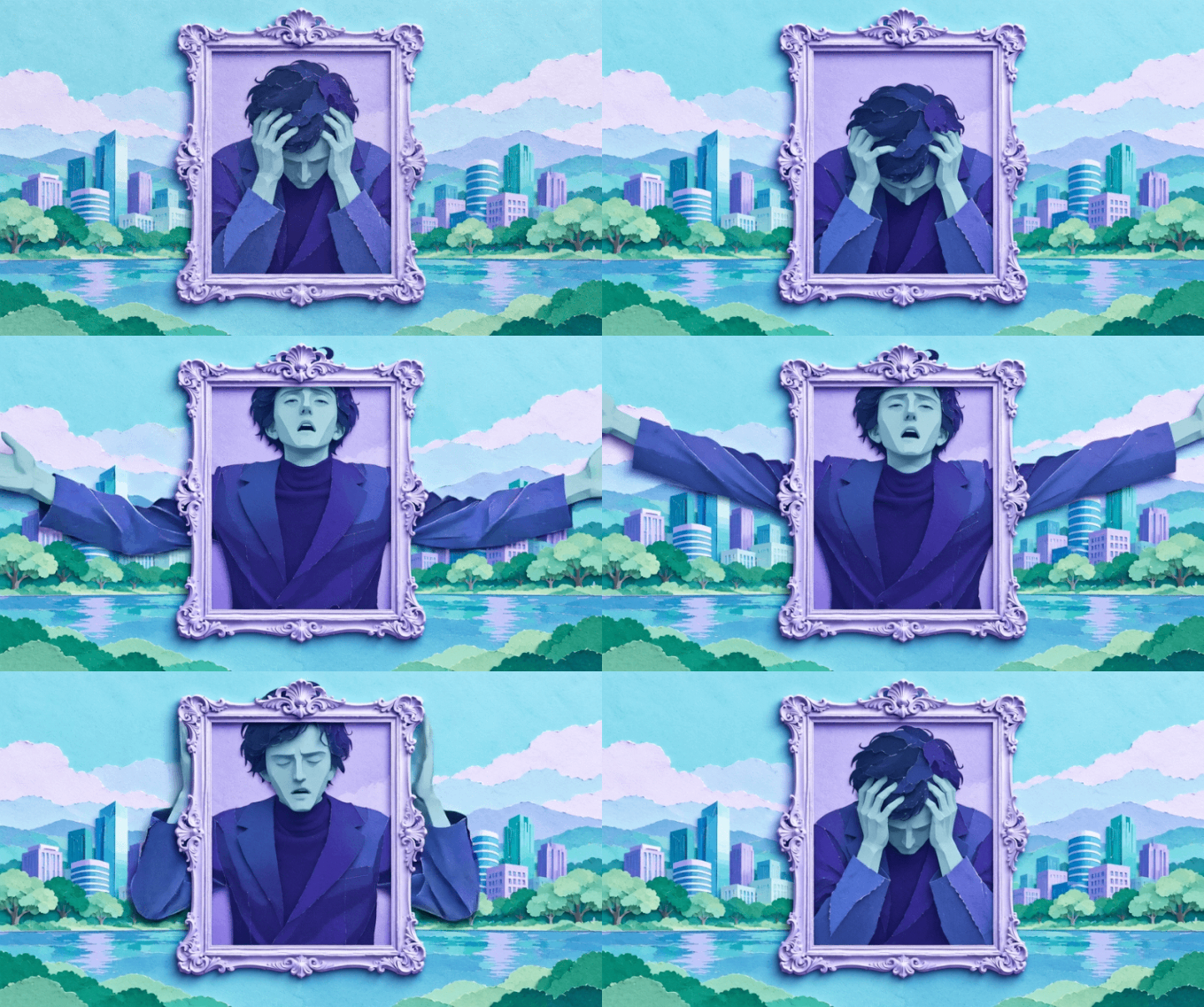
One of the recurring arguments made against the modern world is that it is marked by an intensifying loss of meaning. The argument is not that the natural world or human life and society are actually objectively emptied of meaning but that they are increasingly perceived and understood as such. This is, in other words, an argument about a pervasive state of mind and mental outlook, supposedly produced by the experience of living in the modern world and by the impact of modernity’s essential and predominant ways of thinking on the collective mentality of people. The argument is that people increasingly experience what is often called “anomie” (literally “normlessness”), a state of mental exhaustion, drift, and feeling that nothing means anything and that there is no point to life or to any human action or choice.
That, it is argued, has extensive and harmful effects on the way people live and act, and on the wider culture and ways of life. Anomie creates paralysis and lassitude that are paradoxically combined with restlessness and agitation. The feeling of futility and pointlessness leads to harmful and destructive actions and behaviors such as suicide or substance abuse, producing what are now called “deaths of despair.” Anomie is often claimed to be the source of reluctance to have children or to commit to the future. In culture and the arts, anomie is seen as producing work that is either trivial and shallow or dark and tormented.
The diagnosis of this widespread state of mind and the actual term anomie was classically formulated by the French sociologist Émile Durkheim, in his 1897 book Suicide. That book, however, was inspired by an earlier work in 1881, Suicide and the Meaning of Civilisation by Thomas Garrigue Masaryk (later the first president of Czechoslovakia). Masaryk argued that suicide was an individual response to a wider crisis of meaning and purpose in modern civilization. The main cause of anomie for Masaryk and Durkheim was the breakdown of structures and rules that constrained personal choice, combined with a loss of belief in formal religion, which meant that the idea of the universe as a whole and particular entities within it having a telos or goal that determined people’s proper existence (the final cause in classical philosophy) disappeared. Instead, they argued, people faced an overwhelming range of choices with no structure to guide them, and no idea of life’s ultimate purpose other than their own personal preferences or choices.
Durkheim and Masaryk were only two of many who arrived at this diagnosis. Other authors made similar cases in the late nineteenth and early twentieth centuries, after which this kind of argument became a standard part of the anti-modernist repertoire. Prominent examples include Fyodor Dostoevsky (notably in The Brothers Karamazov but also elsewhere), Friedrich Nietzsche, and Thomas Hardy. Anomie is also a main theme in the work of French philosopher Albert Camus, particularly in The Stranger. Interestingly, not all of the authors saw the loss of meaning as the inevitable and inescapable result of living in modernity. Both Nietzsche and Camus, for example, believed that one could escape anomie through conscious choice at the individual level, although neither thought there was a collective solution to the problem. Masaryk, by contrast, thought that such an escape could be achieved through the development of new forms of collective purpose. Most, however, followed Durkheim in concluding that the anomic state of mental affairs was an inevitable result of how people now lived and of the disenchantment of the world by rationalism and utilitarianism.
How and why, though, was this state of despair and lack of meaning connected to the modern world, for its diagnosticians? Their answer was that anomie was the inevitable result of core features of the modern world. The main one for many such features was loss of religious faith and its supplanting by materialism and (in moral philosophy) utilitarianism. However, several other reasons were given. A prominent one was urbanization and the way that cities supposedly cut people off from the natural and the sublime. Another was the artificial routine produced by modern work, which forced people into a repetitive way of living that had no obvious goal or purpose for most, since it was work oriented towards someone else’s purpose — that of the capitalist, for example. One common argument was that the modern world was too comfortable and lacked challenge or danger, since the latter truly gave life meaning.
This argument led to positions and arguments in the later nineteenth century that will now strike many as bizarre or wrongheaded. Most notably, it led to a valorizing of war as something that created meaning for those caught up in it, even if it came at the cost of death or injury. One classic exposition of this view was German soldier and author Ernst Jünger’s account of his experiences on the Western Front, Storm of Steel, but he was one of many. Another example was the Irish patriot and revolutionary Patrick Pearse, who argued (in 1915!) that young men were lucky to have been born at that time because they had the chance to escape the stultifying boredom and meaninglessness of bourgeois society for the danger and heroism of war. Even after the horrors of the World Wars and other conflicts, authors such as Michael Easter and Anna Lembke still argue that modern life lacks challenge and, therefore, meaning.
In addition to secularization, two other arguments were made. First, that the modern world created too many choices between options that had no substantive difference, so that the choice itself had no real consequence. This range of choice overwhelms people, and the effect of being confronted with choices with no significance (such as choosing between 23 different types of deodorant, in Bernie Sanders’ famous quip), it is argued, undermines the very idea of meaningful or purposive action. Second, that the modern condition both created and valorized individualism and personal autonomy. For the critics, that meant that people were no longer part of a social structure that provided them with meaning and purpose, even though by its nature this social integration also restricted individual expression. That was Durkheim’s principal argument, although, interestingly, he also argued that too much integration and collective rules would ironically produce similar results to the lack of rules. This argument, of meaninglessness as a product of a lack of generally accepted rules and norms, is why the term anomie came to be widely used.
What to say about all that? One obvious comment is that the phenomena in question fall under the heading of what we now call “first world problems.” Worrying about a lack of meaning produced by too much choice and comfort, and the lack of clear rules, is not a problem for those wondering where their next meal is coming from, how to get food and shelter, or living under the kind of strict rules enforced historically by religious authorities and the state. Much of the argument can be described fairly as “luxury complaints”: the kinds of difficulty one might face when actual serious and life-limiting or threatening problems have been dealt with. In other words, to the extent that many people do feel that their life is lacking in meaning or purpose, we can fairly describe this as a problem of success — the kind of problem that it is good to have in many ways.
Second, it is not at all clear that there is anything particularly modern about anomie. Philosophers and religious thinkers from the Stoics and the Buddha onwards have been making the point about the lack of inherent or transcendent meaning in life and the world and suggesting ways of dealing with it. The psychological phenomena described were extensively written about by ancients and Christians under the heading of “accidie,” a term that interestingly is making a comeback in popular psychology as well as theology and moral philosophy. The Christian sin of sloth also corresponds to the feeling of pointlessness and the state of lassitude that it produces (a sin because it rejects the joy and purpose that God offers). In the seventeenth century, before modernity, Robert Burton examined the state of mind described earlier in his massive 1621 work The Anatomy of Melancholy. Clearly, this kind of state of mind and being was not unknown before the modern world.
The critics’ response, of course, is that it has now become more widespread, even normal, as opposed to unusual and pathological. Even if, for the moment, we grant that, it does not follow that anomie is inescapable as a cost of modernity, much less that anomie is a ground for rejecting the benefits of modernity. As several of the authors who diagnose this malady argue, there are ways of dealing with it, most of which involve either simply accepting the lack of transcendent meaning and getting on with living (this was English philosopher Bertrand Russell’s position, for example) or creating meaning in life through one’s own deliberate choices and valuations (the view of Nietzsche and existentialists such as Camus, for example).
The last is the key point. What these complaints share is the belief that human beings are not equipped to bear the burden of full autonomy, and that meaning can only ultimately come from outside the individual, either from God and revelation, or from a collective entity (which mysteriously turns out to consist of flesh-and-blood humans who do the actual choosing). There is actually no reason to accept the case granted pro arguendo above that this existential anxiety is widespread. Most people seem to feel that their life and their relations are perfectly meaningful and do not suffer the angst described. We should remember that suicide, which Durkheim and Masaryk treated as the ultimate expression of a supposed crisis of meaning, is a rare event that’s becoming rarer in most rich countries. Quite simply, the modern world is in many ways founded upon the belief that it is choice and purposeful action by individuals that is the source of meaning, along with relations with other people. The thesis that meaning can only come from outside the individual is rejected. The empirical evidence that secular and open societies are happier supports this view.
Modern life values personal choice and increases the range of choices open to ordinary people. In modernity, the quest for meaning and purpose is fulfilled through individual and voluntary collaborative action. As such, we should reject the complaints of anomie and, to the extent that they have a foundation, regard it as a problem of success.