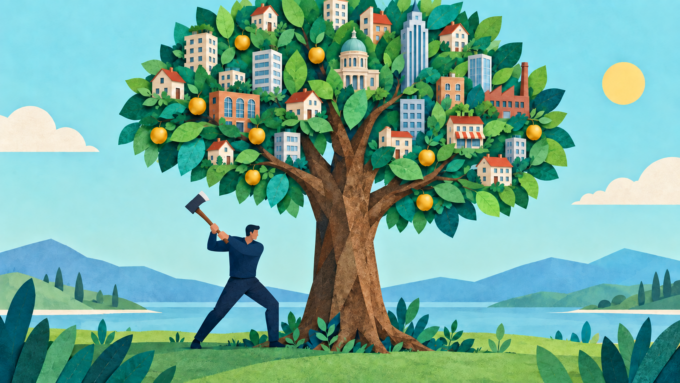
“For many, economic growth and environmental protection exist in direct tension. People with this belief generate policy proposals to permit growth while protecting the environment. For others, the tension is irremediable — they believe growth necessarily destroys. For these zealots, degrowth is the only way. For both groups, liberalizing the economy — allowing for more economic growth — carries at least a risk of environmental degradation.
In recent work with Justin Callais and Alicia Plemmons, published in Structural Change and Economic Dynamics, we show that there is no reason to worry. We used 49 cases of sustained economic liberalization since 1970 and measured their effects on outcomes such as death rates from air pollution, total greenhouse gas emissions, as well as emissions per capita and per dollar of economic output. In this context, liberalization refers to the adoption of policies that promote international trade, secure property rights, and lessen fiscal and regulatory burdens.
Comparing with similar countries that did not liberalize, we found that while GDP per capita increased 16 percent within ten years for liberalizers, environmental outcomes did not deteriorate. In fact, we found that death rates from air pollution declined modestly, while there were no effects of liberalization on total greenhouse emissions. Moreover, post-2000 liberalizers actually showed signs of lower emissions per dollar of economic activity and capita.
In other words, pro-growth policies are not in tension with environmental preservation.”
From The Daily Economy.