Summary: Wealth creation is not inherently zero-sum: fortunes can grow through innovation, investment, and expanding prosperity rather than by taking from others. Yet human psychology remains highly sensitive to relative status, often valuing rank over absolute gains and even accepting personal losses to reduce perceived inequality. This tendency can misclassify productive success as exploitation, turning economic comparisons into moral and political conflict.
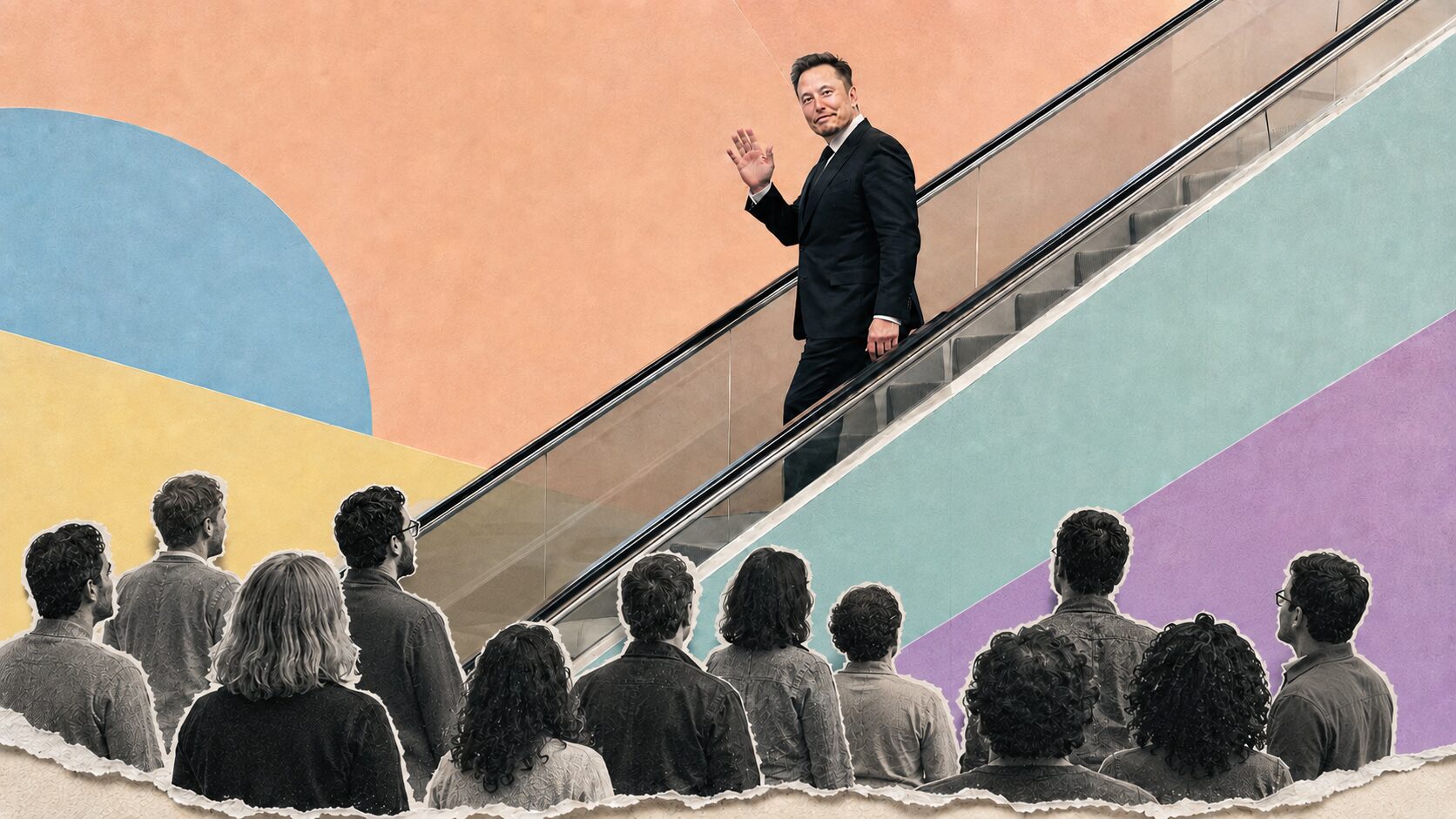
This summer Elon Musk became the first trillionaire in history. Supporters celebrated the trillions in market value and the thousands of jobs he helped create pioneering electric cars and reusable rockets. Critics treated the milestone as a referendum on inequality. Bernie Sanders invoked the “greed and power of a ruling class.” Alexandria Ocasio-Cortez and Elizabeth Warren renewed demands to tax extreme wealth. Then SpaceX shares fell back below their IPO price and Musk’s fortune dropped to a humble $850 billion, down from its brief peak of $1.4 trillion.
The decline provoked almost no commentary. When Musk “gained” hundreds of billions in unrealized wealth, politicians spoke as if the money had been taken from everyone else. When more than half a trillion dollars disappeared, no one proposed that wealth had been restored to the public. If anything, millions of shareholders, including blue-collar employees holding equity and the retirement accounts of ordinary Americans, lost money.
Economists can explain the difference between income and equity, paper wealth and spendable cash. But the real dispute is psychological. Humans dislike inequality even when a rising tide lifts all boats. If every centibillionaire donated over 99 percent of their net worth to charity and kept a single billion, people would still lament that billionaires exist.
Wealth can be created. That is why the economy grows every year and why most people can afford basic goods like refrigerators that were once luxuries. But status is zero-sum. If one person moves up in rank, everyone below moves down by definition.
People will even pay to close a gap. When one person proposes how to split $100, and the other can only accept it or kill the deal for both, a lopsided offer is routinely rejected, the responder giving up a real $20 to stop a stranger from pocketing $80. The asymmetry appears early in development. Five-year-old children will even sacrifice some of their own reward to preserve an advantage over a peer.
Envy is not a free-floating vice. It is a system for detecting consequential differences in rank and resources. Humans evolved in groups that were both cooperative and competitive. Food sharing and reciprocal exchange produced mutual gains, but access to land, allies, and mates was limited, and a rival’s rise could shrink one’s own share. Monitoring who had more was adaptive.
The trouble begins when the system cannot distinguish extraction from creation. A fortune won by inventing something useful should be celebrated, not interpreted as a threat.
Musk does not hold a trillion dollars in food, houses, or currency. He owns stakes in companies whose prices reflect what investors expect them to produce. Comparisons between one man’s fortune and the combined wealth of whole populations translate an opaque balance sheet into a familiar problem: one member of the band appears to have claimed the communal kill.
Zero-sum belief also converts personal comparison into coalitional morality. A man who resents a richer neighbor feels small. A man who resents a class of exploiters feels righteous. The English writer George Orwell noticed the pattern: socialism is often motivated more by hatred of the rich than by love of the poor.
Musk may regain his fourth comma or shed another few hundred billion. His rank can swing violently without any matching change in everyone else’s circumstances. That is why the gains produce outrage and the losses silence. The number is being read as a status score.
Critiques of Progress, Pt. 1: The Revolt against Modernity
Some say the modern world could be better. Others say it is rotten at the core.
Steve Davies —
Today marks the launch of a new series of essays on HumanProgress.org written by Dr. Steven Davies titled Critiques of Progress. Each of the fifteen essays in this monthly series will examine the origins, nature, and validity of recurring critiques of the modern world. This introductory essay distinguishes between two broad critiques of modernity and explains which one this series will address and why.
Today’s world is one of liberal modernity, the result of a transformative process dating back to the end of the 17th century. This process has brought enormous benefits to everyone alive today, as well as many who lived during the three centuries leading up to today. The most obvious benefit is the dramatic rise in average incomes over that period, especially globally. This rise in real incomes (and therefore living standards and material conditions) has no precedent in human history. It also started slowly and in a limited part of the globe, but it has accelerated and spread to almost every location, not steadily, but nonetheless in a progressive fashion.
However, while liberal modernity has improved human life, rising living standards are foundational but not the most important. More significant are the second-order consequences of economic growth and rising living standards, which are related but distinct. Second-order effects include a dramatic increase in the range of life options and ways of life available to ordinary people, a decline in crime and violence, a transformative change in the status and life experience of women, and improved health outcomes for people of all ranks and positions. Independent but related benefits include the enormous increase in our knowledge about, and understanding of, the natural world, and the increased sociability that comes from the shift from a rural society where most lived in small communities to a majority urban society where an increasing share of the global population lives in large cities or towns.
All of that is a transformation in the extent and variety of human flourishing. It is, by many ethical standards, the biggest improvement in human life in recorded history. Nevertheless, the modern world has as many critics as celebrants, in fact even more so. For every author or artist celebrating that things are better for most people than ever before, several complain and paint the contemporary world, or parts of it, in dark colors. At first glance, this chorus of criticism might seem united and singular, but a closer look reveals something more interesting.
On examination, criticisms of the modern world fall into two broad categories. The first are those we could call “Yes, but…”. In these arguments, critics accept the modern world as good, or at least better than what came before. Critics argue that, despite that, the modern world is deeply flawed: it is marked by deep inequality or injustice, harms the environment, or is plagued by persistent poverty, for example. In these arguments, the positive agenda is to say that the modern world needs to do better or radically reform in some way to realize its promise. It is better than the pre-modern world but has a foundational flaw that needs correction (private property and capitalism are the most common examples, but critics also cite the continued existence of the state and systemic advantages and disadvantages). These criticisms of modernity can be described as radical (or, in their milder versions, reformist).
The obvious example is Marxism. For the German philosopher Karl Marx, capitalist modernity was undoubtedly progressive at first and a clear improvement on feudalism, let alone slavery. He saw the modern world of his time as transitional, moving toward a truly liberated future where all human potential would be realized. The point of his criticisms of bourgeois society and modernity was that they had inherent contradictions and injustices that would be resolved through a dialectical process of historical development. That made the modern world unjust and flawed but also necessary and, in many ways, progressive. It was the contrast between the actuality of the modern world and what he saw as its potential that sparked his ire. He never had anything but the deepest contempt, forcefully expressed, for the apologists of the pre-modern world (as also for those whose objections to the modern world were founded in ethics rather than a ‘scientific’ approach like his own).
However, from the very first intimations of the modern world in the 1690s and 1700s, a second category of critiques emerged, of a very different type. These analyses and polemics argue that something about modernity is at least deeply regrettable, or (more often) profoundly bad. They argue that key aspects of modernity, including the ones listed earlier, should be morally condemned because of their harmful consequences for people and the natural world. The point is that these arguments don’t argue that the modern world is good but flawed, or potentially good but failing to realize that potential. Instead, they reject the modern world tout court and see the modernization process as a tragic wrong turn for all of humanity. That is a much more fundamental critique than the first type.
This second category is also more widespread, though you might not realize it because these critiques and the movements they inspire either attract little attention from scholars or are misrepresented as belonging to the first category. In reality, critiques, movements, and analyses of this kind appear in every society that begins to modernize and seem to be one of the most universal responses to that process. What is striking is how the same specific themes and arguments recur across contexts and societies that are otherwise wildly different. Ian Buruma and Avishai Margalit captured that in a remarkable little book, Occidentalism, published in 2004. They framed their work as a response to Edward Said’s Orientalism and presented the ideas and movements they analyzed as driven by a negative stereotype of “the West.” In reality, what they identified was the recurring tropes and arguments of anti-modernity (their framing came from the notion that modernization was identical to westernization – understandable but incorrect).
Buruma and Margalit captured how movements such as anti-imperialism, Japanese nationalism, 19th-century romanticism, and fascism, as well as individual intellectuals of many kinds, produced similar arguments against the world the modernization process produced and even employed similar rhetoric. This suggests that the shock of modernity triggers a similar response and analysis across traditional or pre-modern societies, regardless of how different those societies might be. These responses and arguments are not limited to political arguments and polemics. In fact, they are even more widespread in literature, historiography, and the arts. Many of the most important cultural figures of the last two centuries are associated with them; one could point to Wagner, Dostoyevsky, Ruskin, and T. S. Eliot, for example. In more popular culture we could cite authors such as Lovecraft, C. S. Lewis, Tolkien, or any number of writers of fantasy and adventure fiction.
The point is that this second category of criticisms of modernity attacks the very idea and foundational features of the modern. What most people, including the first kind of critic, would celebrate is seen as something to regret or deplore. A common theme is that the modern world, or main and essential aspects of it, are incompatible with human nature, with what it is to be human and to live a truly human life. If the more familiar kinds of critique can be labelled “radical” then these can be described as “conservative” or “reactionary.” We should be cautious about those terms, however. Although many of the exponents did indeed see themselves as conservatives or reactionaries, many did not. They are not often seen as radical opponents of the status quo – although increasingly, as time passed, that is what they were. Many also regret modernity but see it as irreversible and argue for “reactionary modernism,” in which high technology and science combine with deeply anti- or pre-modern beliefs and social structures. This kind of view is found in people as varied as fascists and Nazis, ante-bellum fire-eaters, and many nationalist movements.
What are some examples of the family of arguments we are speaking of here? To give a few: that the modern world is godless and denies the transcendent; that it degrades the nature and meaning of personal relationships, making them ephemeral and insignificant; that it destroys the concept of honor and a whole range of virtues, replacing them with base materialism; that it undermines true connection between people and true community for a deracinated individualism; that it destroys excellence in the name of bland equality and uniformity; that it separates humans from the natural world; that it destroys true masculinity and femininity and the proper relations between men and women; and that it cuts the connection between people and places, rendering all of us rootless.
Over the next fourteen essays, we will explore the second kind of critique of progress and other arguments, examining what lies behind them, the forms they take, and why they are sometimes factually incorrect and usually grounded in false moral principles. We are familiar with the first kind of critique, but increasingly we need to address these more foundational and fundamental ones.
What If Smartphones Aren’t Killing Romance, but Saving It?
Smartphones did not start the decline in dating and fertility, but they may help reverse it.
Chelsea Follett —
Summary: Smartphones are often accused of weakening romance and contributing to falling birth rates, even though many of these trends began before smartphones became widespread. Most new couples now meet online, and digitally formed relationships can be just as stable and satisfying as those formed offline. As AI improves matchmaking, smartphones may become even more effective at bringing compatible partners together.
My husband and I met in the same academic building where my parents first met decades earlier as students.
When we recently returned to that spot around our 10th wedding anniversary, we joked with our children that if they attended the same college, perhaps they’d meet their future spouses in that very building, too. Part of me hopes they do. It would make for a cute family story across generations.
But statistically, I know they’re far more likely to one day find love with the help of an online matchmaker. That doesn’t make me sad. I think of the couples I know who met online. They were brought together by an algorithm, yet their marriages are no less happy, and their children are no less loved because of it.
Some, however, lament this new mode of family formation. Others contend, more despairingly, that humanity is about to “scroll its way out of existence,” believing that smartphones are a drag on fertility. Are these devices replacing in-person interaction, romantic relationships, and children?
Most Couples Meet Online
The available research suggests smartphones have become the most common way couples meet, which makes them one of the most powerful matchmaking technologies ever built.
According to research from Stanford University, in 2021 more than 50% of new U.S. couples met online, a category that includes meeting through digital forums, social media and dating apps.
That may actually understate the role of technology as an effective matchmaker. The Stanford data also appear to show a post-2010 rise in couples first meeting in “bars and restaurants,” but according to the researchers, that “is due entirely to couples who met online and subsequently had a first in-person meeting at a bar or restaurant.”
A 2024 survey of nearly 8,000 newly engaged couples similarly found dating apps were the single most common way they met, ahead of every offline route. That survey, from The Knot, an online wedding services platform, found couples first connected through a variety of different dating apps including Hinge, Tinder, Bumble, OkCupid, Match, Plenty of Fish and eHarmony.
Technology has long been blamed for inadvertently hindering family formation. Recent research from Northwestern University suggests the typewriter may have lowered birth rates by bringing more women into the workforce. Yet the same research also suggests the typewriter led to many “office romance” marriages — and, presumably, many children.
Today, technology continues to bring couples together. Smartphones are increasingly accused of fueling the global decline in fertility, but the evidence that smartphones reduce fertility is weaker than many think. For example, some economists point out that most of Italy’s fertility decline preceded smartphone adoption.
Studies on average marital satisfaction between couples who met online and offline show mixed results, but some research suggests slightly higher marital satisfaction among the former as well as slightly less separation and divorce. Digital introductions can lead to lasting partnerships, and divorce rates are at their lowest point in half a century. That trend is driven by highly committed married millennials, many of whom met their spouse online.
Although dating apps and other online mechanisms are the leading way couples first connect, there is still significant room for improvement. Rates of couple formation (and, consequently, fertility) declined across many countries, even though most single young adults say they are aspiring toward marriage.
Some would blame the phones. Yet, some data shows a decline in teen dating that predates smartphones, starting in the early 1990s. And research suggests the widespread adoption of online dating between 2008 and 2021 had remarkably little effect on individuals’ romantic preferences or selectivity — that is, their pickiness — to the researchers’ surprise. Nonetheless, many singles still struggle to meet the right person.
Traditional matchmakers are expensive, but AI holds the promise of dramatically lowering the cost and democratizing access to high-quality, personalized matchmaking as well as enhancing matchmaking through higher success rates.
The race is already on to harness AI to improve digital courtship. For example, the company Keeper AI bills itself as “AI-assisted matchmaking for serious, long-term relationships” and claims that with their app, “1 in 10 first dates lead to marriage.” Other new AI-powered dating platforms include Known and Overtone.
Older dating apps also aim to improve their effectiveness with AI. Earlier this year, Bumble introduced an AI-powered profile guidance feature providing users with feedback on their bios, and plans to entirely replace swiping with AI-based matchmaking later this year in select markets. Meta similarly says its AI assistant for Facebook Dating helps users optimize their profiles and highlight their best qualities to appeal to potential matches.
Smartphones and dating apps are frequently criticized for undermining traditional courtship and contributing to declining fertility. Yet if they were to suddenly disappear, couple formation would likely suffer, given that most couples now first meet online. Smartphones, perhaps paradoxically, act as vital family-formation infrastructure in the modern world.
This article appeared onDeseret News on August 23, 2026.
“India’s institutional footprint in higher education has expanded considerably over the decade.
The number of universities increased from 760 in 2014-15 to 1,289 in 2023-24, registering a growth of 69.6 per cent. The number of colleges rose from 38,498 to 48,246, an increase of 25.3 per cent, while standalone institutions increased from 12,276 to 15,221, registering growth of about 24 per cent…
The Gross Enrolment Ratio (GER) also improved steadily, rising from 23.7 per cent in 2014-15 to 29.5 per cent in 2022-23 and 30 per cent in 2023-24. The rise represents increased participation in higher education and progress towards the NEP 2020 target of achieving a 50 per cent GER by 2035…
Female participation has emerged as a major area of progress in India’s higher education system.
Female enrolment increased by 42.2 per cent, from 1.57 crore in 2014-15 to 2.24 crore in 2023-24, outpacing the growth in total enrolment…
The Gender Parity Index (GPI) in higher education also improved from 0.92 in 2014-15 to 1.08 in 2023-24. Among SC students, GPI increased from 0.91 to 1.11, while among ST students it rose from 0.81 to 1.08.
A GPI of one represents parity between male and female participation, while a figure above one indicates higher female participation.”
Civilization has advanced by learning to preserve more knowledge with less matter.
J.K. Lundblad —
Summary: Human progress depends not only on discovering knowledge but also on preserving and transmitting it. From stone tablets to printed books and solid-state drives, storage media have become vastly lighter, denser, and faster. Over five thousand years, humanity has increased data density by trillions, making accumulated knowledge cheaper and more accessible than ever.
The astonishing conveniences and prosperity of modern civilization rest on two pillars: our mastery of energy and our relentless discovery of knowledge. Yet, discovering new knowledge alone was not enough for civilizational progress. To accumulate and build on discoveries across generations, humanity needed a way to encode knowledge onto a medium outside of our collective nervous system. From etching hieroglyphs into stone to digitally controlling electrons in modern solid-state drives (SSDs), humanity’s advancement in creating affordable, lightweight, and reliable data storage is astonishing.
Before the invention of written language, people usually transmitted knowledge orally. Fables and other knowledge had to be memorized and accurately recited to pass from one generation to the next. Transmitting knowledge this way, where data is stored only in the human mind, risks significant data loss. When Joe Huntergatherer, the only member of the tribe who had memorized the story of the Great Elder, was killed by an arrow, that story was forever lost. The fragility of oral transmission is why almost all human history, spanning hundreds of thousands of years, is lost to the erosive sands of time.
The invention of writing, the ability to etch, carve, or paint characters onto clay tablets, stone, and cave walls, allowed humans, for the first time, to store information outside the brain. The first clay inscriptions with readable script date from ~3,400 B.C. So long as another person was trained to interpret the inscribed hieroglyphs, characters, or letters, that knowledge was no longer subject to fallible human memory. However, stone inscriptions had relatively low information density.
To create a formula to measure the data density of storage media over time, I convert characters (letters and punctuation) into bits of information, then divide by the number of grams of matter needed to encode that information. A bit is a single binary digit, a zero or one, and roughly eight bits make up a single character. (View these calculations not as precise figures, but as order-of-magnitude approximations, since data density varies considerably from stone to book to drive.)
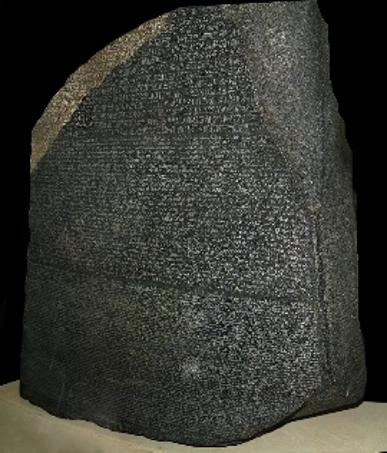
Let’s begin with stone engravings, using the famous Rosetta Stone as an example. The Rosetta Stone weighs roughly 750kg and contains the same text in three languages: Ancient Egyptian hieroglyphs on top, Egyptian Demotic script in the middle, and Ancient Greek on the bottom. To estimate the data density, I focused on the Greek portion of the stone, which accounts for roughly 1/3 of the stone’s total weight (about 250kg).
No source I could find provided a reliable count of the surviving Greek characters, so I calculated it twice independently. First, I compared a 19th-century publication’s line-by-line count with a high-resolution photo of the stone, which puts the original, undamaged text at about ~7,290 characters. Adjusting that figure for the approximately 20 percent of the stone that’s damaged or missing gives an estimated ~5,832 surviving characters. Second, I ran an AI optical character count directly off the damaged stone, which returned ~5,800. The two methods are close, so I use ~5,800 characters going forward.
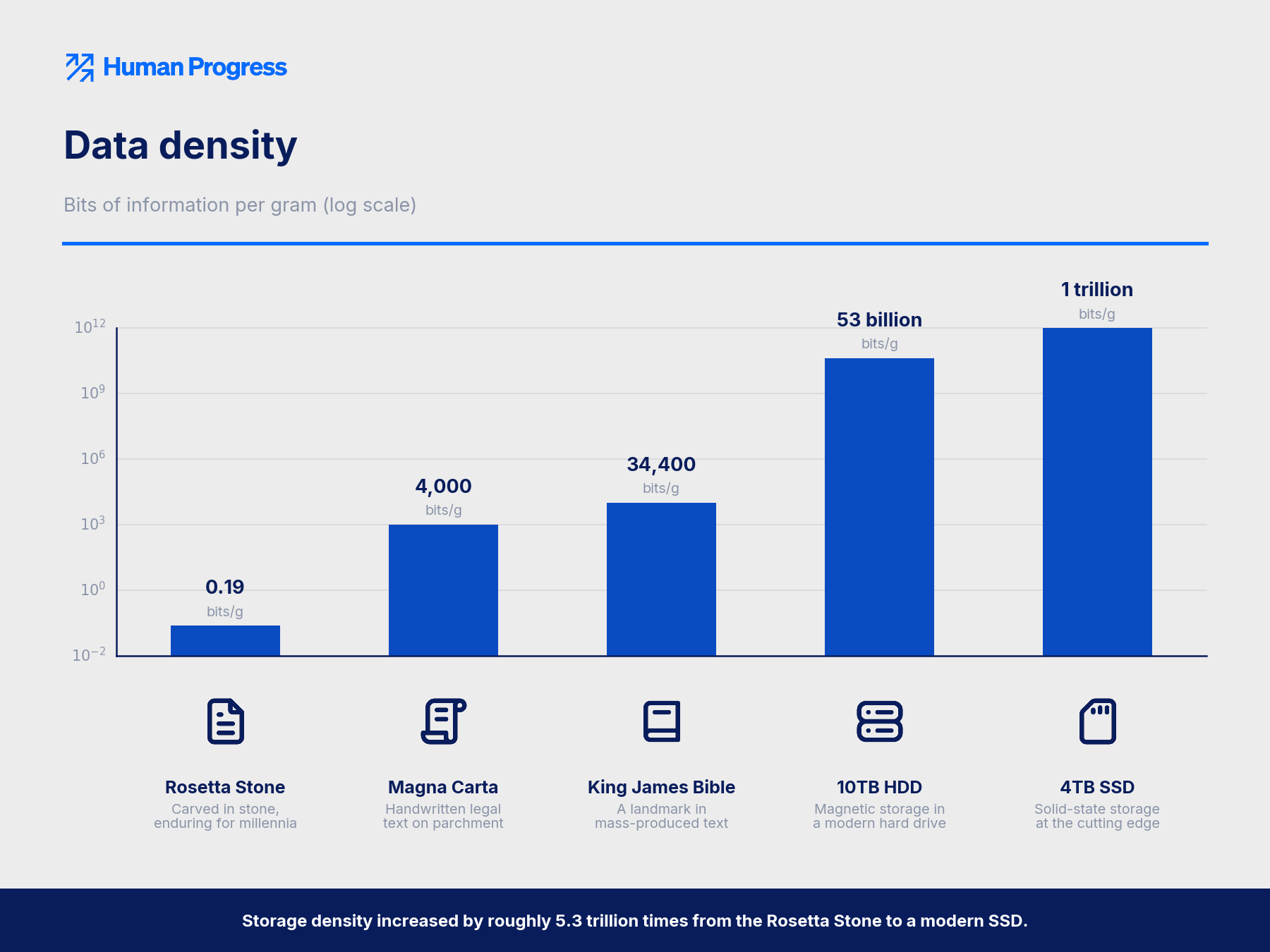
Since a single character of text equates to about 8 bits of information, the surviving 5,800 characters store 46,400 bits of data. Divided by the 250kg weight of the Greek portion, we arrive at a data density for the Rosetta Stone of ~0.19 bits/g.
With the discovery of agriculture and the rise of agrarian civilizations, the demands for knowledge storage and transmission media grew. The human population expanded, and a small but notable fraction began to congregate in small towns. As social and economic complexity grew, so did administration, trade, tax, and legal systems. Humans needed an easy way to perform and store the outputs of mathematical calculations, record taxes, and codify rules and regulations for personal and business conduct. Agrarian civilization, in short, demanded a storage medium with higher information density and faster read/write speeds (throughput). Enter papyrus, parchment, and paper.
Early forms of “paper” included papyrus and animal-skin materials like parchment and vellum. Papyrus was made from the papyrus plant, which grew in the Nile Delta in ancient Egypt. To make papyrus, strips of the plant were cut, laid into overlapping layers, and then pressed and dried into sheets. Papyrus was first used for writing as early as 2,500 B.C. and was one of the primary writing materials for thousands of years. Compared with stone, papyrus was far more data-dense; we could fit more characters on a given surface area, the substrate was lighter, and it could be folded or rolled into a scroll.
Parchment, made from cleaned and stretched animal skin, was developed long after papyrus and, thanks to its superior durability, quickly became the medium of choice for important documents. The Magna Carta, made from parchment, contains about 3,500 words or ~25,000 characters, which equates to about 200,000 bits of information. Medieval parchment weighs about 100–180 g/m², meaning the Magna Carta weighs roughly 50 grams. Using our formula, the Magna Carta’s data density comes out to around 4,000 bits/g.
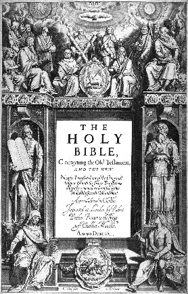
Even the Magna Carta pales in comparison to modern paper with printed text. “Paper”, the flexible plant-fiber sheets we know of today, was invented in China as far back as the 2nd century B.C.. It took centuries for it to spread outside China. Paper could be made thinner and lighter than parchment or papyrus, and the printing press made it possible to fit more words on a sheet. The King James Bible, for instance, contains around 789,000 words. That’s roughly 4.3 million characters, or 34,400,000 bits of data. A standard hardcover Bible weighs about 1 kg. Even if we conservatively include the weight of the binding, the information density comes to ~34,400 bits/g, about 8.6 times the density of the Magna Carta.
Our eyesight is limited, and text can only be so small before we can no longer resolve it. The next revolution in data storage came in the form of more exotic “machine-readable” media. Examples include magnetic storage such as hard drives and magnetic tape. Here, data is encoded on magnetized material directly as bits of information – ones and zeros – by carefully controlling the polarity of magnetic domains. This technology was a wondrous breakthrough, and it’s still improving. Today, for a few hundred dollars, you can purchase a hard drive that can store tens of terabytes of data! A commercially available 10TB HDD that weighs ~1500 g can store ~80 trillion bits of data, a data density of ~53 billion bits/g, 1.54 million times higher than the King James Bible.
Yet today, hard disk drives already feel antiquated. Instead, most phones, desktops, tablets, and external drives use solid-state storage (SSDs). It’s easy to see why SSDs have become so dominant in recent years; they are ideal for mobile devices. They have no moving parts, are more durable, use less energy, and still have higher data density. Solid-state media store data by trapping electrons in a grid of floating-gate transistors to represent bits of information. A commercially available 4TB (~32 trillion bits) SSD weighs 32 grams; a data density of 1 trillion bits/g, about 19 times higher than a comparable hard drive, or about 5.3 trillion times the data density of the Rosetta Stone!
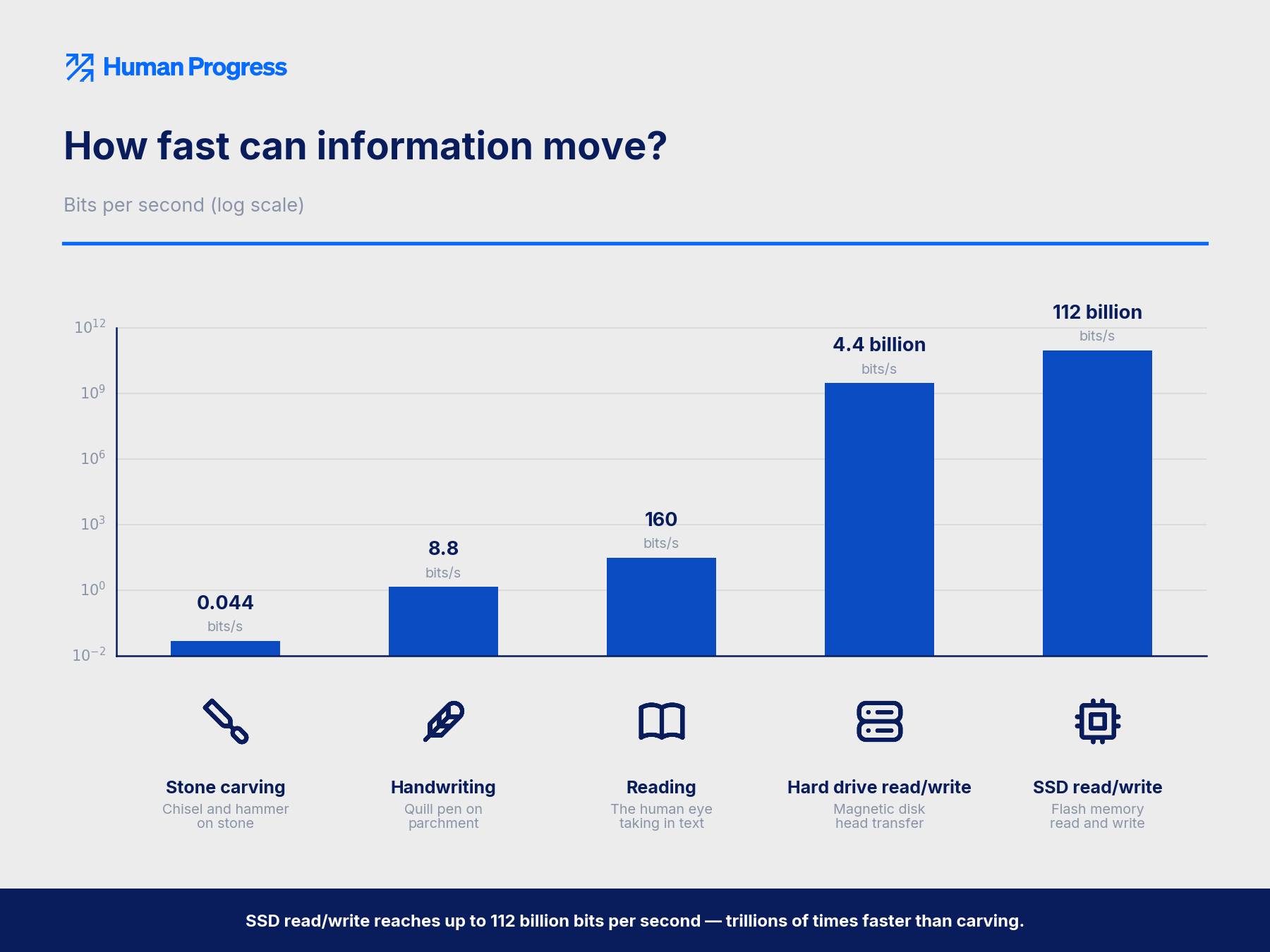
Commensurate with improvements in data density came higher read/write speeds, or “throughput.” People read about 4 words a second and with an average word length of around 5 characters; that’s about 160 bits per second. A professional stone carver might be able to write up to 20 letters an hour, or about 0.044 bits per second. Paper and paper-like media dramatically increased writing speed. A human writes about 1.1 characters per second, or roughly 8.8 bits per second – 200 times faster than carving into stone, though still slower than reading. Printing machines, of course, could print text far faster than any human could write by hand.
But none of this compares to magnetic storage, such as modern hard drives, where read/write speeds (which are similar) are currently about 4.4 billion bits per second. SSDs are faster still, reaching read/write speeds up to 112 billion bits per second. That’s about 700 million times faster than reading, and nearly 13 billion times faster than writing by hand, roughly 2.5 trillion times faster than carving into stone!
In roughly five thousand years, we’ve pushed the density of our storage media up by a factor of trillions, and the leaps keep coming faster. It took five millennia to get from stone to the printed page, representing a 180,000-fold gain in data density. In the seventy years since the invention of the hard drive, and with SSDs, humanity has multiplied that density by another 29 million times. For perspective, the text of the King James Bible carved in stone would weigh around 185 tons, nearly as much as a Boeing 747 (without fuel). On an SSD, it weighs less than a grain of sand.