01 / 05
When “Innovator” Was an Insult Rather Than a Compliment

Blog Post | Innovation

When “Innovator” Was an Insult Rather Than a Compliment

A study of 23,000 books suggests that declining resistance to new ideas helped turn ingenuity into prosperity.

Summary: For centuries, “innovator” was a slur rather than a compliment. A new analysis of more than 23,000 books suggests that Western culture gradually became more receptive to new ideas, helping turn ingenuity into sustained prosperity. Countries where resistance to innovation declined earlier or further usually produced more notable scientists and inventors. Societies that learned to welcome new ideas grew richer, and living standards rose substantially, especially for the poor.


In 1548, the government of England’s 10-year-old Edward VI issued a proclamation against those who “doeth innovate.” Offenders would “suffer imprisonment, and other grievous punishments.” The target was unauthorized change to church ceremonies, but for more than two centuries, the word “innovator” remained an accusation. My research suggests that the gradual decline of this hostility to novelty helped the West turn new ideas into sustained economic progress.

An innovation is a new idea put to use: a better plow, a new crop rotation, a vaccine. Such ideas matter because, unlike a loaf of bread, they can be used by many people at once without being used up. A farmer who gives a neighbor a loaf no longer has it, but if he teaches the neighbor a better way of growing wheat, both can use the knowledge. Each farmer still needs his own land, seed, and labor, yet the method need only be discovered once; after that, others can adopt it, and later generations can improve it. Resisting the new method can deny its benefits to people far beyond the farm where it began.

But a useful invention can put someone out of work. The Roman historian Suetonius tells how an engineer offered Emperor Vespasian a cheap way to haul columns to the Capitol. The emperor paid him well but declined the device, saying he had to feed his poor. Seventeen centuries later, English textile workers known as Luddites smashed the machines they blamed for cutting their wages, and their name became a byword for technophobia. Today, leading mathematicians warn about AI’s effects on their profession. While their concerns about how mathematicians are trained and how the field builds understanding are serious, no profession enjoys contemplating its own replacement. Resistance cannot be dismissed as ignorance when the losses are immediate and personal, while many of the gains go to strangers or future generations.

How a society responds to innovation depends partly on its culture, the beliefs and values people learn from one another and pass between generations. An unfamiliar method can put a farmer’s crop at risk and, in a culture suspicious of novelty, his standing with his neighbors. Where obedience is prized, a scholar’s challenge to established teaching may be treated as insolence before anyone considers the evidence. When challenging accepted views becomes less costly, the same effort can yield more discoveries, and because each discovery becomes material for the next, the gains can compound over centuries.

To trace how attitudes toward innovation changed over time, I looked at what earlier generations praised and condemned in more than 23,000 books in the Western literary tradition, available in English or English translation through Project Gutenberg. They preserve the views of a literate minority, but one with an outsized role in teaching, government, and innovation.

First, I adapted a framework the Dutch psychologist Geert Hofstede created to compare national cultures. Using AI, I scored each book on cultural values from the framework, focusing on the four most relevant to innovation: deference to authority, discomfort with uncertainty, individualism, and what I call patience, which covers saving, planning, and adapting inherited practices to changing circumstances. The AI read passages of several thousand words from each book and judged whether each passage endorsed, rejected, or took no clear side on each cultural value. Each book’s score reflects the share of passages supporting a value minus the share opposing it. Because the AI judges what each passage argues, rather than tallying how often it uses words linked to a value, the method distinguishes what a book endorses from what it merely depicts.

Fourteen scholars of literature and classics at the University of St Andrews compared pairs of books chosen for strong contrasts, judging which book in each pair leaned further toward a given value, without seeing the AI’s scores. Leaving aside cases where a scholar did not know both books or judged them about equal, they agreed with the AI 93 percent of the time. If you know the books, you can see whether you agree with the AI.

I then combined the four cultural values into a resistance index that rises with deference to authority and discomfort with uncertainty and falls with individualism and patience. Earlier books remain in the index as new ones appear, but gradually receive less weight. The index shows that resistance to innovation fell by about half between 1000 and 1920. I repeated the exercise on roughly 5,000 books from four collections outside Project Gutenberg and again found declining resistance between 1500 and 1890.

What might explain the decline? The economic historian Deirdre McCloskey argues that printing, religious reform, and political upheaval gave ordinary people a greater voice, so that commerce and innovation came to be admired rather than scorned. The Nobel laureate Joel Mokyr points to a related change among Europe’s educated elite, who began to challenge inherited authority and to share what they found. The motto of the Royal Society, founded in 1660, translates as “take nobody’s word for it.”

The books broadly support this timeline but suggest the change began earlier. The index fell sharply between about 1130 and 1230, centuries before the printing press or the Royal Society, though the early evidence is thin and that fall was partly reversed later. Most of the lasting decline came after 1500, with deference to authority retreating fastest in the 16th and early 17th centuries.

Did invention rise as resistance fell? To find out, I grouped books by country of origin and built a separate index for 13 countries. Between 1500 and 1900, countries whose index fell earlier or further produced more notable scientists and inventors, even after allowing for the fact that larger populations have more potential innovators. The pattern fits the cultural story, but it is an association rather than proof of causation, since prosperity and institutions can also change attitudes toward new ideas.

How much might these changing attitudes toward innovation matter for living standards? Suppose population had grown exactly as it did between 1000 and 1920, but the resistance index had stayed at its year-1000 level. My growth model, which depends on assumptions about how strongly culture affects invention, suggests that by 1920 productivity would have been about 44 percent lower, leaving the same workers and equipment to produce little more than half as much. The model attributes about two-thirds of the speed-up in productivity growth between 1500 and 1700 to falling resistance to new ideas.

Vespasian turned down the engineer’s device to protect the poor. Yet through cheaper food, better medicines, and less exhausting work, the poor have been the great beneficiaries of innovation. Nobody has to improve a crop to eat a cheaper loaf or understand a vaccine to be protected by it. We all gain from a culture in which “innovator” is no longer an insult.
Blog Post | Innovation

The Costs of Holding Back AI | Podcast Highlights

Kristian Stout explains what's holding back AI innovation and why slowing its development could be costly.

Listen to the podcast or read the full transcript here.

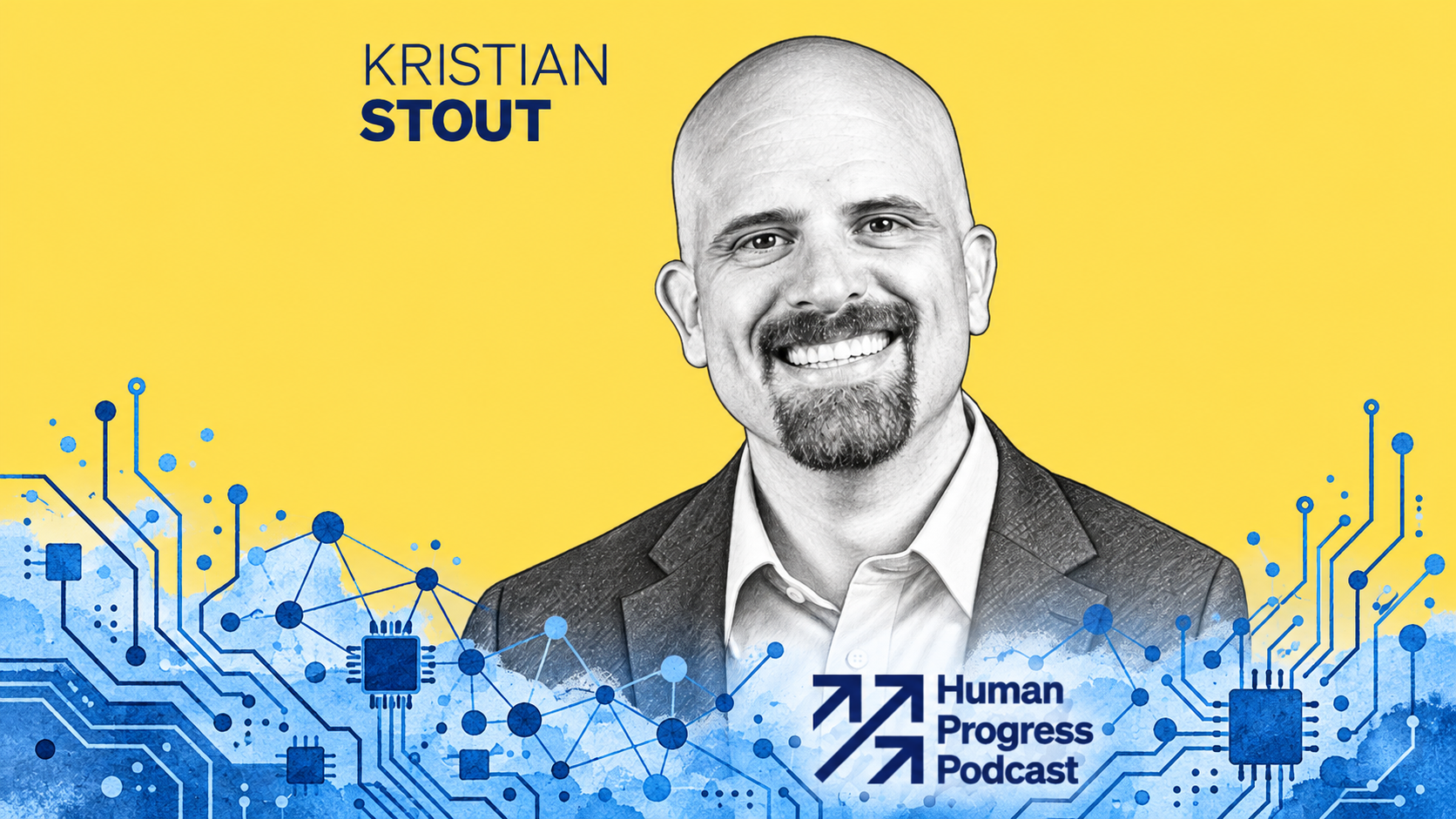
Joining me on the Human Progress podcast today is Kristian Stout, Director of Innovation Policy at the International Center for Law and Economics. His work addresses competition, telecommunications, and artificial intelligence policy—very big topics these days.

Let’s start with a big-picture overview. Can you sketch out the history of AI and data centers for us before we dive into the current debates?

AI feels like something very new. When the computer starts talking to you, that’s unusual. But it’s really part of a longstanding trend in computer science. As far back as the 1940s, there were researchers trying to understand how you could model, for instance, human neurons inside of computers.

So, the whole project of computing is trying to introduce more intelligence to computing, and what we have today is the result of compounding developments over many decades. In the 1970s, you started getting some more sophisticated algorithms being deployed. The ones that consumers are most familiar with are things like autocomplete and search engines. Those are all forms of artificial intelligence.

Then, around 12 years ago, we started really focusing on machine learning. For a long time, the news was about “big data.” All of the investment money was going to big data and different machine learning techniques. That was artificial intelligence. Nobody was writing news articles about it as artificial intelligence. There were some anxieties surrounding it about, for instance, what that augmentation meant for labor and the future of work. But we didn’t frame it in terms of Skynet taking over. Today, because you can interact with the computers in a way that feels very human-like, it’s become popular to think about AI that way.

It’s a similar story with the data centers. Data centers have been with us since the 1950s, albeit at a very small scale. IBM’s mainframe model, where researchers would share information over long distances with phone lines, was an early form of data center. The data centers that we think of now as “the cloud” really started being built around 2005, when the scale of the internet really was taking off, and we needed a lot more computing support. So what we’re dealing with, when it comes to both AI and data centers right now, is a scale difference, not a kind difference.

That scale difference has brought with it some interesting political debates. The public’s view of data centers has seemingly soured even as people are using AI more and more. And we’ve been seeing more and more political moves to ban or restrict the construction of data centers.

What is your take on this development?

I think all of your viewers are going to be familiar with the idea that people’s true feelings do not always match what they say in public opinion polls. You will get a different result if you ask something like, “What do you think about data centers?” versus “How do you feel about an industrial project in your area that might bring jobs and might have these costs and benefits?”

It’s the same thing with AI. The CEO of Anthropic, Dario Amodei, goes out and says something about how AI could kill us in 10 years. So when you poll people, “What do you think about AI?” well, “I would like it not to kill me in 10 years.” But if you then had a poll asking something like, “How would you feel about a computer technology that enables you to do all of your week’s work in two days?” you might get a more positive result.

Part of it is a categorical thinking problem. As human beings, we look at the environment and create groups of things that allow us to make very fast decisions. That decision-making process is often not complete enough for us to actually answer complicated modern questions. I think most people, if you actually drill down into the questions with them, have a more nuanced opinion about these technologies.

I think that there are understandable concerns about what AI will mean for the future of work. Personally, from the research I look at and from interacting with these technologies, I don’t think AI is going to cause mass layoffs. I think employment will go up. Workers will be expected to be even more productive, and we will invent new forms of consumption that we need to satisfy.

However, it is very hard to predict what that future economy will look like. AI is what researchers call a general-purpose technology. It’s like electricity. It’s a platform that people are going to use to develop new ways of doing things. So we won’t know exactly what AI will be used for until the market discovers it. That creates some understandable anxiety. But one of the nice things about this particular technological revolution is that it helps us have cognitive adjuncts. AI itself can help us figure out how to onboard more people more quickly and more seamlessly into this new intelligence revolution in a way that previous technological revolutions couldn’t.

You said that you believe with AI, employment will go up. Can you elaborate on that?

If you take human nature seriously, we have an unlimited amount of desire. For hundreds of thousands of years, humans have been looking at their environment and thinking, “I can do a little bit better. I would like to eat more; I would like to have more mating opportunities. I would like to have more of everything.”

There are tons of spiritual traditions around the world that try to help us learn how to tame those desires. So far, they have not been very successful. Instead, when a new opportunity presents itself, our desire fills the volume you provide to it. So if there’s a technology that lets you finish your workweek in a day, I don’t think people are going to stop working on Monday.

Another thing to keep in mind is that we’re status-driven creatures. The reason why we value money or other resources is not just the resources themselves, but also the status that those resources provide us relative to other people. That means there’s never enough. If someone else is perceived as having more status, we’re always going to want to increase our own status.

Modern wealthy people in the United States compete on their investment in their children, right? When I was a kid in the 1980s and 1990s, no one went to anybody’s practices. Now, sports and extracurriculars are a kind of social event where people vie to be the most involved. AI is going to lead to something similar. It’s going to enhance our productivity, but the things that we value are going to expand in turn, and we’re going to fill that time with more value-seeking opportunities. And that might not look like sitting at a desk for 40 hours a week, but it will still exist, and there will still be employment and resource opportunities within those new activities.

Some of the anxiety around AI is inspiring policies that could slow down the industry. There’s a big difference, for example, between Europe’s technology industry and the relatively less regulated technology industry in the US. Could you talk a bit about how the policy environment affects the ability of the AI industry to continue to innovate?

The European area, before it was the European Union, was one of the leaders in pharmaceutical production throughout the 20th century. They’re still developing these drugs and they’re still innovative, but over the last 30 years, because of policy choices they’ve made, America has just blown past them because we have a relatively pro-innovation regulatory environment when it comes to pharmaceuticals.

There’s definitely a similar risk with AI regulation. First off, China is becoming a very innovative place, and I don’t believe they’re going to slow down AI innovation. They’re standing up their own chip producers to get around our export controls, and some of the early returns on their chips look very promising. I myself run a lot of the open-source models that come out of China. They’re fantastic. They do a great job.

In Europe, they’re largely a consumer of our technology products. They don’t need to be. There are brilliant people in Europe. They’re constrained by the regulatory environment. The cost to Europe is that they’re six months behind us, say. The United States gets a product first, and then a team of lawyers has to figure out how to deploy it in Europe. And then Europeans eventually will get some form of it.

That’s a serious cost. I read a lot of science fiction as a kid, and I really loved cyberpunk novels. One of the concepts in those novels was that everyone had personalized AI defensive measures. Your AI is essentially supposed to go out and be your agent, to go out and do the things you need it to do. And part of that is defending you from the bad AIs.

The future could look something like that. You may have an AI agent whose job is to protect you and advance your interests. It might check your identity theft exposure, check your financial risk exposure, go out and make sure that the opportunities in your professional life are being maximized, and so on. If we lose the race to AI because we have bad policy, the cost could be becoming de facto citizens of Chinese AI infrastructure in the future.

I want to get your take on the recent AI Safety Accord. So this is a matter of self-regulation. Some have critiqued it because it’s non-binding. What’s your take on the AI Safety Accord and this idea of industry self-regulation?

There’s no such thing as self-regulation anymore. We do not live in a laissez-faire environment. We live in a highly regulated environment, even in the United States. And regulation is not just someone at the FTC sitting down and designing a code of conduct. The legal system itself is a regulatory apparatus. The United States has a common-law approach, where we have adjudication through different court levels. And we also have pseudo-courts within the regulatory system. That backdrop means that there are liability rules operating in the background of every firm that will potentially destroy your company if you run afoul of them.

But I guarantee you AI companies have counsel inside warning them to be careful. You could see negligence liability emerging based on the way consumers use these products, the way you’re selling them to people. There are all kinds of exposure for liability. It’s only a matter of time before you start to see more settlements and cases emerge.

So by saying we’re encouraging them to do self-regulation, we’re not saying AI companies can get away with whatever they want. We’re saying they need to take the first crack at helping us understand how to understand AI and how it fits in society. And when something goes wrong, a court or regulator is going to look at what their efforts were and whether they were good enough. If they weren’t, AI companies are going to face massive liability.

What do you see as some of the most damaging roadblocks, even in the United States’ relatively pro-innovation environment, that could potentially cost us the AI race?

Great question. There are two broad classes of problems right now. The first one is the state versus federal distinction. The second one would be the data center pushback.

Because the federal government has not been able to enact something like a federal framework for how we want to think about AI regulation, we are seeing a lot of states rushing to fill the gap. If states end up having different requirements for training a model, safety testing a model, and offering it to consumers, that would definitely put the brakes on AI development.

The received wisdom right now is that Chinese models are about six months behind American frontier models. Maybe a little less in some areas. If you were able to introduce enough regulatory friction in the United States that major labs felt like they needed to severely slow down their deployment, you could easily see China match us or even start to outpace us at the frontier level.

The other major roadblock is data center permitting.

One problem is zoning at the local level. A hyperscaler or somebody who wants to build a big data center comes into a community, and the local council is like, “What questions do I ask? What data can you give me?” The public processes that the states have in place can be opaque, and it’s not clear how to get the exact answers. At what point do the jobs that the data centers bring in materialize? How do you judge those things? Frequently, local councils don’t know how to answer these questions.

I think state governments need to create a regular process that someone who wants to build a data center has to go through to expose all of the information that the local communities need. Without that information, some residents will be like, “Why would you do this? You’re trying to do some shady backroom deal.” It’s usually not, but without that information, it’s hard to justify.

The other side of it is the permitting side. We have this long-standing problem in the telecommunications area where providers need to go in and get permissions in each locality they operate in to deploy their infrastructure. Energy suffers from a similar problem. Right now, in some areas, connecting a new data center to the grid can take up to seven years, which is why a lot of these places are starting to look at putting in their own on-site energy production.

So we have a very fragmented and inefficient way to get the energy into these data centers. We have a fragmented and inefficient way to build the necessary telecommunications networks. And then we have the legitimate problems at the local level.

What are you most optimistic about regarding AI or AI policy?

So Meta has these Ray-Ban glasses with the cameras and the AI that you can talk to, right? People get upset about them because they don’t want to have their picture taken in public, and we’re still working through the privacy issues there. But think about what this does for people who are visually impaired: they now have, on their face, something that helps them navigate the world. This person can now participate in society in a way that they couldn’t before.

It’s the same thing with AI. People of below-average intelligence do okay in life. They’re able to scrape by. Now they have a personal assistant who helps them understand the incredibly complicated modern world. So AI is obviously going to help us do even more impressive stuff at the frontier of human knowledge and capability. But it’s also going to allow more people to participate more fully in society. That can only be for the benefit of society, in my opinion.

The Human Progress Podcast | Ep. 87

Kristian Stout: The Costs of Holding Back AI

Kristian Stout explains what's holding back AI innovation and why slowing its development could be costly.

Blog Post | Innovation

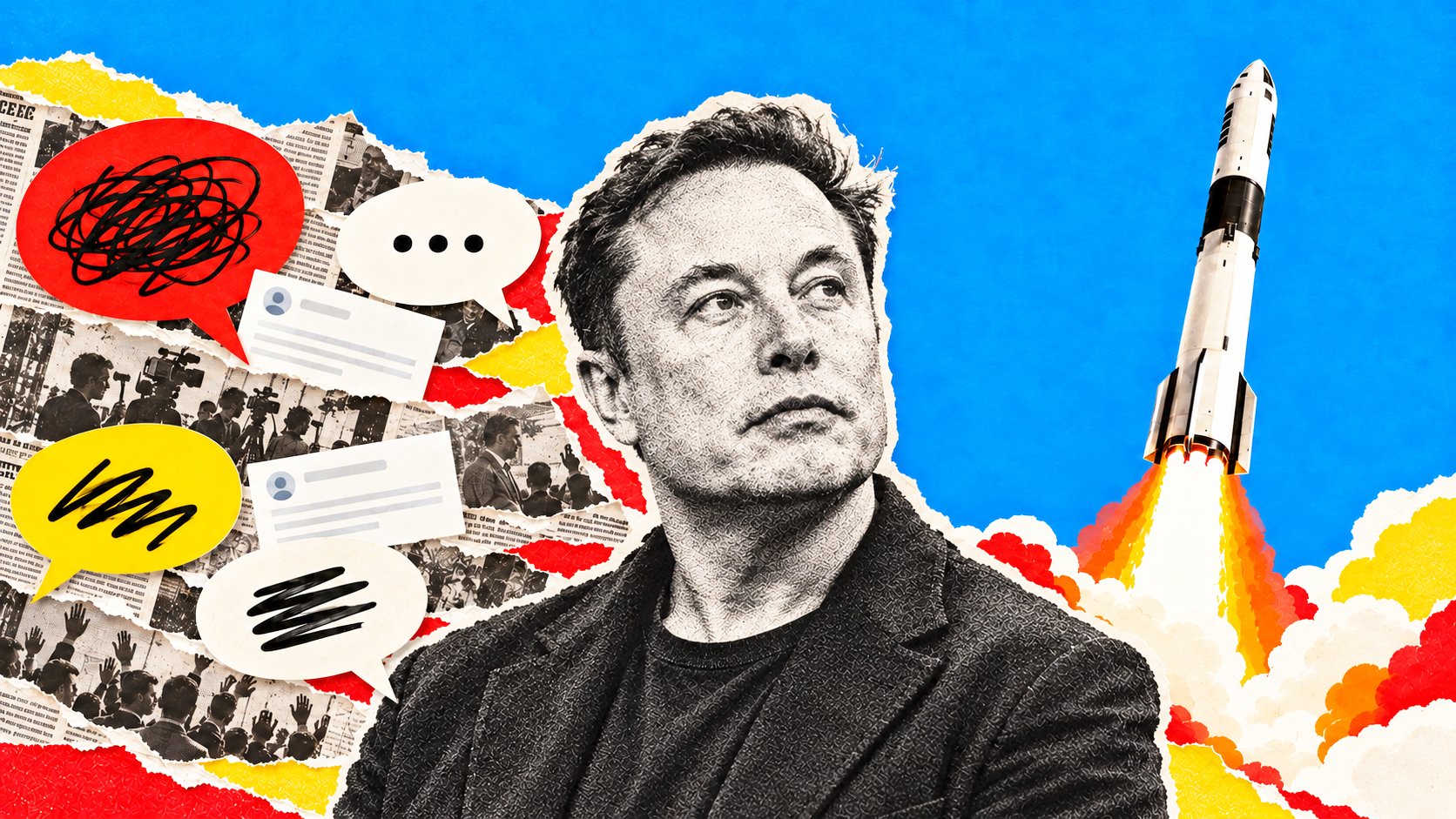
You Don’t Have to Like Elon Musk to Value What He Builds

Society benefits from extraordinary innovators, even when their personalities make them difficult to tolerate.

Summary: Technological progress often comes from unconventional people. Elon Musk’s abrasive conduct has made him a polarizing figure, but his companies have helped cut rocket launch costs, expand internet access, and make electric cars mainstream. Some traits that drive ambitious breakthroughs may also make their creators difficult to work with. Holding innovators accountable for harmful conduct need not mean dismissing their accomplishments or demanding agreeable personalities.


Last Thursday, Tesla demonstrated a prototype Roadster capable of briefly flying through the air. Elon Musk’s AI company, now part of SpaceX, recently introduced Grok Bot, autonomous agents that run on a shared persistent cloud computer and that can collaborate with one another and execute scheduled tasks in users’ apps while they are offline.

Meanwhile, SpaceX continues developing Starship, the largest rocket ever built, with the ambition of making space travel cheaper and more routine.

On Friday, Alex Gibney’s nearly four-hour documentary, Musk, opened nationwide. The film presents Musk as a deeply flawed man whose wealth and power have become dangerous. There is plenty of evidence for the first part of that judgment. But the documentary raises a larger question. How much offensiveness should society tolerate from people who push the technological frontier forward?

My answer is quite a lot.

Musk insults journalists, politicians, and critics. He promotes conspiracy theories, makes extravagant promises, and sometimes treats employees harshly. His interventions in politics have alienated former admirers, including environmentalists who once championed Tesla. His management of X has angered advertisers and free-speech advocates alike. His involvement with the Department of Government Efficiency antagonized many, and government auditors questioned its claimed savings. He can be arrogant, impulsive, vindictive, juvenile, and spectacularly rude.

But Musk’s failings should be weighed against his contributions to human progress.

Consider SpaceX. When Musk founded the company in 2002, rockets were largely disposable. SpaceX developed boosters that could land and fly again, helping reduce the cost of reaching orbit and enabling more frequent launches. Its Dragon spacecraft restored America’s ability to launch astronauts from U.S. soil after the space shuttle program was retired. Its Falcon rockets transformed the satellite-launch industry. Starship could eventually make it possible to transport much larger payloads at lower cost, opening new opportunities for scientific research, manufacturing, and exploration.

Perhaps SpaceX’s most consequential achievement for ordinary people is Starlink. By the end of 2025, the satellite internet service had more than 9 million customers across more than 155 countries and markets. In remote communities where laying fiber-optic cables is prohibitively expensive, Starlink provides access to online education, telemedicine, banking, and commerce. Rural schools in Alaska have used it to improve educational access. After Hurricane Helene devastated parts of the American Southeast in 2024, emergency responders deployed Starlink terminals to restore communications.

In Ukraine, Starlink and its military counterpart, Starshield, have been especially important. Russian attacks destroyed or disrupted much of the country’s communications infrastructure. Satellite connections helped Ukrainian soldiers coordinate operations, operate drones, and communicate with commanders. Civilians also benefited from access to the internet when conventional networks failed. 

The recent restrictions on Ukraine’s Starshield service illustrate the dangers of relying heavily on a single provider, as Musk has blamed the disruption on the White House and reporting over the weekend suggested it was Musk’s idea. Such uncertainty strengthens the case for competition and clear rules governing essential infrastructure. It also demonstrates just how valuable the underlying technology has become.

Musk’s contribution to electric vehicles has been similarly consequential. He did not invent the electric car, joining Tesla after its 2003 founding. But he helped transform electric vehicles from a niche product into a serious competitor to gasoline-powered automobiles. Before Tesla, EVs were often viewed as slow or purely utilitarian. By prioritizing high performance, cutting-edge technology, and sleek design, Musk helped make electric cars highly desirable and genuinely “cool.” Established automakers responded with massive investments of their own. Because of this massive shift in consumer demand and industry standards, it is fair to argue that Musk has done more than any other individual to accelerate the global transition away from the internal combustion engine. Tesla also helped advance battery technology and large-scale electricity storage.

Neuralink, Musk’s neurotechnology company, is developing implantable brain-computer interfaces designed to translate neural activity into digital commands. By using thousands of microscopic electrodes surgically implanted into the brain, the device has recently enabled individuals with severe paralysis to control computers, move cursors, and play video games using only their thoughts. While the technology remains experimental, its potential medical benefits, such as restoring communication, mobility, and independence for patients with severe neurological conditions, are considerable.

Not every Musk venture will succeed. Grok Bot remains an emerging technology. The flying Roadster is an engineering demonstration rather than a practical transportation solution. Starship faces substantial technical challenges. Musk’s ambitious timelines have often proved unreliable. Yet technological progress requires people willing to attempt things that others consider impractical.

Musk did not personally invent every technology associated with his companies. But he helped assemble the engineers, capital, factories, and organizations needed to make difficult technologies work at scale.

History provides useful parallels.

Thomas Edison was combative, fiercely competitive, and sometimes ruthless. During the battle over competing electrical systems, he backed animal electrocutions to demonstrate the supposed dangers of alternating current. Yet his work on practical electric lighting, sound recording, and industrial research helped transform modern life.

Henry Ford was a notorious antisemite who promoted conspiracy theories through his publications. Yet his application of mass-production techniques brought automobile ownership within reach of ordinary Americans. The price of a Model T fell from $850 in 1908 to $260 by 1925. Ford helped democratize personal mobility. Furthermore, his perfection of the moving assembly line revolutionized global manufacturing. By establishing a blueprint for unprecedented efficiency, Ford’s methods were quickly adopted beyond the automotive sector, driving massive productivity gains and transforming industrial production worldwide. Perhaps paradoxically, the assembly line helped the Allies defeat Hitler by turning America into the arsenal of democracy.

Steve Jobs was famously demanding and could be cruel to colleagues. His perfectionism made him difficult to work with. Yet he helped bring personal computers, smartphones, and other transformative technologies to mass markets.

None of these examples proves that unpleasantness causes innovation. Many disagreeable people accomplish nothing, and many important innovators are personally decent. But the historical pattern raises an uncomfortable possibility. Some characteristics that make innovators successful also make them difficult to get along with.

Psychological research lends support to that possibility. In a 1998 meta-analysis, psychologist Gregory Feist found that highly creative people tended to be more open to new experiences, less conventional, more independent, more self-confident, and more ambitious than their peers. They also showed higher levels of hostility and impulsivity. The research concerned scientific and artistic creativity rather than entrepreneurs specifically, but it suggests that creativity and social agreeableness do not always travel together.

Here lies the real trade-off.

We would prefer brilliant innovators who are modest, considerate, politically inoffensive, and easy to supervise. Some undoubtedly fit that description. But if the psychological traits associated with exceptional creativity sometimes accompany arrogance, impulsiveness, and hostility to convention, society cannot assume that it can select for the former while eliminating the latter.

A society that places a high premium on conformity, deference, and social approval may discourage some of the very people most willing to challenge established technologies and institutions. The price could be slower innovation, fewer experiments, and delayed benefits for everyone else.

That does not mean suspending ordinary standards of behavior. Musk should be held accountable for violations of the law, misleading claims, and genuine harms caused by his decisions. His companies should face competition and the same legal obligations as their rivals. 

But there is a difference between enforcing standards of conduct and expecting that innovators possess socially acceptable personalities. We should be especially reluctant to turn personal dislike or political disagreement into a reason to dismiss their achievements or obstruct legitimate enterprise.

That matters because innovation creates benefits that extend far beyond the innovator. Cheaper access to space helps researchers and entrepreneurs who will never meet Musk. Better batteries help consumers who will never own a Tesla. Satellite communications serve people whose lives may depend on reliable connections. Competitors imitate successful technologies and improve upon them. The resulting gains can continue accumulating for generations.

Of course, other entrepreneurs might eventually have developed many of these technologies. The question is how quickly. Bringing useful innovations to market years or decades earlier creates substantial value. Those gains should count when we evaluate the people responsible.

Gibney is entitled to criticize Musk’s character, conduct, and exercise of power. But the documentary’s emphasis on his failings risks obscuring the extraordinary advances he has helped bring about.

I would prefer a Musk who was more considerate, more restrained, and less inclined to insult everyone who disagrees with him. But I cannot assume that the same man, stripped of his unconventional temperament, would have pursued the same extraordinarily difficult ambitions with the same determination.

The real choice is therefore not between praising Musk and condemning him. We can do both. It is whether society remains willing to accommodate difficult, unconventional people whose talents can produce enormous benefits for everyone else.

This article first appeared in The Dispatch on 10/20/2026.

Blog Post | Economic Growth

How to Escape the Productivity Slump

Removing policy barriers can unleash a new era of productivity and abundance.

Summary: For the past half-century, much of the developed world has experienced a puzzling slowdown in productivity growth—the rate at which workers and businesses become more efficient over time. While digital technologies have advanced at a remarkable pace, innovation in the physical world has slowed considerably. The problem is not a lack of scientific breakthroughs or a shortage of good ideas. Rather, it is a failure to translate discoveries into products, infrastructure, and services that improve everyday life. This slowdown is largely the result of policy choices. By reforming outdated permitting systems, using innovation incentives such as R&D prizes and Advance Market Commitments, and reducing barriers created by protected local monopolies, we can accelerate the spread of new technologies and usher in a new era of prosperity.


In a previous exploration of the housing affordability crisis, I observed a sobering reality: artificial scarcity is often a policy choice. We have placed arbitrary limits—mostly through local governments—on our ability to build homes, driving up costs and restricting opportunity. But this pattern of self-imposed constraint does not stop at the edges of our neighborhoods. It extends into the institutions and policies that shape economic growth. It is one of the primary reasons why, despite living in an age of extraordinary digital innovation, we remain stuck in a decades-long productivity slump.

Economists often measure technological progress using a concept called Total Factor Productivity (TFP). In simple terms, TFP measures how efficiently an economy turns labor, land, and capital into goods and services. When TFP rises, society discovers better ways to produce more with the same resources.

From the 1920s through the early 1970s, TFP in the United States and much of the developed world grew at more than 2 percent per year. This was the era that gave us commercial aviation, widespread electrification, antibiotics, and the Apollo program. The physical world was transformed in a single generation.

Since the early 1970s, however, productivity growth has slowed dramatically to less than 1 percent in most years. As investor Peter Thiel famously quipped, “We wanted flying cars; instead, we got 140 characters.” Digital technologies have advanced rapidly, while progress in energy, transportation, infrastructure, and advanced manufacturing has been far slower. We can send vast amounts of information across the globe in milliseconds, yet we often struggle to build major infrastructure projects on time or on budget.

A 2020 paper by Nicholas Bloom and co-authors argues that good ideas are getting harder to find – that is, more investment in research and development has become necessary for each new patentable idea. However, more recent research by Teresa Fort and co-authors (currently in working paper form) suggests that this is not the case. The Bloom et al. result may, in fact, be an artifact of focusing on manufacturing firms, which were dominant from about 1970 to 1990. Fort and her co-authors show that patenting and innovation have shifted in recent decades, becoming dominated by firms in information, management, and professional services.

Because manufacturing is a physical process, it is much more likely to be subject to, for example, environmental regulations, whereas an IT firm operates in a much less regulated sector. So, our relative stagnation may not be the result of a scientific drought after all. Universities and research laboratories continue to produce remarkable discoveries. We are not failing at invention; we are failing at diffusion, the process of turning new discoveries into widely used products and services.

The Diffusion Deficit and the Permitting Veto

Innovation does not benefit society until it escapes the laboratory and enters the marketplace. The journey from a peer-reviewed paper to a consumer-ready product is long, expensive, and uncertain. Over time, policymakers have added layer upon layer of regulatory complexity to that journey.

Physical innovation requires physical construction. New technologies need testing facilities, advanced laboratories, semiconductor fabrication plants, energy infrastructure, and transportation networks. Yet building almost anything of significance in the modern West often requires navigating years of environmental reviews, public-comment periods, and multi-agency approvals.

Laws such as the National Environmental Policy Act (NEPA) and state-level counterparts such as the California Environmental Quality Act (CEQA) were originally intended to prevent environmental harm. Over time, however, they have increasingly become tools for the delay of progress. Because these laws frequently allow opponents to challenge projects on procedural grounds, they have contributed to what political scientist Francis Fukuyama calls a “vetocracy”—a system in which many actors can block decisions but few can make them. Average NEPA environmental impact statements now take almost four years to complete, with many extending far beyond a decade. Thankfully, the median is a bit shorter, but still about 2.5 years.

Consider the recent push to reshore semiconductor manufacturing. While the government has allocated billions of dollars in subsidies to build these vital factories, the physical construction is bottlenecked by years of permitting and environmental reviews. A state-of-the-art fabrication plant (commonly called a “fab”) that takes 18 months to build in Taiwan or South Korea can take three to five years just to obtain a permit in the United States.

The result is predictable: projects take longer, cost more, and become less attractive to investors. Even when governments provide subsidies for strategic industries such as semiconductor manufacturing, years of permitting can slow implementation. Time is money, and prolonged regulatory uncertainty discourages investment in capital-intensive industries.

The solution is straightforward, even if politically difficult. Critical infrastructure, advanced manufacturing facilities, and research laboratories should face streamlined approval processes. If projects satisfy clearly defined environmental and safety standards, they should be approved in months rather than years.

Pull Mechanisms: R&D Prizes and Commercialization

Reducing regulatory barriers is only part of the solution. We must also rethink how innovation is encouraged and financed.

In addition to corporate financing, most governments try to support innovation through “push” funding. Researchers receive grants to conduct experiments, purchase equipment, and explore new ideas. This model, some economists argue, can be effective for basic science, especially when commercial applications may be years away.

Commercialization presents a different challenge. Many promising technologies fall into what innovators call the “Valley of Death” – the difficult period between a successful laboratory demonstration and a commercially viable product. At this stage, development costs rise sharply while uncertainty remains high.

That is where “pull” mechanisms become valuable. Instead of paying for research inputs, policymakers reward successful outputs. An Advance Market Commitment (AMC), for example, guarantees that a buyer will purchase a product if it is successfully developed. Rather than funding every possible approach, the sponsor commits to paying for results.

Economist Michael Kremer helped pioneer this approach through vaccine development programs. More recently, Operation Warp Speed demonstrated its effectiveness. The government did more than fund vaccine research; it guaranteed large future purchases for successful vaccines. By reducing market risk, policymakers encouraged firms to accelerate development and manufacturing simultaneously. The result was one of the fastest vaccine-development efforts in history.

Consider other approaches. Throughout history, prizes have also stimulated innovation. The Longitude Prize helped solve a critical navigation problem for maritime trade, while the Ansari X Prize helped launch the private spaceflight industry. Pull mechanisms align private incentives with public goals by rewarding success rather than political connections or grant-writing skill.

Breaking Local Monopolies and Regulatory Capture

When people hear the word “monopoly,” they often think of large technology companies. Yet some of the most significant barriers to innovation exist at the local level.

The electric utility sector provides a clear example of how regulatory design shapes technological adoption. Because most utilities operate as regulated monopolies with government-guaranteed rates of return on capital investments, their business model relies on continuous, large-scale infrastructure growth. 

Put simply, utilities make more money the bigger power plants and power lines they build, so they usually prefer huge projects over things like rooftop solar panels that let people generate their own power without the utility having to build as much infrastructure.

Decentralized energy technologies—such as local battery storage, micro-grids, and advanced management software—directly threaten this model by optimizing the existing grid and reducing the need for new capital projects. As a result, studies from the MIT Energy Initiative and industry financial analysts indicate that utilities frequently leverage legacy regulatory processes to delay or block these decentralized innovations from integrating into the wider network.

Similar dynamics exist elsewhere. State dealership franchise laws frequently restrict direct-to-consumer automobile sales, making it more difficult for new manufacturers to enter the market. Occupational licensing requirements now affect roughly one-fifth of American workers and can create barriers to entry that limit competition and labor mobility.

Innovation depends on what economist Joseph Schumpeter called “creative destruction” – the replacement of older, less efficient business models with better ones. When established interests use regulation to shield themselves from competition, they slow technological adoption and reduce future productivity growth. Encouraging competition and reducing regulatory barriers at the state and local level would help accelerate the diffusion of new ideas throughout the economy.

Choosing Abundance

The productivity slowdown is not an immutable law of nature. It is, at least in part, the consequence of policy choices. Human ingenuity remains as powerful as ever. We have more scientists, more capital, and better tools than any previous generation. The challenge is not generating ideas; it is allowing those ideas to spread.

By streamlining permitting processes, expanding the use of R&D prizes and Advance Market Commitments, and reducing barriers created by protected local monopolies, we can accelerate innovation in the physical world.

An additional one or two percentage points of annual productivity growth may sound insignificant. Yet when compounded over decades, the effects are transformative. Higher productivity means higher incomes, better health outcomes, more abundant energy, and greater opportunities for future generations. The ideas already exist. The question is whether we will allow them to flourish.