
Summary: Overpopulation fears date back to ancient Greece, when the Trojan War was portrayed as Zeus’s solution to excessive population. Though understandable in a preindustrial world, such anxieties became outdated as technology expanded humanity’s productive capacity. Yet Malthusian ideas still shape policies and environmental rhetoric despite improving technology and falling fertility rates.
The Odyssey is giving today’s moviegoing audiences a glimpse into the myths of the distant past, but one of the most surprising ideas in the Homeric tradition feels decidedly modern: overpopulation.
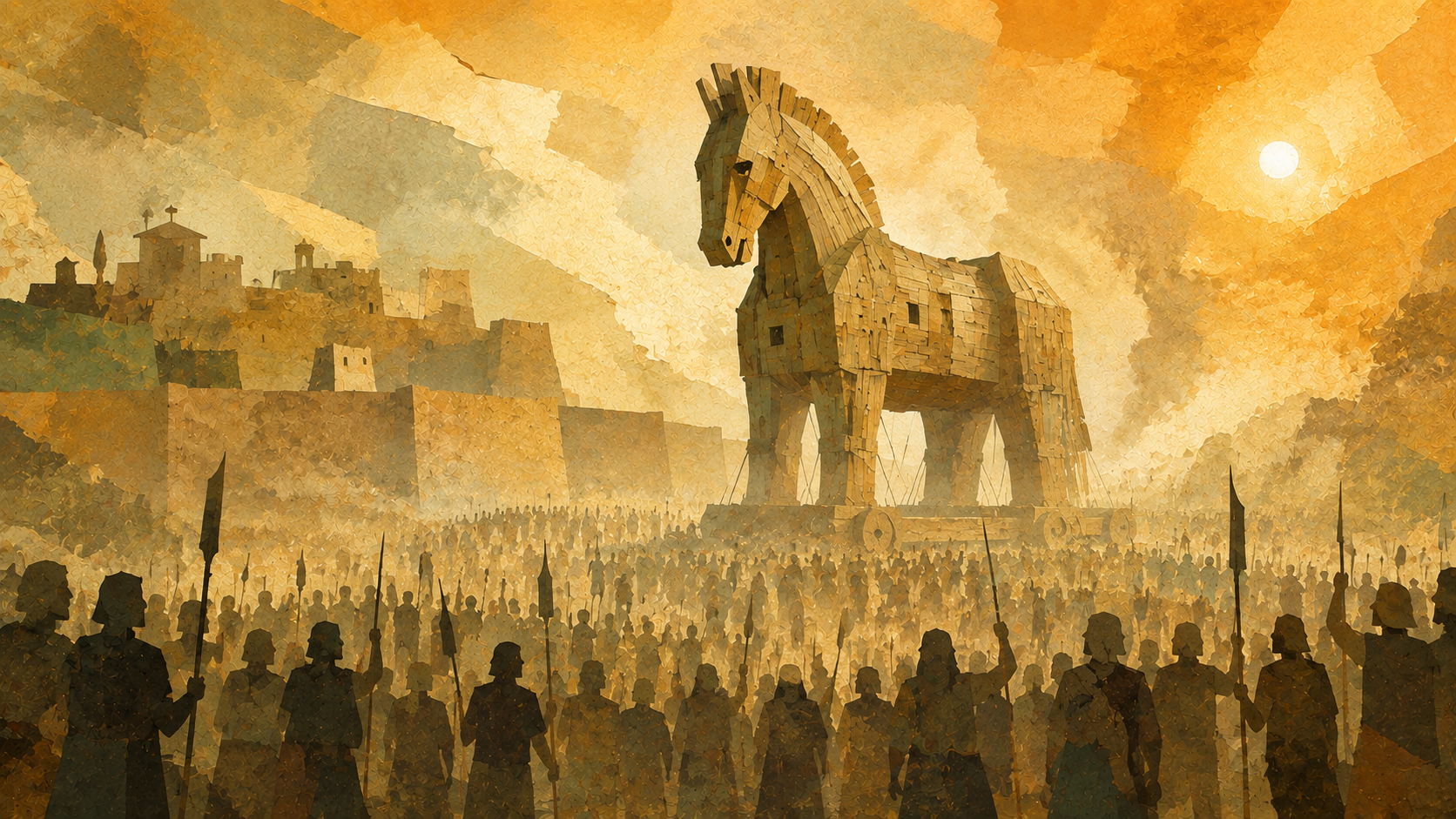
In Greek mythology, the Trojan War was a deadly conflict that Zeus orchestrated to fight human overpopulation. According to a surviving fragment of The Cypria (a prequel to Homer’s Iliad and Odyssey):
There was a time when the countless tribes of men, though wide-dispersed, oppressed the surface of the deep-bosomed earth, and Zeus saw it and had pity and in his wise heart resolved to relieve the all-nurturing earth of men by causing the great struggle of the Trojan War, that the load of death might empty the world. And so the heroes were slain in Troy, and the plan of Zeus came to pass.
Many today might sympathize with aspects of that rationale. A study published recently in thejournal Sustainable Development recommends that humanity aim to more than halve the global population, to about 4 billion, in order to improve long-term sustainability. A 2026 poll by YouGov, meanwhile, suggests that over 60 percent of Americans see overpopulation as a big problem globally and are concerned about straining the world’s resources. Such anxieties about overpopulation are far older than most realize.
The Cypria was probably composed in the late seventh century B.C. During that era, the population of the Earth is estimated to have been only between 50 million and 100 million: less than a third of the current U.S. population, about five to ten times less than the current Mediterranean population, and around 100 times less than the current global population. That this was imagined to be exhausting the world’s capacity to sustain life, the threshold for what constituted “overpopulation” was extraordinarily low by modern standards.
That perception reflected the technological realities of the ancient world. Agricultural yields were low, and transportation was slow and dangerous — traversing the “wine-dark sea,” as Homer calls the Mediterranean, was dreaded for good reason — while crop failures and hunger were common and feared. As Odysseus’s second-in-command, Eurylochus, opines, “All forms of death are hateful to wretched mortals, but to die of hunger, and so meet one’s doom, is the most pitiful.”
For most of history, additional people meant additional mouths to feed, not additional productive capacity. In this respect, the world changed remarkably little between the age of Homer and the dawn of the Industrial Revolution. When Thomas Malthus published An Essay on the Principle of Population in 1798, almost two and a half millennia after The Cypria’s composition, he articulated essentially the same fear that had motivated Zeus in the old epic tradition: Left unchecked, population would eventually outgrow the resources available to sustain it. Yet even as Malthus was composing his essay, the Industrial Revolution was transforming humanity’s relationship with nature. Mechanization, scientific agriculture, improved transportation, and later advances in medicine and sanitation meant that, for the first time, technological progress was increasing productive capacity faster than population growth.
The ancient fear of population growth outpacing resources was understandable in a world of stagnant technology. It became far less compelling in a world where human ingenuity could continually redefine the limits imposed by nature. Tragically, however, that original fear shaped destructive policies long after technological progress had undermined its underlying assumptions. China’s one-child (1979–2015) and two-child (2016–2021) policies, for example, were rationalized based on this fear. They resulted in hundreds of millions of forced sterilizations as well as other grave human rights abuses.
Even today, as many countries face below-replacement fertility rates and as the world’s population is expected to peak and eventually decline, most Americans do not know that global birth rates are falling. Organizations such as Population Connection still peddle outdated overpopulation fears through teaching materials that, the group says, reach millions of students a year, while the U.N. Environment Program’s most recent Global Environment Outlook report claims that “most of the world’s nations may be considered overpopulated” and frets about resource overuse. The Sustainable Development study cited above, which advocates massive population reduction, is merely the latest iteration of a long-discredited fear.
Zeus’s decision to reduce the population through war was portrayed as “wise” because increasing the world’s productive capacity lay beyond the imagination of the ancient Greeks. Living in a preindustrial economy with little sustained productivity growth, they could readily imagine that fewer people would solve scarcity but not that expanding resources would support a larger population. Today, there is no excuse for such a limiting worldview.
Globalized markets and modern technology have accomplished what even Zeus could not in the wildest dreams of the ancients. Humanity has pushed back the constraints that once seemed as fixed and inescapable as a hero’s fate in a Homeric epic. We now easily feed a population perhaps 100 times larger than the one known to the ancient Greeks. If only public wisdom would catch up.
This article originally appeared in National Review on 8/9/2026.