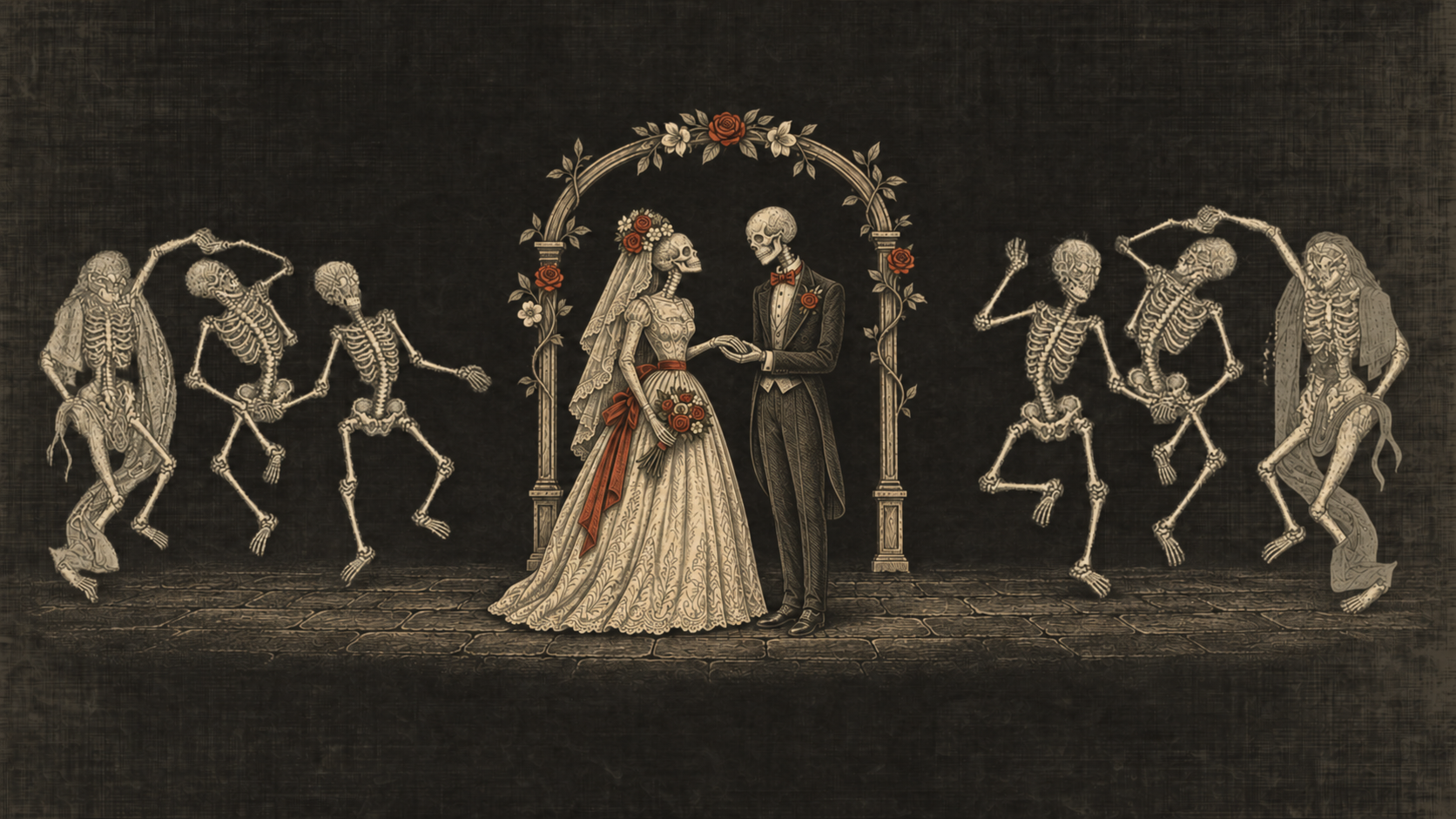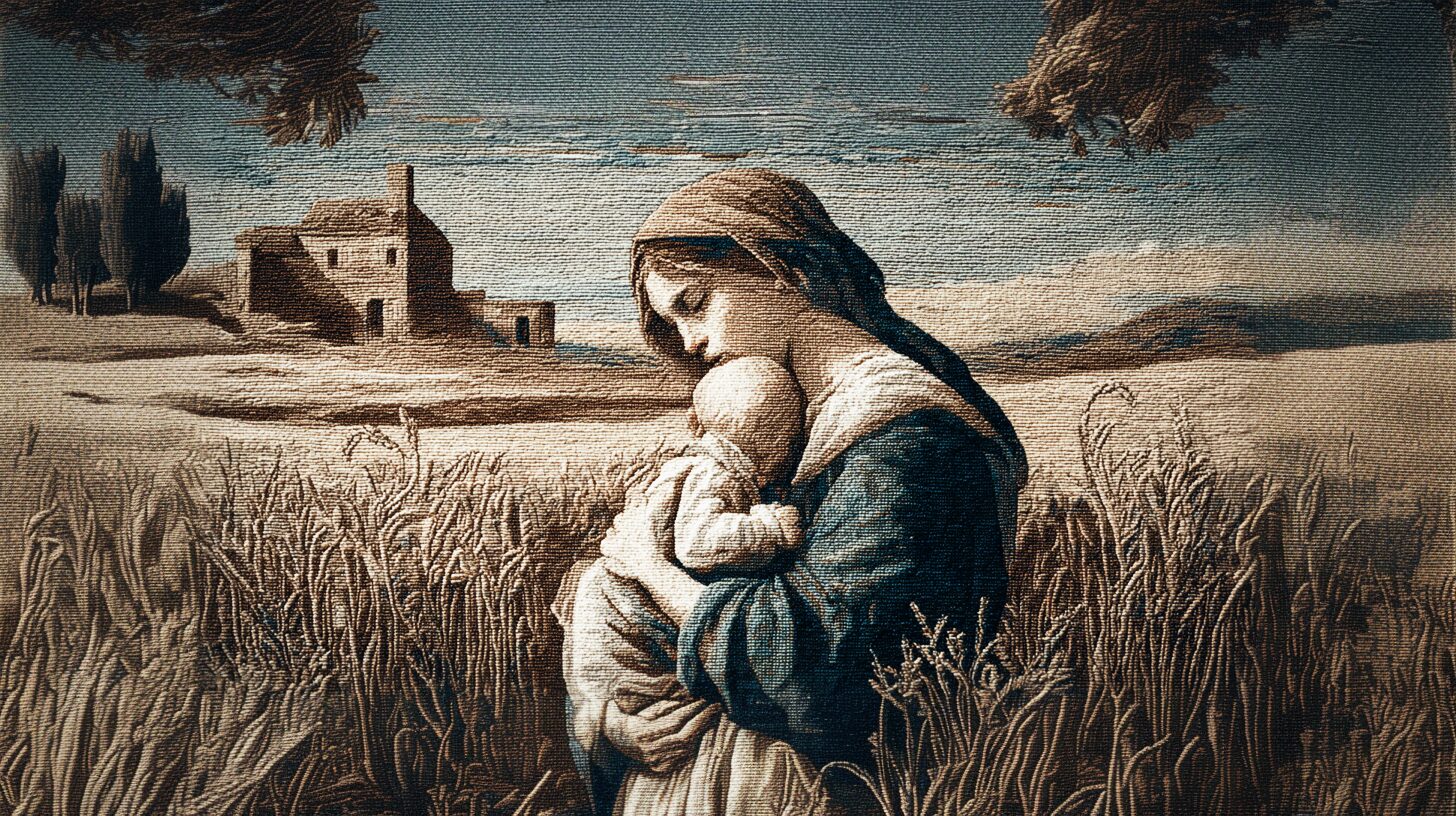
Summary: Rose-tinted nostalgia for the preindustrial era has gone viral—some people claim that modernity itself was a mistake and that “progress” is an illusion. This article addresses seven supposed negative effects of the Industrial Revolution. The conclusion is that history bears little resemblance to the sanitized image of preindustrial times in the popular imagination.
When Ted Kaczynski, the Unabomber, declared in 1995 that “the Industrial Revolution and its consequences have been a disaster for the human race,” he was voicing a sentiment that now circulates widely online.
Rose-tinted nostalgia for the preindustrial era has gone viral, strengthened by anxieties about our own digital era. Some are even claiming that modernity itself was a mistake and that “progress” is an illusion. Medieval peasants led happier and more leisurely lives than we do, according to those who pine for the past. “The internet has become strangely nostalgic for life in the Middle Ages,” journalist Amanda Mull wrote in a piece for The Atlantic. Samuel Matlack, managing editor of The New Atlantis, observed that there is currently an “endless debate around whether the preindustrial past was clearly better than what we have now and we must go back to save humanity, or whether modern technological society is unambiguously a forward leap we must forever extend.”
In the popular imagination, the Industrial Revolution was the birth of many evils, a time when smoke-belching factories disrupted humanity’s erstwhile idyllic existence. Economics professor Vincent Geloso’s informal survey of university students found that they believed “living standards did not increase for the poor; only the rich got richer; the cities were dirty and the poor suffered from ill-health.” Pundit Tucker Carlson has even suggested that feudalism was preferable to modern liberal democracy.
Different groups tend to idealize different aspects of the past. Environmentalists might idealize preindustrial harmony with nature, while social traditionalists romanticize our ancestors’ family lives. People from across the political spectrum share the sense that the Industrial Revolution brought little real improvement for ordinary people.
In 2021, History.com published “7 Negative Effects of the Industrial Revolution,” an article reflecting much of the thinking behind the popular impression that industrialization was a step backward for humanity, rather than a period of tremendous progress. But was industrialization really to blame for each of the ills detailed in the article?
“Horrible Living Conditions for Workers”
Were horrible living conditions a result of industrialization? To be sure, industrial-era living conditions did not meet modern standards—but neither did the living conditions that preceded them.
As historian Kirstin Olsen put it in her book, Daily Life in 18th-Century England, “The rural poor . . . crowded together, often in a single room of little more than 100 square feet, sometimes in a single bed, or sometimes in a simple pile of shavings or straw or matted wool on the floor. In the country, the livestock might be brought indoors at night for additional warmth.” In 18th-century Wales, one observer claimed that in the homes of the common people, “every edifice” was practically a miniature “Noah’s Ark” filled with a great variety of animals. One shudders to think of the barnlike smell that bedchambers took on, in addition to the chorus of barnyard sounds that likely filled every night. Our forebears put up with the stench and noise and cuddled up with their livestock, if only to stave off hypothermia.
Homes were often so poorly constructed that they were unstable. The din of collapsing buildings was such a common sound that in 1688, Randle Holme defined a crash as “a noise proceeding from a breach of a house or wall.” The poet Dr. Samuel Johnson wrote that in 1730s London, “falling houses thunder on your head.” In the 1740s, “props to houses” keeping them from collapsing were listed among the most common obstacles that blocked free passage along London’s walkways.
“Poor Nutrition”
What about poor nutrition? From liberal flower children to the “Make America Healthy Again” crowd, fetishizing the supposedly chemical-free, wholesome diets of yore is bipartisan. The truth, however, is stomach-churning.
Our ancestors not only failed to eat well, but they sometimes didn’t eat at all. Historian William Manchester noted that in preindustrial Europe, famines occurred every four years on average. In the lean years, “cannibalism was not unknown. Strangers and travelers were waylaid and killed to be eaten.” Historian Fernand Braudel recorded a 1662 account from Burgundy, France, that lamented that “famine this year has put an end to over ten thousand families . . . and forced a third of the inhabitants, even in the good towns, to eat wild plants. . . . Some people ate human flesh.” A third of Finland’s population is estimated to have died of starvation during a famine in the 1690s.
Even when food was available, it was often far from appetizing. Our forebears lived in a world where adulterated bread and milk, spoiled meat, and vegetables tainted with human waste were everyday occurrences. London bread was described in a 1771 novel as “a deleterious paste, mixed up with chalk, alum and bone ashes, insipid to the taste and destructive to the constitution.” According to historian Emily Cockayne, the 1757 public health treatise Poison Detected noted that “in 1736 a bundle of rags that concealed a suffocated newborn baby was mistaken for a joint of meat by its stinking smell.”
Water was also far from pristine. “For the most part, filth flowed out windows, down the streets, and into the same streams, rivers, and lakes where the city’s inhabitants drew their water,” according to environmental law professor James Salzman. This ensured that each swig included a copious dose of human excreta and noxious bacteria. Waterborne illnesses were frequent.
“A Stressful, Unsatisfying Lifestyle”
Did stressful lifestyles originate with industrialization? Did our preindustrial ancestors generally enjoy a sense of inner peace? Doubtful. Sadly, many of them suffered from what they called melancholia, roughly analogous to the modern concepts of anxiety and depression.
In 1621, physician Robert Burton described a common symptom of melancholia as waking in the night due to mental stress among the upper classes. An observer said the poor similarly “feel their sleep interrupted by the cold, the filth, the screams and infants’ cries, and by a thousand other anxieties.” Richard Napier, a 17th-century physician, recorded over several decades that some 20 percent of his patients suffered from insomnia. Today, in comparison, 12 percent of Americans say they have been diagnosed with chronic insomnia. Stress is nothing new.
Sky-high preindustrial mortality rates caused profound emotional suffering to those in mourning. Losing a child to death in infancy was once a common—indeed, near-universal—experience among parents, but the loss was no less painful for all its ordinariness. Many surviving testimonies suggest that mothers and fathers felt acute grief with each loss. The 18th-century poem, “To an Infant Expiring the Second Day of Its Birth,” by Mehetabel “Hetty” Wright—who lost several of her own children prematurely—heartrendingly urges her infant to look at her one last time before passing away.
So common were child deaths that practically every major poet explored the subject. Robert Burns wrote “On the Birth of a Posthumous Child.” Percy Bysshe Shelley wrote multiple poems to his deceased son. Consider the pain captured by these lines from William Shakespeare’s play King John, spoken by the character Constance upon her son’s death: “Grief fills the room up of my absent child. . . . O Lord! My boy, my Arthur, my fair son! My life, my joy, my food, my all the world!” Shakespeare’s own son died in 1596, around the time the playwright would have finished writing King John.
Only in the modern world has child loss changed from extraordinarily common to exceedingly rare. As stressful as modern life can be, our ancestors faced forms of heartache that most people today will never endure.
“Dangerous Workplaces” and “Child Labor”
Dangerous workplaces and child labor both predate the Industrial Revolution. In agrarian societies, entire families would labor in fields and pastures, including pregnant women and young children. Many preindustrial children entered the workforce at what today would be considered preschool or kindergarten age.
In poorer families, children were sent to work by age 4 or 5. If children failed to find gainful employment by age 8, even social reformers unusually sympathetic to the plight of the poor, would express open disgust at such a lack of industriousness. Jonas Hanway was reportedly “revolted by families who sought charity when they had children aged 8 to 14 earning no wages.”
For most, work was backbreaking and unending. A common myth suggests that preindustrial peasants worked fewer days than modern people do. This misconception originated from an early estimate by historian Gregory Clark, who initially proposed that peasants labored only 150 days a year. He later revised this figure to around 300 days—higher than the modern average of 260 working days, even before factoring in today’s paid holidays and vacation time.
Physically harming one’s employees was once widely accepted, too, and authorities stepped in only when the mistreatment was exceptionally severe. In 1666, one such case occurred in Kittery, in what is now Maine, when Nicholas and Judith Weekes caused the death of a servant. Judith confessed that she cut off the servant’s toes with an axe. The couple, however, was not indicted for murder, merely for cruelty.
“Discrimination Against Women”
The preindustrial world was hardly a model of gender equality—discrimination against women was not an invention of the early industrialists but a long-standing feature of many societies.
Domestic violence was widely tolerated. In London, a 1595 law dictated: “No man shall after the houre of nine at the Night, keepe any rule whereby any such suddaine out-cry be made in the still of the Night, as making any affray, or beating hys Wife, or servant.” In other words, no beating your wife after 9:00 p.m. That was a noise regulation. A similar law forbade using a hammer after 9:00 p.m. Beating one’s wife until she screamed was an ordinary and acceptable activity.
Domestic violence was celebrated in popular culture, as in the lively folk song “The Cooper of Fife,” a traditional Scottish tune that inspired a country dance and influenced similar English and American ballads. To modern ears, the contrast between its violent lyrics and upbeat melody is unsettling. The song portrays a husband as entirely justified in his acts of domestic violence, inviting the audience to side with the wifebeater and cheer as he beats his wife into submission for her failure to perform domestic chores to her husband’s satisfaction.
Sexist laws often empowered men to abuse women. If a woman earned money, her husband could legally claim it at any time. For instance, in 18th-century Britain, a wife could not enter into contracts, make a will without her husband’s approval, or decide on her children’s education or apprenticeships; moreover, in the event of a separation, she automatically lost custody. Mistreatment of women, in other words, long predated industrialization. Arguably, it was the increase in female labor force participation during the Industrial Revolution that ultimately gave women greater economic independence and strengthened their social bargaining power.
“Environmental Harm”
While many of today’s environmental challenges—such as climate change and plastic pollution—differ from those our forebears faced, environmental degradation is not a recent phenomenon. Worrying about environmental impact, however, is rather new. Indeed, as historian Richard Hoffmann has pointed out, “Medieval writers often articulated an adversarial understanding of nature, a belief that it was not only worthless and unpleasant, but actively hostile to . . . humankind.”
Consider deforestation. The Domesday Survey of 1086 found that trees covered 15 percent of England; by 1340, the share had fallen to 6 percent. France’s forests more than halved from about 30 million hectares in Charlemagne’s time (768–814) to 13 million by Philip IV’s reign (1285–1314).
Europe was hardly the only part of the world to abuse its forests. A 16th-century witness observed that at every proclamation demanding more wood for imperial buildings, the peasants of what are today the Hubei and Sichuan provinces in China “wept with despair until they choked,” for there was scarcely any wood left to be found.
Despeciation is also nothing new. Humans have been exterminating wildlife since prehistory. The past 50,000 years saw about 90 genera of large mammals go extinct, amounting to over 70 percent of America’s large species and over 90 percent of Australia’s.
Exterminations of species occurred throughout the preindustrial era. People first settled in New Zealand in the late 13th century. In only 100 years, humans exterminated 10 species of moa in addition to at least 15 other kinds of native birds, including ducks, geese, pelicans, coots, Haast’s eagle, and an indigenous harrier. Today, few people realize that lions, hyenas, and leopards were once native to Europe, but by the first century, human activity eliminated them from the continent. The final known auroch, Europe’s native wild ox, was killed in Poland by a noble hunter in 1627.
Progress Is Real
History bears little resemblance to the sanitized image of preindustrial times in the popular imagination—that is, a beautiful scene of idyllic country villages with pristine air and residents merrily dancing around maypoles. The healthy, peaceful, and prosperous people in this fantasy of pastoral bliss do not realize their contented, leisurely lives will soon be disrupted by the story’s villain: the dark smokestacks of the Industrial Revolution’s “satanic mills.”
Such rose-colored views of the past bear little resemblance to reality. A closer look shatters the illusion. The world most of our ancestors faced was in fact more gruesome than modern minds can fathom. From routine spousal and child abuse to famine-induced cannibalism and streets that doubled as open sewers, practically every aspect of existence was horrific.
A popular saying holds that “the past is a foreign country,” and based on recorded accounts, it is not one where you would wish to vacation. If you could visit the preindustrial past, you would likely give the experience a zero-star rating. Indeed, the trip might leave you permanently scarred, both physically and psychologically. You might long to unsee the horrors encountered on your adventure and to forget the shocking, gory details.
The upside is that the visit would help deromanticize the past and show how far humanity has truly come—emphasizing the utter transformation of everyday lives and the reality of progress.
This article was published at Big Think on 11/19/2025.