01 / 05
The “ADHD Epidemic” Is Just an Overdiagnosis Epidemic

Blog Post | Mental Health

The “ADHD Epidemic” Is Just an Overdiagnosis Epidemic

Screen time gets the blame, but the increase in diagnoses comes more from subjective criteria interacting with financial incentives.

Summary: The rapid rise in ADHD diagnoses reflects expanding diagnostic criteria and financial incentives as much as any increase in impairment. Traits such as distractibility, high activity, and shifting attention often represent ordinary developmental or cognitive variation, especially among children expected to conform to rigid classroom routines. Digital media reshapes attention rather than simply damaging it, strengthening some abilities while weakening others. More reliable diagnoses require tighter criteria, independent assessments, and systems that do not create perverse financial incentives.


The sharp increase in attention-deficit/hyperactivity disorder (ADHD) diagnoses—nearly doubling among American children between 1997 and 2022, and more than tripling among adults from 2012 to 2023—has been chalked up to better screening, increased awareness, and the corrosive effects of smartphones and social media on developing brains. None of these factors holds up well under scrutiny.

The diagnostic category itself has been steadily widened by the institutions that define it and the financial structure that rewards every participant for applying the ADHD label. As we have argued in our Cato Institute analysis of how the American healthcare system rewards psychiatric overdiagnosis, subjective diagnostic criteria interact with a payment system that rewards diagnosis to produce predictable inflation across psychiatric categories. The result is labeling ordinary behavior as pathological. ADHD is among the cleanest case studies of that pattern.

Foraging minds in an industrial classroom.

Human cognition was shaped over hundreds of thousands of years in small foraging bands, where attentional flexibility was an asset rather than a liability. A child who scanned the horizon, registered novel stimuli, and shifted focus rapidly between threats and opportunities was a child more likely to survive. Sustained, narrowly channeled attention to a single abstract task for hours at a time was simply not part of the ancestral environment, and the cognitive machinery to produce such concentration on demand was never uniformly selected for. What we now call distractibility is, in another light, vigilance. Most animals, including ancestral humans, evolved to be constantly on the lookout for novelty and threat.

Mass schooling, which emerged in the 19th century in part to prepare children for industrial labor, asks something quite different. It asks 6- and 7‑year-olds to sit still in rows, suppress physical movement, attend to a single voice for extended stretches, and produce written output on a fixed schedule. Most children adapt. The variance in how easily they do so is enormous, and the children at the lower tail of conformity to that demand have come to define the diagnostic category.

Boys end up there more often than girls, for reasons that are not mysterious. Boys, on average, are more physically active, take longer to develop self-control, and are more drawn to rough play. The same pattern shows up in other mammals and tracks the effects of testosterone on brain development. Put boys in a room and tell them to sit still for six hours, and a predictable share of them will fail, not because they are mentally ill but because they are boys. The youngest children in any classroom are also more likely to be diagnosed with ADHD than their older peers, a finding so robust across studies and countries that it points to ordinary developmental variation rather than disease.

The evolutionary frame also provides a more nuanced understanding of the fear that screen time in childhood harms brain development and attention span. The brain is plastic, especially in childhood, and it adapts to the environment it is given. That plasticity is precisely what allowed generations raised under modern industrialized education systems to develop the sustained attention style that schools reward, despite it being so far from our environment of evolutionary adaptedness. But a generation that grows up navigating fast-moving feeds, switching between applications, and processing rapid streams of visual information will predictably develop a different attentional profile than one raised on books and chalkboards.

That does not mean the learning or attention span of youth raised on digital technology is impaired. Heavy media multitaskers and habitual users of touchscreen devices do tend to perform worse on tasks that demand sustained, narrowly focused attention and inhibitory control. But they also tend to perform better on tasks that demand rapid visual search, parallel processing of multiple objects, and flexible reallocation of attention. Action video game play, in particular, has been shown to enhance visual selective attention, processing speed, and the spatial resolution of vision. These effects transfer beyond the trained task, improving general abilities to track several moving things at once, spot relevant objects in a crowded scene, and pick out a target faster when surrounded by distractions.

These cognitive trade-offs elucidate how neural plasticity gives rise to different forms of intelligence. The brain has a finite budget of computational and metabolic resources, and the cortex reallocates them in response to the demands placed on it. The clearest demonstrations come from sensory deprivation: In people who lose their sight, the visual cortex does not simply lie fallow but is recruited for auditory and tactile processing, including Braille reading, with measurable gains in those domains. Congenitally deaf individuals show analogous repurposing of the auditory cortex for vision and smell. Every brain is continuously specializing toward whatever it does most, and different cognitive skillsets have different trade-offs.

A brain trained on rapid feeds and parallel streams gets better at rapid visual search, switching, and parallel processing while getting worse at slow, serial, endogenous focus. A brain trained on long books and chalkboards makes the opposite trade. The picture is not simply that screens damage children’s brains or lower their intelligence. Claims of generalized cognitive harm typically rest on measures of a single attentional style, the one schools happen to demand, and ignore the capacities that grow on the other side of the ledger. Calling the resulting attentional profile ADHD, treating it as a chronic illness, and medicating it accordingly is a category error. The trade-offs are real, but the diagnostic system measures only the deficits because only the deficits are reimbursable.

From hyperkinetic boys to inattentive adults.

The diagnostic category we now call ADHD has been progressively widened almost from the moment it entered the Diagnostic and Statistical Manual of Mental Disorders, the reference text published by the American Psychiatric Association that defines the criteria for every recognized psychiatric condition in the United States. The DSM-II, published in 1968, listed the condition as “hyperkinetic reaction of childhood” and described it in a single sentence, focused on the restless, disruptive child, almost always identified as a boy, who would supposedly grow out of the condition by adolescence. The DSM-III, in 1980, renamed it attention deficit disorder, with or without hyperactivity, and for the first time treated inattention as a stand-alone presentation rather than a symptom of restlessness. That single revision opened the category to a far larger population of children, especially girls, whose attentional patterns had previously been invisible to the diagnostic system.

The DSM-III‑R, in 1987, folded the subtypes back together and introduced the current acronym, ADHD. The DSM-IV, in 1994, separated the disorder again into three presentations—predominantly inattentive, predominantly hyperactive-impulsive, and combined—and explicitly extended the diagnosis into social, academic, and vocational contexts beyond childhood. Studies comparing the DSM-III‑R and DSM-IV criteria directly found that prevalence rose from 9.6 to 17.8 percent under one set of comparisons and from 7.3 to 11.4 percent under another, almost entirely on the strength of newly identified inattentive cases. The DSM‑5, in 2013, raised the age-of-onset requirement from 7 to 12 and lowered the symptom threshold for adults.

Each revision expanded the population eligible for diagnosis, and, with it, the population eligible for stimulant prescriptions, academic accommodations, and disability protections. The trajectory runs in one direction. There is no edition of the DSM in which the criteria for ADHD became more restrictive.

The incentive problem.

Layered atop the definitional and developmental story is a set of economic incentives that quietly lower the threshold for diagnosis. A growing share of these diagnoses now comes from primary care clinicians rather than specialists, reflecting how rapidly ADHD treatment has migrated into routine primary care, and how the expansion of telehealth lowered the friction of obtaining a prescription.

One of the clearest examples of incentives for overdiagnosis comes from how we finance education. When special-education funding is tied to specific diagnoses, schools have a built-in reason to identify more students with ADHD, because the label unlocks additional resources. Researchers have documented systematic differences in diagnosis and treatment that align with funding formulas rather than with underlying disease rates, a pattern consistent with third-party financial incentives shaping who gets labeled. Clinicians do not work in isolation; they respond to expectations from schools, families, and the broader system. Once stakeholders recognize that a diagnosis unlocks services, pressure to apply the label tends to grow.

Primary care clinicians typically practice in fee-for-service systems, where assigning a diagnosis makes the encounter billable and enables reimbursement for follow-up visits and medication management. Patients have their own incentives to seek the diagnosis, including academic accommodations, workplace protections, and access to performance-enhancing stimulants such as Adderall. In an environment where the condition is defined by subjective criteria rather than objective tests, it is unsurprising that some individuals exaggerate or feign symptoms to obtain those benefits.

The pattern is by now familiar. As we documented in our analysis of Medicaid-funded autism therapy, the broadening of autism criteria, combined with open-ended reimbursement, produced an explosion in spending on applied behavior analysis that far outpaced any plausible change in the prevalence of disabling autism. The broadening of ADHD criteria has produced a parallel surge in stimulant prescriptions, and our recent piece against the campaign to formalize “social media addiction” anticipates the same trajectory if that diagnosis is formalized. In each case, subjective diagnosis and financial incentives that reward diagnosis push the boundaries of illness outward.

What this should teach us.

The growth in diagnoses is best understood as the cumulative output of several systems, each behaving in a way its incentives reward. Definitions expand because there is little institutional pressure to keep them tight. Clinicians diagnose because diagnosis is what the system pays for. Schools refer because referrals bring resources. Patients seek labels because labels bring access to special accommodations. The aggregate effect is a steady erosion of the line between ordinary human variation and clinical disease.

That erosion has costs. Children whose ordinary inattentiveness is medicated as a chronic condition, adults who organize their identities around a label, and patients with severely impairing ADHD whose treatment resources are diluted across an ever-larger pool all bear those costs. The path to more reliable diagnoses runs through more reliable incentives: tighter criteria, independent assessments, and payment structures that do not reward expanding the definition of illness. Policymakers should stop structuring schools, insurers, and healthcare systems so that people must acquire a medical diagnosis to receive help, accommodations, or reimbursement.

Children today have greater safety, resource availability, and tools for education than any cohort in human history. It is the schoolroom that asks kids to sit still for hours and the diagnostic system that pathologizes the ones who cannot that are the more unusual and pathological features of modernity. A more honest accounting would distinguish severely impairing attentional disorders from the wider band of ordinary human variation. It would recognize that the temperaments now most likely to be medicalized are, in a different setting, the temperaments that helped aid survival and human progress.

This article originally appeared in The Dispatch on 5/13/2026.
Blog Post | Progress Studies

Agency and the Making of History | Podcast Highlights

Psychologist Martin Seligman argues that belief in human agency has been a powerful driver of innovation and human progress.

Listen to the podcast or read the full transcript here.

Adam Omary: I’m Adam Omary, a research fellow at HumanProgress.org. I’m honored to be joined by Dr. Martin Seligman, director of the Positive Psychology Center at the University of Pennsylvania. Dr. Seligman is widely credited with founding the modern positive psychology movement and has been called by my graduate advisor, Steven Pinker, “perhaps the world’s greatest living psychologist.” He’s the author of many books, including, most recently, Agency: The Psychological History of Human Progress, which we’ll be speaking about today.

I’m also joined by my colleague, Johan Norberg, a senior fellow in the Center for Global Liberty and Prosperity at the Cato Institute and a historian of human progress.

Being a psychologist myself, I plan to discuss agency with Dr. Seligman from the psychological perspective, and Johan will discuss human progress from the historical perspective. Before we start our panel, Dr. Seligman, I’d love to hear an overview of the book from you.

I’m trying to found a new field, Adam, the field that Isaac Asimov called psychohistory. And it has two aims: to show that psychological states profoundly influence historical events, and then to use what we know about history to try to predict the future. And the psychological state I deal with in this book is agency.

Agency for me has three components. The first is efficacy, the belief that you can accomplish your goal. Optimism, the belief that you can do this into the distant future. And imagination, the range of goals that you can possibly achieve. And the historical hypothesis is that progress and innovation occur when civilizations believe in human agency, and when that belief is absent, we see stagnation and regression. The book culminates with AI. Is AI going to destroy us, or is it the most technologically important aid to human agency of my lifetime? I believe the latter.

Adam Omary: I’m excited to get to AI, but I want to begin with conceptions of progress. As you describe in Agency, and as we outline with data on HumanProgress.org, we’re living in the most extraordinary time of human history. We’re wealthier and freer. Lifespan is longer than ever. Disease and mortality rates are falling. And yet, despite these improvements, so many people seem pessimistic about the future. Why is that?

I think there are at least two answers. One is ideological. It’s become beneficial politically to argue that we’re in one crisis after another, and that only I, the political candidate, can solve that crisis. And the other is journalism. A hundred years ago, if you were a farmer in Nebraska, you might find out a month later that the Titanic went down. Right now, if you watch CNN all day long, you’re going to hear about one horrible thing after another. If it bleeds, it leads. So I think that political ideology and journalism are two of the factors that lead people to believe that progress is a myth.

Johan Norberg: I thank you for this incredibly important book. I recommend it to everyone. I think you’ve documented the rise and fall in the belief in human agency throughout history very well. But societies with a widespread belief in human agency, such as ancient Athens, Renaissance Italy, the Dutch Republic, Britain after the Glorious Revolution, and the American Experiment, also had other things in common. They were, compared to other contemporary civilizations, relatively free and open, and had relatively limited governments. And I have yet to find one example of a very despotic, regimented society with high levels of agency.

So, is agency really the independent variable, or might it be that agency is what we observe when people are more or less liberated and have the incentives to create, adapt, and change?

Great question.

I want to speculate about the relationship between freedom and agency. Freedom is a fact about the world, and agency is a belief about oneself. Now, when we live in a relatively free world, technology advances, science advances, literature gets better, quality of life gets better, more progress occurs, and that impacts agency itself. That is, it makes you believe you can do more, and if you believe you can do more, that produces more freedom in the world. So I think the relationship is reciprocal. Agency increases freedom, and freedom increases agency.

Adam Omary: Dr. Seligman, you’re famous for your work on learned helplessness, which is essentially the opposite of agency. Again, paradoxically, despite living in the freest and most prosperous time in history, we see a lot of this learned helplessness, especially among young people and especially on social media. Do you worry that certain cultural trends are reducing our sense of agency?

Victimology really gets in the way of agency. So learned helplessness is the belief that nothing I do matters. And quite a lot of ideology about why suffering occurs in the world, why inequality occurs in the world, very easily leads to the belief that you’re a victim of a malign environment or a malign system. Under that assumption, when things go wrong and when we suffer, it’s not because of our character or our decisions or actions; it’s because we’re victims.

Adam Omary: From an evolutionary perspective, it seems strange that people could even have learned helplessness. Could it be what social psychologist Rob Henderson calls a luxury belief? In other words, only in a society that is prosperous enough for one to get away with learned helplessness can we see that type of mindset evolve?

No, I wouldn’t go that far. Learned helplessness is not only quite real in the laboratory and in real life, but over the last 25 years, my colleague Steve Maier, who died recently, was able to trace out the brain circuitry for learned helplessness. And to simplify it, there is a structure in the human brain called the dorsal raphe nucleus. And when it fires, that’s when you see passivity and giving up. That seems to be the default response to bad events. However, when we learn hope and mastery, that triggers a set of circuits in the forebrain which inhibit the dorsal raphe nucleus. So helplessness is a very real phenomenon, and if it’s not inhibited by hope, it leads to profound passivity, cognitive deficits, poor health, and premature death.

Johan Norberg: Why is that? What’s the evolutionary benefit of giving up?

Well, if you’re a reptile or a bird and a predator jumps on top of you, you don’t have a lot of cognitive mechanisms to deal with it. And by curling into a ball and giving up, you conserve energy. As mammals, we’ve inherited underneath our frontal cortex a set of biological mechanisms that incline us to give up. And it requires a belief in agency, a belief in hope, an experience of mastery and coping to turn off that reptilian tendency.

Johan Norberg: You also have a wonderful way of explaining our negativity bias. You write that we inherited a bad weather brain. Our ancestors who were anxiously looking towards the horizon for bad weather or predators probably survived and passed their stressed-out genes to us, so we pay more attention to what’s bad than what’s good. On the other hand, you also document that political candidates who are more hopeful and optimistic about the future usually win.

Why is it that we want bad news but hopeful politicians?

Another good question. Let’s see if we can make sense of it.

So first, there is a negativity bias, and it comes from our ancestors in the Ice Ages. Pessimism comes naturally to us. And we are attracted to optimism, empirically. I could run an experiment where I give you a speech to deliver on the telephone, either in a highly depressive cadence or in a very chirpy cadence. Just wait to see how long it takes for people to hang up on you during your depressed speech. Misery loves company, but company does not like misery. We’re attracted to optimistic people. I’m not sure I can say more deeply why.

Politically, this also seems to be the case, at least in American elections. We’ve looked at the last 120 years of elections, and for the most part, the more optimistic candidate wins. We looked deeply at that in the Trump-Harris election. You might think that Trump was the more pessimistic candidate. He was the darker candidate. He cites four times as many bad events as Harris. But we decided to look at how he explains those bad events versus Harris, and we tracked this throughout the campaign. During the first debate, Trump and Harris are equally pessimistic, and Trump cites more bad events. But right through October 31st, Trump gets more and more optimistic. And by the end, he’s massively more optimistic than Harris. And we put our prediction about the election in a sealed envelope, and we sent it to our reporter friends, and we predicted a Trump victory. So humans like optimists, and we want to be led by them.

Adam Omary: How do you distinguish agency from ambition? What does high agency look like in an individual who chooses to live a quiet life centered on family?

Good question. I’ve never been asked this before, so I’m winging it.

So the first component of agency is that you believe that your actions will produce results. Well, to be ambitious, you’d have to have that. To be agentic, you also have to believe that you can succeed at your goals in the far future. And again, to be ambitious, you have to believe that as well. And thirdly, to be agentic, you have to entertain a large range of possible goals. And being ambitious, merely desiring fame and fortune, by no means guarantees imagination. So that’s the difference. Ambition is shallow.

Johan Norberg: One thing that keeps me awake at night is the problem that you write about: pessimism and despair seem to be self-fulfilling. If you think that there’s nothing to be gained from trying, you don’t try. Similarly, if people don’t understand that objective indicators of living standards are improving, that could undermine progress.

Can you talk to us about the importance of understanding past progress for agency and for human flourishing?

It’s crucial to believe in human progress. I’m in a constant struggle with my English department and my history department at the University of Pennsylvania, both of which are pervaded by the belief that human progress is a myth. And the cost of not believing in human progress is not trying. The cost of alarmist pessimism, for example, about the climate, is not trying to do something about the climate.

For me, this has to do with education. We have to teach history differently. Human history is not just the history of victims and suffering; it’s the history of the rise from illiteracy, poverty, and death to literacy, wealth, and long lives. There’s been a huge increase in human well-being, measured by any objective measure of human well-being I know. And the measures that defy that trend are measures of depression and pessimism. And that’s one way of naming, Johan, the problem with misteaching the history of the world.

Adam Omary: Dr. Seligman, you began this conversation by pointing towards artificial intelligence as the next major step of human progress. Artificial intelligence increasingly allows us to delegate decisions and tasks that once required our own knowledge and effort. When does that delegation expand our freedom, and when does it weaken our confidence or ability to act for ourselves?

I am delighted to address that question. I deal with Claude and ChatGPT roughly six hours a day. In fact, I’m so excited by them, I feel like I’m 21 again. Let me give you two examples from my life in which AI hugely expands my own agency.

AI has produced more love in my life, contrary to those who say it’s dehumanizing. I have two four-year-old grandsons, Denny and Max. I’m 80 years older than they are, and I noticed, starting at around age two, that I was becoming invisible to them. They walk faster than I can run. I can’t throw a football around with them. So I went to Claude and to Chat, and I said, “Help me write stories in which Max and Denny are the guardians of the world and the heroes.” And now I’m on volume six, chapter 24: Max and Denny tour the solar system. Well, I’m visible to them now. I have more love in my life.

Number two, and much more importantly, AI has increased my own creativity. Let me just give you one example of a discovery that I made with Claude that no human being could have made. This is the paradox of the Axial Age. Across the globe, around 1000 BCE, Greece, Israel, Persia, India, and China were backwaters: villages, illiteracy, minimal technology, etc. Five hundred years later, all of those cultures are thriving. What happened during those 500 years across the globe?

Well, I had a hypothesis, and that was that they invented new words. They conceived, for the first time in human history, words about human agency, as opposed to divine agency. Well, interesting hypothesis, but I knew no human being could test it. There’s no human being who knows ancient Sanskrit, ancient Persian, ancient Chinese, ancient Hebrew, and ancient Greek. But Claude and ChatGPT do. So I gave them a hypothesis. We worked for a day together, and sure enough, the words don’t exist or barely exist in the five cultures in 1000 BCE, but by 500 BCE, they’ve invented the words.

So, for example, in Hebrew, the word teshuva is invented. It’s not in the Torah. It’s invented later on. Teshuva means repentance. It means you can actually do things to change your life. And once you have new words, new things can occur. Take sexual harassment, for example. People were harassed sexually in the office for generations, but there was no word for it until about 1970. Once there was a word for it, it opened up lawsuits, mandatory training, and ways of counteracting it. So when we have new words, we invent new things. And that’s an example in which AI made a discovery that could not have been made by human beings.

Adam Omary: There is some concern that, if we are having agents think for us, particularly for young students, it will harm our own ability to think. Do you think of agency like a muscle? Certainly it can be developed, but is it also a matter of ‘use it or lose it’?

That is one doomsayer hypothetical I agree with. They call it de-skilling. Let’s take writing. So I’ve been writing for 70 years. I’ve made hundreds of thousands of decisions between “perhaps” and “maybe.” And so at age 84, I’ve got the skill of writing, and I’m delighted to have Claude, who writes better than I do, help me along and edit. It’s not de-skilling me. But if, starting at age six, I have my writing done by the machines, I’m never going to learn how to write.

Adam Omary: Another audience question. How do different philosophical ideas, such as religious versus secular worldviews and individualist versus collectivist ethics, drive the cultural adoption or rejection of agency?

Let me give two examples.

I’ll start with the obvious Marxist one. Believing that history unfolds as a result of historical forces that are beyond our control is a recipe for passivity. And it suggests that Marxism is an ideology that leads to passivity, a sense of victimhood, and a lack of progress.

In terms of religion, I spent a lot of the book documenting different religious views. Let’s take early Catholicism and early Christianity before Augustine. So early Christianity after Jesus, up to about 300 AD, is very optimistic. You can become holy, and in fact, your encounter with God after you die is about, “Did you do the things that would make you acceptable for salvation?” Under that kind of belief, you get agentic action. Then Augustine comes along and says, “Hold it, that’s Pelagianism.” Pelagius believes that you can contribute to your own grace. Augustine says that’s nonsense. Any time you do something good, it’s only by the grace of God.

That’s the opening gate for the stagnation of the Middle Ages. Then, after the Renaissance, Catholicism once again becomes highly agentic. Erasmus argues that we’re like toddlers. When we fall down, God lifts us up, but we have to have motive power of our own to be so lifted. Luther says that’s nonsense, and in his retort to Erasmus on the bondage of the will, he tells us about predestination, about the lack of human will, and Calvin even goes further. With the Restoration and the influence of Arminian Protestantism, which believes you have to assent to grace, progress gets resuscitated.

So, that’s a long-winded way of saying that your ideology and religious faith modulate your agency, and most importantly, the achievement of entire cultures.

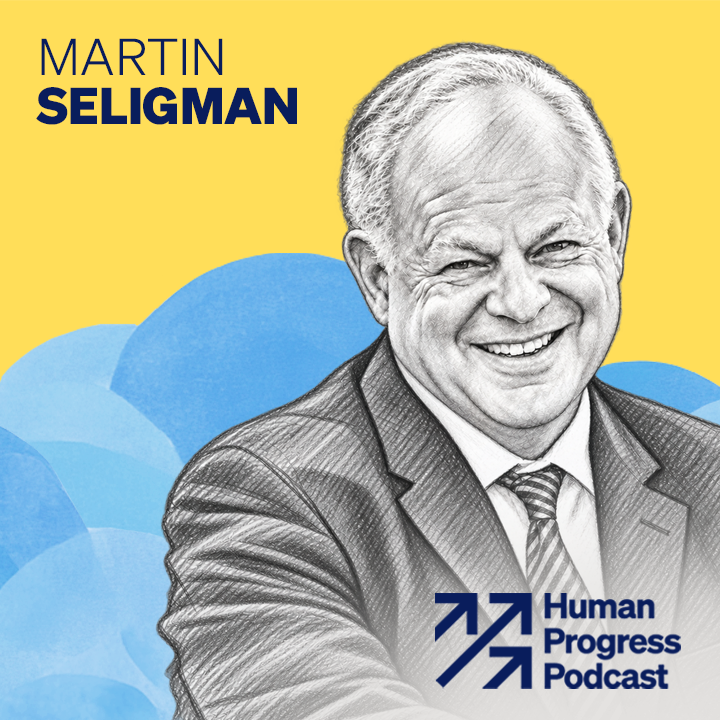
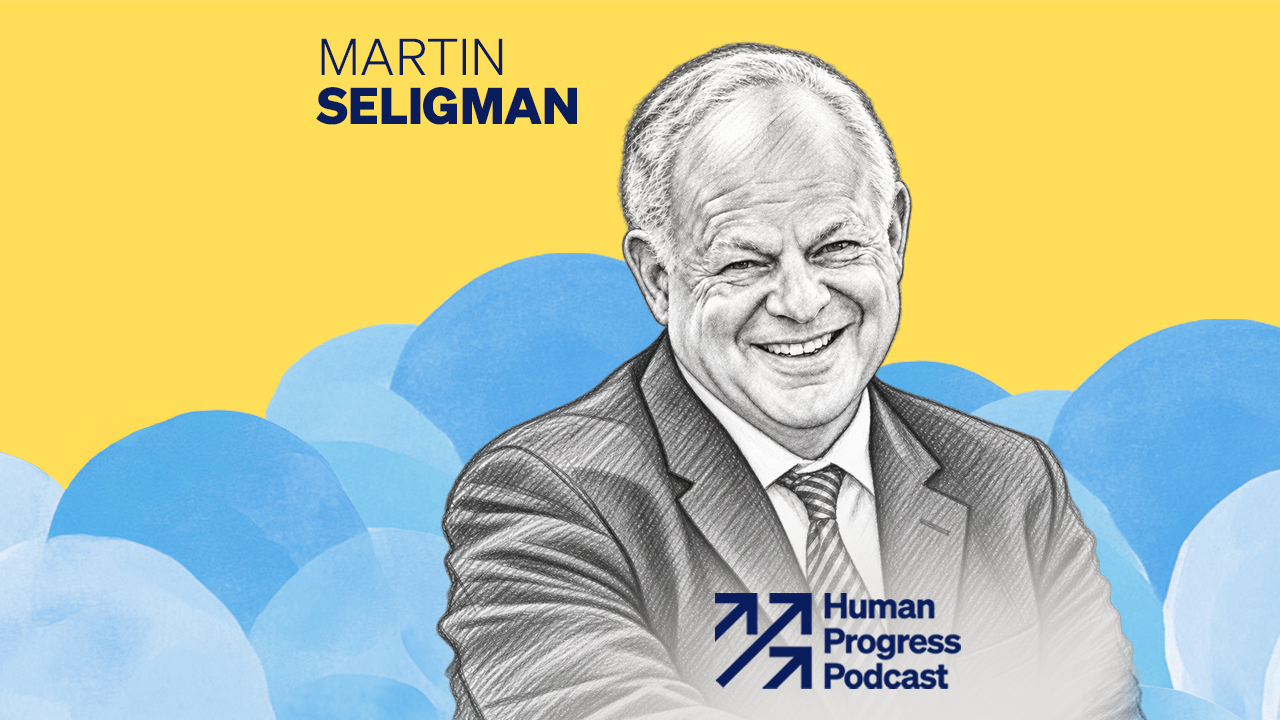
The Human Progress Podcast | Ep. 86

Martin Seligman: Agency and the Making of History

Psychologist Martin Seligman argues that belief in human agency has been a powerful driver of innovation and progress.

Anthropic | Scientific Research

AI Finds a New Enzyme System in a Virus

“Many discoveries that have revolutionized biology and medicine started with a scientist noticing something odd in the staggering diversity of molecular machines found in nature. Restriction enzymes, proteins that cut DNA at specific short sequences, were found in bacterial immune systems, where they destroy the DNA of invading viruses. Researchers realized they could use these enzymes to cut DNA at chosen places and splice genes from one organism into another, which launched the biotechnology industry. Taq polymerase, an enzyme that copies DNA at high temperatures, was identified in a bacterium in a Yellowstone hot spring. It became the basis for PCR, the DNA-copying method used in much of modern diagnostics. CRISPR was first noticed as an unusual repeat sequence in the DNA of certain bacteria, and is now the foundation of gene editing-based medicines.

In the spring of 2026, we formed a research group to see whether general AI models can systematize and accelerate such discoveries. We believe that this acceleration will come from establishing a new way of doing biology research, in which agents collaborate with humans in every step of the process. Developing this new way of working required that we build our own lab and a single team working on everything from training Claude in biology to running experiments in the lab.

Today, we’re sharing early results from one of our first research programs, in which Claude autonomously discovered a novel enzyme system that is associated with an array of DNA repeats, a pattern reminiscent of CRISPR. Although we don’t yet know its function, the system that Claude discovered has a set of characteristics that have only ever been found together in a handful of other systems, all of which are programmable and perform operations like cutting, copying, and pasting DNA. Beyond CRISPR, which has already transformed science and medicine, several other such systems are now in development as promising tools.

The system that Claude found is based on a reverse transcriptase (RT), enzymes that copy RNA into DNA. While this underlying RT, found in a jumbo phage, had been identified in previous studies, Claude appears to be the first to notice the system’s defining features—an associated array of non-coding DNA sequences and an additional accessory protein of unknown function.”

From Anthropic.

The Keyword | Computing

Google Expands SynthID Detector for AI content

“As AI tools become better and easier to use, having clear context about the content you encounter online helps you make informed decisions about what to trust. Since launching Google SynthID in 2023, we've helped people identify AI-generated media using imperceptible watermarks across images, video, and audio. To date, we've watermarked over 180 billion images and videos, along with 240,000 years of audio content.

Last year, we introduced an early version of the SynthID Detector to help media professionals verify AI-generated content. Now, we’re expanding access to everyone – with the tool available globally in English starting today.

With the new SynthID Detector, anyone can easily check if an image, video, or audio file was made with AI from Google or our partners, including OpenAI, NVIDIA, Kakao, and soon, Apple.”

From The Keyword.