
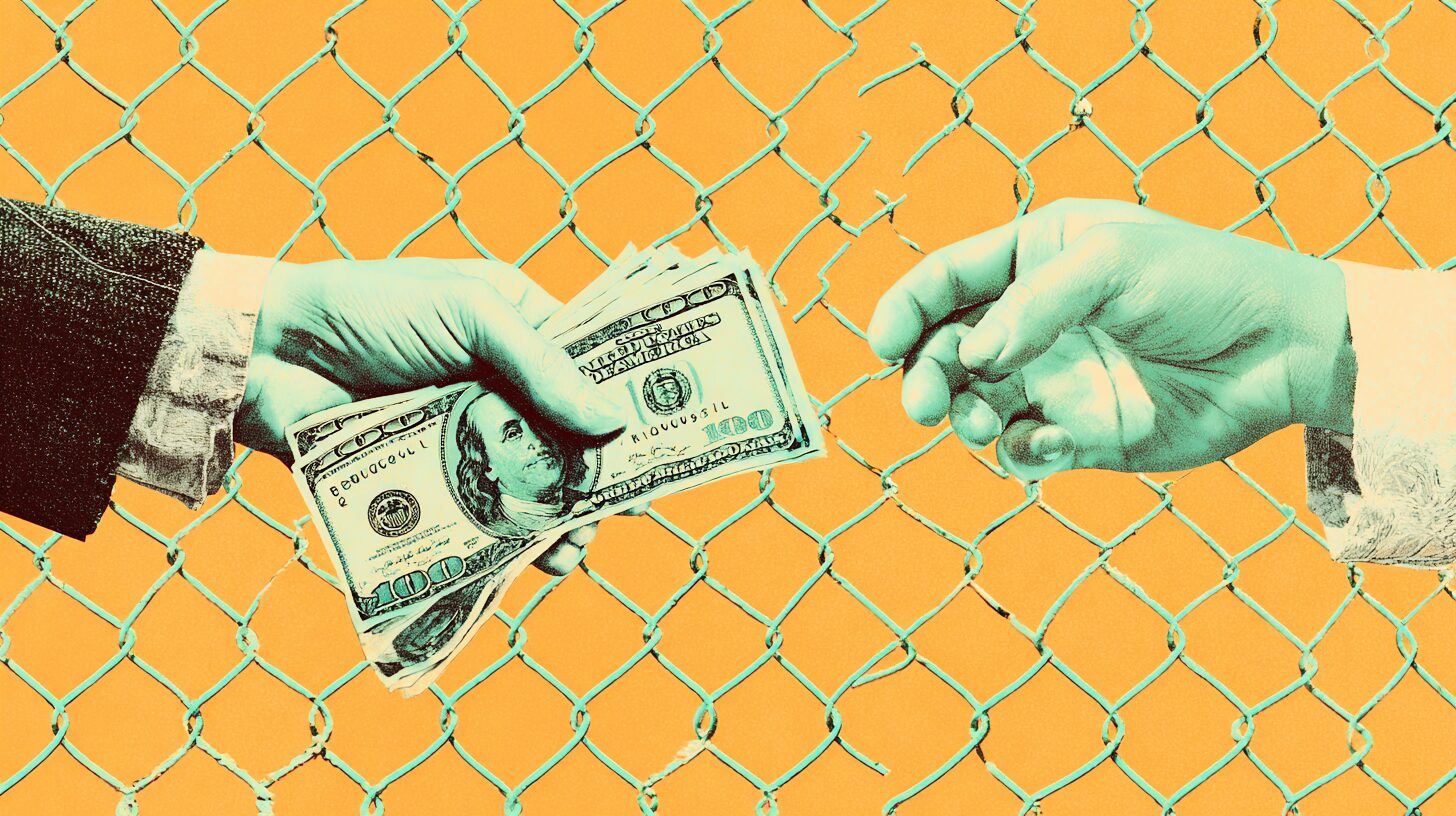
Summary: Remittances are a lifeline for millions around the world. Unlike foreign aid, these funds cost taxpayers nothing and flow directly to those who need them most, improving health, education, and opportunity. Yet new proposals to tax and restrict remittances threaten this vital support system. Reducing the freedom to give across borders would needlessly destroy opportunities for crucial economic development.
Remittances, the funds immigrants send to family members in their countries of origin, are under political fire. Many US policymakers favor taxing these payments and placing bureaucratic hurdles in the way of those trying to send money home. The rationale? Keep more money circulating in the US economy. It’s a seductive argument for many. Yet this idea is not only shortsighted but harmful.
First, consider the scale of these payments. The average global migrant worker sends 15 percent of their salary back home. That is only about $250 every 1 to 2 months, but it represents one-half the average monthly salary after tax of a worker in El Salvador, and just above the average monthly salary of a worker in Bangladesh. Thus, the flow of cash from a migrant worker can determine who back home can afford a metal roof, a well, pavement, nutritious food, payment of debt, medical coverage, or education.
The United Nations estimates that one billion people worldwide either pay or receive remittances. The World Bank anticipates that global remittance payments sent to low- and middle-income countries (LMICs) will total $690 billion by the end of 2025. The amount of money sent by migrants more than tripled global foreign aid money in 2021.
Personal Remittances, Received (Current US$)
Unlike foreign aid, remittances don’t cost US taxpayers a dime. According to Robert Stojanov and Wadim Strielkowski, remittances are absorbed nearly twice as effectively as official development assistance, or foreign aid for development. The absorption rate represents how effectively money is used and traded in the economy it enters. In other words, money given by remittances is often more effectively used in local developing economies than money provided through foreign aid.
Remittances are especially important for families because they can reduce child mortality and child labor. When parents receive steady financial support from family members abroad, they are better able to support their children and afford medical care for them. The children, in turn, are less burdened by the need to work and can attend school.
Remittances are also crucial in times of economic uncertainty. During the COVID-19 pandemic, remittances accounted for more than 30 percent of the gross domestic product (GDP) for The Gambia and Lebanon, providing essential support for recipients and boosting local economic activity.
In the early 2010s, internet and mobile phone access were still limited in many developing countries. However, in just the past decade, the world has seen a 30 percent increase in internet users worldwide, and the World Bank estimates that 84 percent of people in developing countries own a mobile phone in 2025. Importantly, the adoption of mobile phones correlates with the adoption of mobile money accounts, facilitating millions of remittances.
Western Union is the dominant remittance handler in the developing world and has historically used its comfortable market share to impose high fees to transfer remittances. However, because of the spread of mobile devices in the developing world, fintech companies such as Wise and Remitly have since entered the remittance market, offering users lower transfer fees and forcing Western Union to lower its fees in turn.
Prior to the information age, most of Africa suffered from a lack of financial infrastructure, such as automated teller machines (ATM), banks, and tellers. However, since the distribution of mobile devices, companies such as Wave and M-PESA have experienced strong adoption of mobile remittance transfers. These mobile money payments, like those traditionally handled by Western Union, reduce poverty and income inequality in developing countries, but with much lower transfer costs and infrastructure needs.
Remittances also represent an essential human freedom: the right to give. Just as Americans can freely send money through Venmo and Zelle without government interference, individuals who transfer funds internationally should enjoy the same freedom. However, the recently passed One Big Beautiful Bill Act will put a 1 percent excise tax on remittances.
A world with greater freedom and improved economic development demands that all people are free to send and receive money. As calculated by the Center for Global Development, “for many low- and middle-income countries, the impact of the remittance tax far outweighs the impact of known US aid cuts conducted so far.”
During an interview with me, Helen Dempster of the Center for Global Development stated that a remittance tax could decrease remittances themselves. This decrease in transfers may incentivize banks and lenders to charge higher fees. According to Dempster in the interview on July 4th, 2025:
There’s been a campaign for 20 years now to reduce the cost of sending remittances and many remittance service providers, particularly the large ones like Western Union, are keeping fees stubbornly high. I think if they wanted to keep fees low to encourage remittances, they would have reduced their fees by now. So, my sense is that they will pass the whole amount of the cost on to consumers.
Because of this tax, some of the most powerless individuals will suffer the cost, and the US will earn negligible revenue. As we’ve seen in past decades, greater freedom to migrants and competition between lenders directly improve the lives of the global poor. Ultimately, preserving our freedom to give not only protects our human rights, but positively transforms the day-to-day lives of millions and the future of the developing world.