
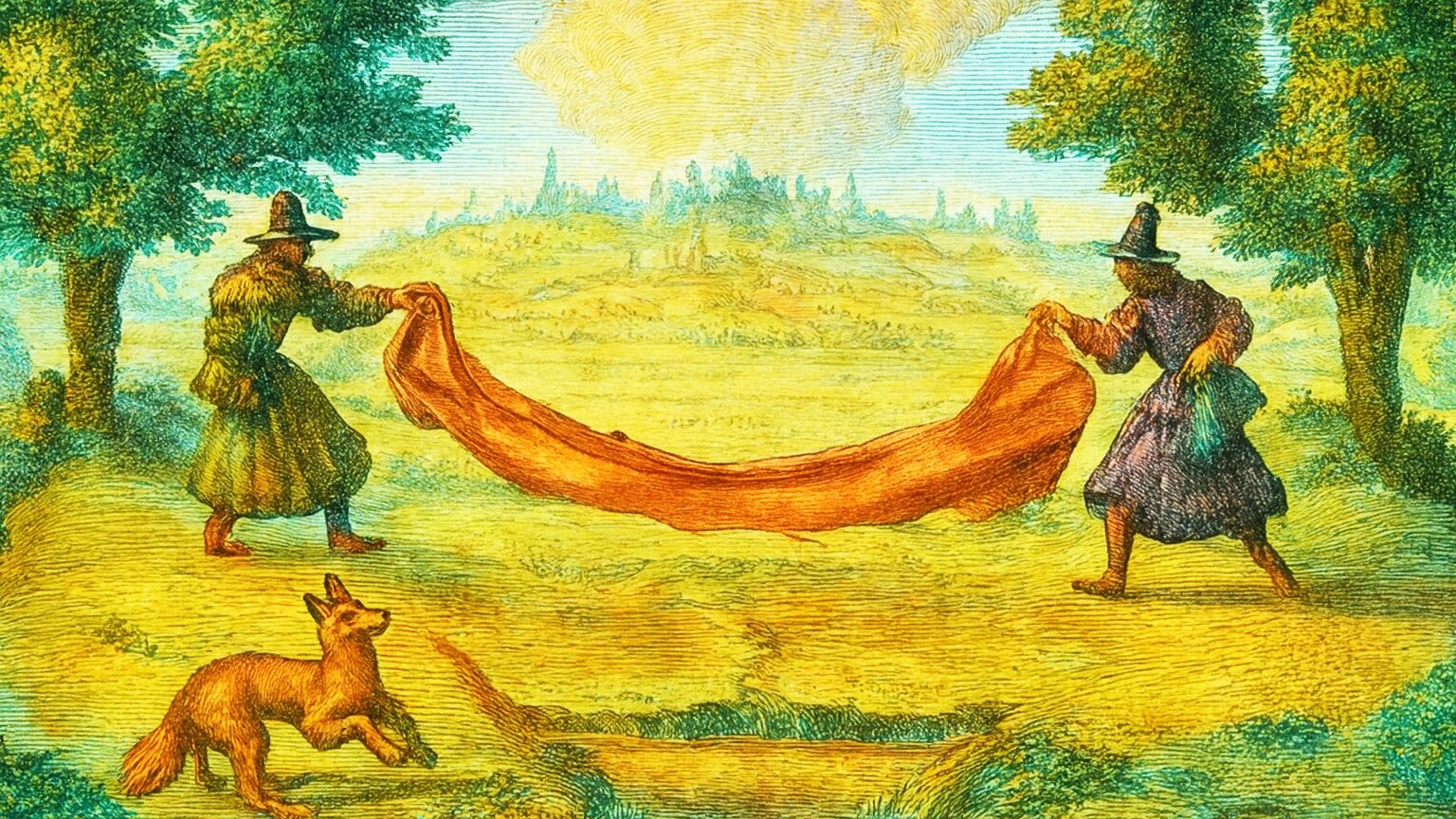
Summary: A recent case of animal cruelty in New Mexico shocked the public. History shows that such brutality was once routine entertainment. For centuries, bloodsports like “fox tossing” drew crowds and even royal participation, where animals were flung, beaten, and killed for amusement. Today, those practices are unthinkable, banned, and widely condemned. This shift reflects a form of broad moral progress: as societies grow more empathetic, cruelty gives way to compassion.
When a New Mexico sheriff’s deputy was recently filmed grinning as he killed a rabbit by throwing it against a police vehicle, public outrage was swift. He was placed on leave and charged with extreme cruelty to animals, which is a felony. The incident was stomach-turning, yet perhaps even more shocking is how ordinary such violence used to be.
For much of human history, killing small animals for fun wasn’t just tolerated, but celebrated. Among the more disturbing examples was the European bloodsport known as “fox tossing,” a competitive event popular among aristocrats in the 17th and 18th centuries. Despite the name, the victims were not limited to foxes; hares, beavers, badgers, wildcats, boars and even wolves were also flung to their deaths in this brutal form of entertainment.
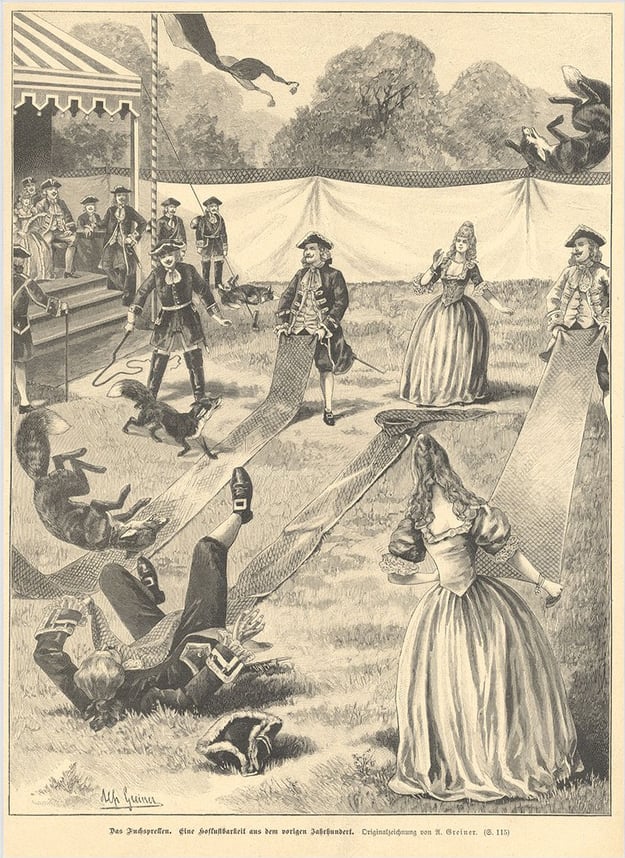
The rules were simple and horrifying. European courtiers would gather in an enclosed or cordoned-off area and form pairs, with each person holding one end of a length of cloth. Both men and women partook in this strange pastime, and it was a popular sport among romantic couples. Terrified animals were released into the enclosure. When one darted across a cloth, the participants would pull it upward to launch the animals into the air. The goal was to hurl the critters as high as possible. Some managed to reach heights of approximately 7.5 meters, or 24.6 feet.
Whatever animals survived the ordeal were bludgeoned to death at the event’s end. At one fox tossing contest in Vienna in 1672, Leopold I, emperor of the Holy Roman Empire, is said to have personally joined in the lethal clubbing of the injured animals.
For a later emperor, Charles VI of Austria (1685-1740), custom held that “the hunting season started with fox tossing,” a tradition not to be skipped.
Augustus the Strong, an 18th century ruler of Saxony and King of Poland, had a particular love of the bloodsport. When King Frederick William of Prussia visited Saxony in 1728, Augustus greeted him with a gruesome display that saw 200 foxes thrown to their deaths. But that was hardly his record. At one contest that Augustus held at Dresden, an astonishing “687 foxes, 533 hares, 34 badgers and 21 wildcats were tossed to their deaths. At the end, 34 young boars and three wolves were turned into the enclosure” to mark the game’s grand finale.
The game wasn’t without risks to the players, either. Wild animals don’t take kindly to being turned into projectiles. Fox-tossers were frequently clawed or bitten. “That injuries on such occasions were not infrequent need hardly be mentioned, and more than one tosser was marked for life by the claws of a wildcat or the tusks of a young boar,” noted one writer.
Some animals proved more dangerous to victimize than others. One witness noted that wildcats were particularly difficult to toss during these sadistic games, opining that they “do not give a pleasing kind of sport, for if they cannot bury their claws and teeth in the faces or legs of the tossers, they cling to the tossing-slings for dear life, and it is next to impossible to give one of these animals a skillful toss.”
It’s easy to look back at this history and recoil in disbelief. But we shouldn’t mistake this for a bizarre cultural footnote. Throughout much of history, tormenting animals for fun was considered unproblematic. In fact, fox tossing was just one among many similarly cruel activities.
“Sports such as eel-pulling, pig-sticking, cat-headbutting and fox-tossing all fall under this purview: these ‘games’ are senselessly brutal, but to players of the era they were merely light pre-supper entertainment,” notes writer Edward Brooke-Hitching, who compiled an entire book of such historical pastimes entitled “Fox Tossing, Octopus Wrestling and Other Forgotten Sports.” Cruelty was often the centerpiece of communal fun.
So what changed? Harvard University psychologist Steven Pinker believes humanity became more compassionate as the spread of literacy, education and reason led people to consider the perspectives of others, expanding humanity’s “circle of empathy” and eventually extending compassion even to animals, while dramatically reducing violence in many different areas of life. Fox tossing was ultimately recognized as uncivilized in the early 19th century and abandoned, eventually outlawed across Europe and in many other locales. Like other now largely forgotten bloodsports such as gander-pulling and ritualistic cat torture, humanity tossed “fox tossing” aside in favor of more innocent amusements.
Throwing small animals to their deaths, an activity that once entertained our forebears, is now a criminal offense, as that New Mexico sheriff’s deputy discovered. The cruelty once seen as charming is now met with condemnation.
And that is progress that shouldn’t be tossed away.
This article was published in The Well News on 8/22/2025.