01 / 05
America’s Turn Against Markets | Podcast Highlights

Blog Post | Economic Freedom

America’s Turn Against Markets | Podcast Highlights

Chelsea Follett interviews Samuel Gregg about the rise of a more interventionist economic consensus and the case for markets in modern America.

Listen to the podcast or read the full transcript here.

Joining me today is economist Samuel Gregg, the President and Friedrich Hayek Chair in Economics and Economic History at the American Institute for Economic Research. He is the author of seventeen books, including The Next American Economy: Nation, State, and Markets in an Uncertain World, which will form the basis of our discussion today.

So, tell me about why you chose to write this book and why it is, perhaps unfortunately, more relevant today than ever?

In around 2016, the way that Americans thought about the nature of their economy started to shift. Since the early 1980s, America had moved back towards markets, free enterprise, and limited government, at least in principle. You could find people on the center left and the center right who were more or less on board with that vision. That changed, I think, in 2015 or 2016. People have emerged on the right and left who believe that the state should take a much more proactive role in economic life.

In the book, which came out in October 2022, I wanted to outline why this shift occurred. I wanted to outline some of the differences, the battle lines, if you like, between those of us who favor a free-market economy and those who favor state capitalism. And I also wanted to argue that it was time for free marketers to realize that we weren’t living in the 1980s or even the 1990s anymore. The tide had shifted, and we needed to adjust our message to the conditions that we find ourselves in today.

What is this state capitalism alternative that so many seem to be advocating for?

The way that I use it in the book, and I think this is a common use of the phrase now, is to describe an economy in which you have private property and markets, but also a state that tries to deliver economic outcomes that are substantially different than those that would emerge if markets were left to prevail.

State capitalism usually involves a large and extensive welfare state. It involves using regulation and the administrative state to put certain parameters and contours around the workings of markets in order to push consumers and producers, and particularly producers, in particular directions. So, while you still have markets, competition, and private property, the state goes far beyond anything that would have been envisaged, for example, by America’s founders. And I think if you look around America today, that’s exactly what we’re living in.

Now that you’ve described the idea of state capitalism, let’s dissect it a bit more. You have a chapter in the book titled “Why Protectionism Does Not Pay.” Why doesn’t it?

The classic arguments against protectionism go back to Adam Smith. His basic argument against tariffs was that they don’t create wealth; they just push production or economic activity in particular directions. The problem is that creates a hidden tax on consumers because the businesses that get charged the tariffs invariably pass the costs on to consumers.

Protectionism also encourages cronyism, by which I mean businesses getting close to government to try to ensure that tariffs are leveled against their competitors. It also shifts the balance of the economy away from consumer interests towards producer interests. The problem with that is, in the end, protectionism doesn’t serve producers very well either. It makes them lazy and uncompetitive, and rarely ever manages to maintain a particular industry in place. So, protectionism, despite the name, actually does enormous damage, both to consumers and, in the long term, to the producers that it’s ostensibly designed to protect.

What do you say to those who would argue that the world we live in today is very different from the world of Adam Smith? For example, we have new national security concerns that might justify tariffs.

Free traders and free marketers have always acknowledged that national security is a legitimate exception. Adam Smith says defense trumps opulence. At the same time, the single most important element for a country’s national security is the size and dynamism of its economy. That is what allowed the United States to defeat or outlast Nazi Germany, Imperial Japan, and the Soviet Union.

So, yes, there are genuine national security challenges, but they don’t justify shutting down the whole process of liberalizing trade with other countries. Reverting to protectionism will ultimately hurt our security more than it will help.

Let’s move on to industrial policy. What is the trouble with industrial policy, and why do you think it has so much continued appeal?

The basic problem with industrial policy is something classical liberals talk about all the time, which is, as F.A. Hayek called it, the knowledge problem.

Industrial policy assumes that governments can come up with a better allocation of resources than the market can. The problem is that even central banks and treasury departments, which are full of economists who have lots and lots of data at their disposal, cannot possibly know the best allocation of resources at any one point in time, and you need to know that information for industrial policy to work. So industrial policy cannot help but misallocate resources. Another problem with industrial policy is that it breeds cronyism. In case study after case study after case study, industrial policy is determined, not by some detached being discerning the best allocation of resources, but by the best and most influential lobbyists.

I think industrial policy remains attractive to people for two reasons. One is a sort of hubris about human intellect and how much you can know about the world. The second is that it panders to people’s desire for security. I think it’s very difficult for people to live their lives unless they have some degree of predictability and stability, and people think that industrial policy can provide their community or economic sector with that stability. But it can’t. Just like protectionism, industrial policy corrodes an industry’s competitiveness and can encourage laziness and a sense of entitlement among those who are being protected. In the long term, that results in greater instability and insecurity.

Many worry that, because so many manufacturing jobs have moved overseas, we need industrial policy to help those displaced workers. What would you say about that specific concern?

Well, there’s no question that the number of manufacturing jobs has fallen since the 1970s, but that has relatively little to do with outsourcing and a lot more to do with technological change. And that’s a good thing, because manufacturing in the 1950s relied very heavily on manual labor, which was exhausting and had a high risk of injury. Technology made the industry safer and more productive, and displaced workers gravitated to service sector jobs, which are generally safer, less physically demanding, and better-paid.

The other thing I would say is that many parts of the country that once had very big industrial manufacturing sectors have successfully transitioned towards something different. Pittsburgh and Grand Rapids are good examples. You can contrast those examples with places like Youngstown, Ohio or Detroit, Michigan, which, rather than adapting, tried to stay the same through protectionism. In other words, those towns and cities that opted to embrace change and work with the change have come out the other side quite well, while the places that opted not to change have effectively made themselves poorer and less competitive.

You have a chapter with a rather counterintuitive title: “Business Against the Market.” What do you mean by that?

There’s a common assumption that being in favor of the market is the same as being in favor of business. And I always say, no, businesses are participants in markets, they’re not markets themselves, and that’s an important distinction because the interests of a given business may not coincide with the interests of American consumers. Businesses, in many cases, don’t even particularly like markets. I know plenty of business leaders who like subsidies, are quite favorable towards tariffs, and resent competition. They don’t like having to constantly adapt to stay alive.

That is an excellent transition to part two of the book, “Markets in America.” You start out that section of the book with America as a creative nation. Tell me about that.

The classical economists of the Scottish Enlightenment, even into the 19th century, didn’t say much about things like entrepreneurship and economic creativity. I think it was assumed rather than talked about. But in the 20th century, people like Joseph Schumpeter, or, in more recent decades, Israel Kirzner, pointed out that the entrepreneur, and human creativity in general, is essential for a dynamic economy. Entrepreneurs are not just making big discoveries like the iPhone that fundamentally change the entire economy, but they also make piecemeal changes on an everyday basis that constantly animate the economy. If you took away creativity from the market, it would enter almost automatic stagnation.

I think it’s important for those of us who favor markets to talk more about creativity. It’s a distinctly human force. We are made to truck and barter, as Adam Smith said, and we’re also made to be creative. That, I think, is a very uplifting, very positive message. And of course, people on the other side of the debate tend to be rather suspicious of economic creativity because economic creativity creates disruption and change. It means you have to adapt.

Now tell me about America as a competitive nation.

As you can probably tell by my voice, I wasn’t born in the United States, so I come at this as someone who’s lived in America for a long time, but who has an outsider’s perspective. And Americans are very, very competitive people. They don’t see competition as bad or even distasteful. And that’s important because competition is not about destroying other people, it’s about adapting and changing so that you can do things faster or more efficiently or more creatively than other people.

Finally, you discuss America as a trading nation.

Well, again, Americans have been trading with the world since the very beginning of, and even before the Republic. We’ve never been a people that say trade begins and ends in the United States. At the same time, there’s also been immense debate about trade in the United States since the beginning. In the 19th century, the single issue that most divided Americans, apart from slavery, was tariffs. In the 1830s, we even had some states threatening to secede over tariffs, because they wanted to be able to freely trade with European countries.

One of the things about the United States that lots of external observers noticed from the very beginning is that America began as a commercial nation. It wasn’t a feudal society. Even mercantilism was not particularly strong in the American colonies compared to, say, continental Europe and Britain. When Alexis de Tocqueville came to America in the 1830s, he looked around and said, “Everyone is an entrepreneur.” So, commerce is part of our identity, of who we are as a people.

If we lose sight of that, I think the country is in big trouble. We’re not meant to be just another Western European social democracy. There are some Americans who want America to become like that, but that is not the vision that the founders had of the United States, and I don’t think it’s a vision that large numbers of Americans really want, because they understand that we would lose what makes us different from other countries.

Given current events, what do you foresee in terms of the future economic direction of the United States? Are we going to move closer to that ideal haven of freedom, or further away?

Well, the battle of ideas never ends. Even in the 1980s and 1990s, there were plenty of people expressing deep reservations about markets and limited government. The New Deal and Great Society programs still overhang a lot of American political culture and inform the assumptions that many Americans bring when they think about the economy.

What we’ve seen added since the mid-2010s is the addition of a nationalist populism, which is now the dominant force in the Republican Party. There are similar things happening on the political left as well, in the form of a class-oriented populism that feeds off the idea that any economic inequality is inherently wrong and needs to be corrected.

It’s interesting that you hear a lot of the same mythologies among both nationalist populists and left-wing populists. There’s the sense that blue-collar workers have done poorly as a result of economic liberalization, that manufacturing has been emptied out by trade, that we should be giving more benefits and welfare to particular segments of society rather than trying to wind these things back.

So, in addition to all the usual problems that we have when it comes to defending markets—the fact that arguments for markets are often counterintuitive, that markets are about the long-term rather than the short-term, that markets force us to face up to certain realities of the human condition—we also have this cross-party populist consensus, which is going to be very difficult to dislodge.

In the end, I think their policies will fail and inflict enormous harm, because they always do. Economic history is full of examples like this. But that doesn’t necessarily mean that we’ll move back in the direction of markets very quickly; the argument, “well, we didn’t do enough intervention,” will remain. That means that we need to keep making the same arguments, and we also need to find ways to get our arguments across to broader audiences because, like it or not, in a democracy like the United States, you have to win both the battle of ideas and the battle of public opinion.

I always try to end The Human Progress Podcast on a positive note.

What do you feel most hopeful about with regard to the future of the United States of America?

I’m very hopeful and inspired by the fact that we remain by far the world’s most entrepreneurial economy. Even despite all the regulation, despite Roosevelt, despite Johnson, despite all sorts of very bad policies, entrepreneurship continues to flourish in the United States. There’s something about American culture that inclines people to view entrepreneurship as a positive rather than a negative. And if you have a strong culture of entrepreneurship, then I think you’ve got a lot of room for hope.

It’s also amazing how resilient American capitalism is. It bounces back over and over and over again. It’s battered, and it’s still being punched around, but nonetheless, it keeps powering forward.

Manhattan Institute | Economic Freedom

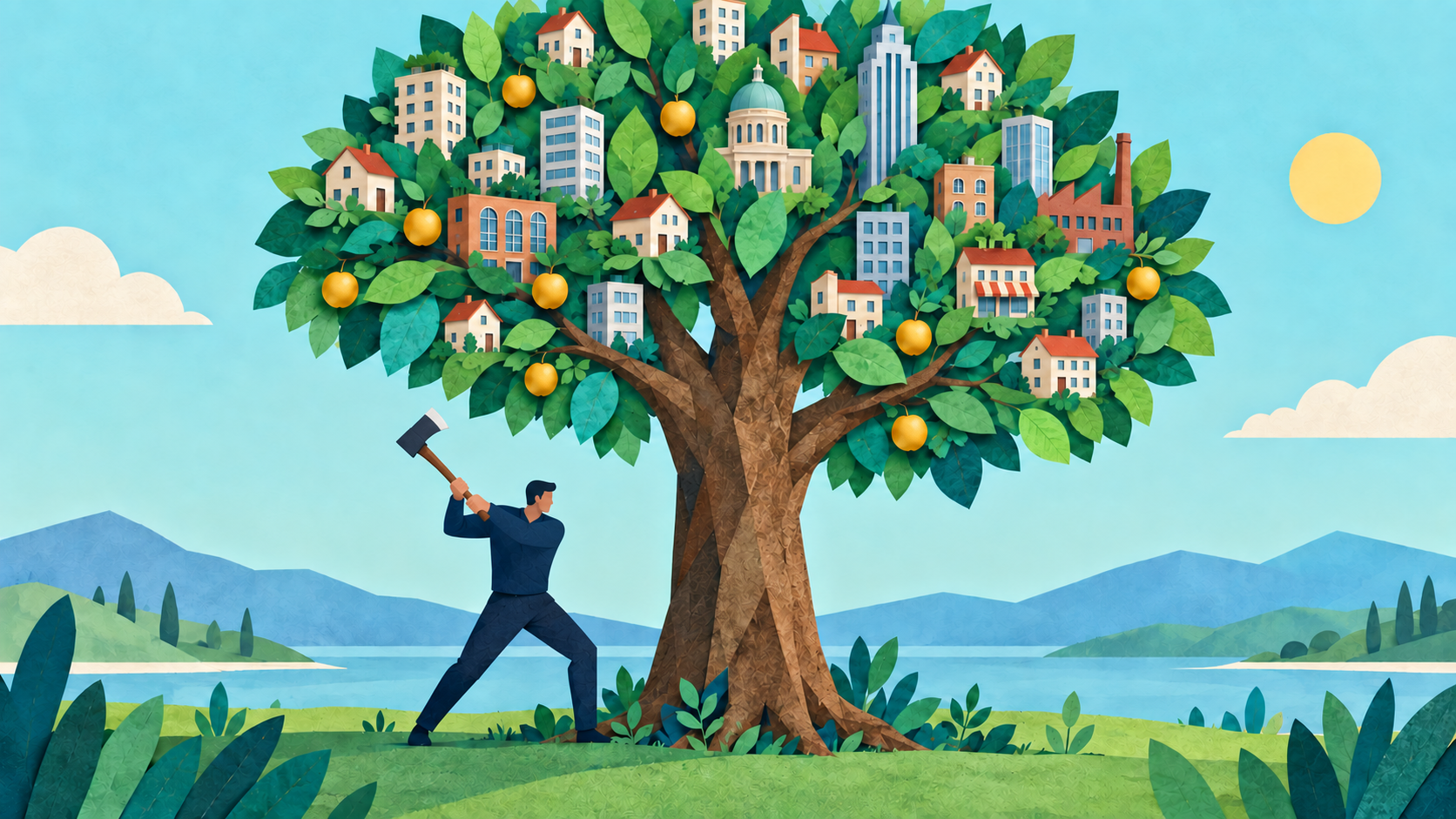
Idaho Nearly Halved Its Regulatory Code

“For decades, most state regulatory systems have operated on autopilot. Once a rule is adopted, it usually stays in force unless someone can marshal the time, political will, and technical knowledge to repeal it. That default favors regulatory accumulation. Agencies add rules to address new problems, implement new statutes, satisfy federal requirements, or respond to isolated incidents. But old rules rarely receive the same scrutiny. Over time, the regulatory code grows not because every rule remains necessary but because inertia protects what already exists.

Idaho broke that pattern. And that state’s example can teach a lesson to states all over the country.

Beginning in 2019, Idaho used two related mechanisms to reset and then review its entire administrative code. First, after the legislature did not enact the customary bill extending existing rules, Governor Brad Little directed agencies to republish only the subset of rules considered necessary to that agency. But crucially, these were retained as temporary rules.

Second, the governor issued Executive Order 2020-01,[1] which required executive-branch agencies to review and generally repeal and replace each remaining rule chapter on a staggered five-year schedule covering 2021–25, with a legislative review concluding in 2026.

This issue brief refers to these combined steps as Zero-Based Regulation (ZBR). Through these two steps, instead of asking only which regulations should be repealed, Idaho required agencies to justify which provisions should remain. That shift produced one of the most dramatic state-level regulatory reductions in recent memory: by the end of the ZBR cycle on July 1, 2026, Idaho had eliminated roughly half (49.1%) of its regulatory code. Regulatory volume fell in each of the eight annual code publications from 2019 to 2026 under ZBR.”

From Manhattan Institute.

Blog Post | Economic Freedom

How Pessimism Puts Progress at Risk

There are dangers in believing the myth that everything is getting worse.

Summary: Humanity enjoys unprecedented prosperity and longevity, yet many people believe the world is getting worse. That misdiagnosis risks fueling populist policies, from tariffs and immigration restrictions to wealth taxes and hostility to technology, which threaten the freedom and openness that made modern progress possible. Sustaining progress requires recognizing its achievements and defending the principles that made them possible.


It was not in his celebrated oath but rather in Of the Epidemics that Hippocrates wrote: “As to diseases, make a habit of two things—to help, or at least to do no harm.” 

That principle reflects a basic truth of medicine: The misdiagnosis of a disease can be worse than no treatment at all. A serious illness—thought to be something minor—can progress untreated until the patient suffers serious damage or mortality. And mistaking one condition—or no condition at all—for another can result in treatment that is ineffective at best and dangerous at worst.

The same logic applies to what is happening today in the United States and other major countries around the world. At a time of unprecedented prosperity, technological advances that continue to make lives better and longer, and unparalleled distributions of these benefits to every corner of the globe, we endure a constant drumbeat of negativity that tells us this progress is an illusion. The public is persistently told that “the system is rigged” against them, that they are becoming poorer rather than richer and that their children will be the first generation in centuries to be worse off than their parents. The “American carnage” cited by US President Donald Trump in his first inaugural address is the very embodiment of this mindset.

It’s not true. By virtually any measure—income, longevity, hours at leisure, the harnessing of technology for convenience and entertainment, and the diminishment of extreme poverty around the world—today is the best time ever to be alive as a human being nearly anywhere on the planet.

In other words, humanity today is in better health than it has ever been. Populists, in response, are recommending chemotherapy.

And like any misdiagnosis, this one carries big risks of doing harm. It has stoked a populist backlash threatening to move us away from the freedom and openness that have been the engines of our success. It also increases the likelihood that we will double down on bad policies and unhelpful government interventions that are themselves the source of many economic challenges.

Age of Abundance

Humorist P.J. O’Rourke was fond of reminding us that the ordinary men and women of today’s world are freer and enjoy more material benefits than at any time since the beginning of civilization. If we were to think there was a golden era of the past in which we’d rather live, P.J.’s famous quip sobers us up with one word: dentistry.

The point is not that the past lacked virtues, but that we often overlook the quiet improvements that make life much better. Extreme poverty has disappeared for much of the world. In 1981, 42 percent of the world’s population lived on less than $3 per day. Today, that has fallen to less than 10 percent. And in the developed world, incomes and gross domestic product (GDP) per capita continue to grow nearly every year.

Innovation doesn’t just make us richer. Medical breakthroughs are removing barriers to longer, better lives: Smallpox has been eradicated; polio is on the ropes; HIV is now treatable for many; and vaccines prevent millions of deaths every year. Since 1990, the global mortality rate for children under five has fallen more than 50 percent, enabling millions more children every year to survive to adulthood. 

Time, they say, is our most precious resource, and medical innovation, better nutrition and more comfortable living conditions are creating much more of it. Since 1900, global life expectancy has more than doubled from about 32 years to more than 73 years today. And just recently we learned that life expectancy in the United States likely reached another record high of nearly 80 years in 2025.

Have these data been cherry-picked? Jump into these extensive datasets and explore trends in longevity, income and wealth, medicine, nutrition, violence and tolerance, the environment and more. Decide for yourself. It won’t take long for you to be convinced that human well-being has never been greater in a world that is freer and more peaceful than ever before.

Engine of Prosperity

The tremendous progress of the past 300 years has created the extraordinary living standards and conditions we enjoy today. Before this, the human condition had barely changed for thousands of years.

Freedom and openness, exemplified by the ideas of the Enlightenment and the values of the American Revolution, created the conditions under which this improvement could occur. As absolute government gave way to self-government that better protected citizens’ rights and liberties and as freedom allowed entrepreneurs to reap the benefits of their hard work and novel ideas, an incentive structure was created that encouraged individual initiative and innovation.

Meanwhile, freedom and individual liberty engendered the openness by which innovation and progress could flourish: open trade, freer migration and greater receptiveness to new ideas and experimentation. The experience of these last few centuries is a vindication of Adam Smith’s contention that “little else is requisite to carry a state to the highest degree of opulence from the lowest barbarism, but peace, easy taxes, and a tolerable administration of justice”. 

Smith’s formula captured the essential conditions for sustained progress. Peace provides a positive environment for trade, migration and the sharing of ideas. Easy taxes ensure that entrepreneurs, workers and investors retain enough of the rewards of their efforts to encourage risk-taking innovation. And a tolerable administration of justice preserves the individual rights and freedoms on which markets depend.

As with today’s living standards, this can also be confirmed with data. In the Economic Freedom of the World: 2025 Annual Report, co-published in the United States by the Fraser Institute and the Cato Institute, the degree of economic freedom is calculated and compared for 165 countries. Economic freedom is measured by reference to the size of government, the protection of property rights, monetary soundness, the freedom to trade and the amount of regulation.

Based on the 2023 data used in the report, the correlation between freedom and income is compellingly strong. The world’s countries are divided into quartiles from least free to most free. Measured by per capita GDP, people in the 25 percent most-free countries earn on average in excess of six times more than people in the 25 percent least-free countries.

And the advantages of living in a free country go well beyond money. Compared to those in the least-free quartile, those in the most-free quartile live an average of 17 years longer and work nearly 17 percent less. In the least-free quartile, the poverty rate is 25 times higher, and the rate of infant mortality is nearly 10 times higher compared to the most-free quartile.

Cognitive Dissonance

So, if things are so good, why are we reluctant to believe it? Why are we willing to listen to populists on both sides when they tell us that things are bad and life is getting tougher?

The first reason is that there’s a market for bad news. If The New York Times proclaimed on its front page: “115,000 People Worldwide Escaped from Extreme Poverty Yesterday”, would it sell more newspapers? Probably not. Or at least not as well as a political scandal, natural disaster or other tragedy. But that astounding statistic is, in fact, the average daily drop in extreme poverty over the past 25 years.

Second, without a doubt, life can be difficult. It’s natural to focus on one’s daily challenges and not consider how well off we are in the context of history. Even today, certainly the best time to be alive, earning a living and raising children aren’t easy. And as well off as we may be, there will always be someone more fortunate or some item of consumption that’s out of our reach. This makes us feel worse off.

Many middle-class Americans, while living better than their parents and grandparents, can feel strapped by the high costs of housing, health care for their families and higher education for their children. Ironically, the challenge of accessing these key products has stimulated government interventions that have greatly increased their costs and exacerbated accessibility challenges.

In each of these sectors, policies have been pursued that have restricted supply (for example, through licensing requirements, zoning and land-use regulations or accreditation) while subsidizing demand through a variety of mechanisms. Any economics undergraduate should recognize that simultaneously restricting supply and subsidizing demand will generate price inflation. Yet when it does, the policy response is often not to unwind these counterproductive approaches but to double down and further subsidize demand. Thus, policies that are well-intentioned at best—or politically motivated at worst—can create what is perceived as an affordability “crisis”.

Do No Harm

To believe things are getting worse when they have, in fact, never been better is a classic misdiagnosis. And like a medical misdiagnosis, it risks ill-advised treatment when a popular groundswell for government intervention encourages populist leaders happy to oblige. Yet such policies will always have the opposite effect—exacerbating the problems they’re intended to address. 

By far the most worrisome dynamic is that these interventions could move us away from the freedom and openness that have been the source of our prosperity and well-being, compromising the beautiful trendline of progress and rising wealth that has persisted for more than two centuries. And the continuation of that trend is not a foregone conclusion. This misdiagnosis fuels zero-sum thinking that motivates attacks on the very things—such as freer trade and migration—that have contributed substantially to our benefit.

Already, this is happening. The index of global economic freedom highlighted in the Economic Freedom of the World: 2025 Annual Report hit an all-time peak in 2019. It has since declined sharply, particularly in the wake of the heavy-handed policy responses to the COVID-19 pandemic. (But the rise of economic populism and discontent in developed economies has likely also played a part.) The index of economic freedom in the United States has steadily eroded since 2000 and has dropped sharply since 2017.

But beyond any index, we can see these threats clearly in the policy environment, particularly in the backlash against immigration in much of the West, the turn against open trade and the imposition of high and erratic tariffs in the United States. The US political arena has also experienced a stoking of class warfare, attacks on entrepreneurs as “oligarchs” and agitation for the imposition of wealth taxes. Antipathy toward technology companies exists on both extremes of the political spectrum. And this sentiment is spreading to technology itself, as exemplified by the growing resistance to artificial intelligence (AI) and attendant infrastructure such as data centers.

It’s nothing short of dangerous when public sentiment turns against innovation and innovators and against the very openness and freedom that have created our wondrous modern world. And it’s ironic when this is driven by misperceptions about the true state of the world and the economy. As Daniel Hannan, a notable British advocate for openness and trade, observed, “Open markets lifted billions from poverty, added decades to our lives, gave us powers that previous generations attributed to wizards or gods. And we never noticed.”

It’s time for us to take notice and to defend the principles that have brought us to this point. This is how the upward march of progress and prosperity will continue, creating the brightest possible futures for those who come next.

This article originally appeared in International Banker on 9/15/2026.

Blog Post | Income & Inequality

Solving the Conundrum of Status Competition

A free-market economy does not abolish the competition for status, but it gives people more places to compete.

Summary: Prosperous societies can produce more educated, ambitious people than established prestige systems can accommodate. When recognition depends on a narrow set of institutions, status competition intensifies and frustration grows. Independent platforms, new institutions, and emerging industries can create alternative paths to achievement. Economic and technological dynamism can therefore ease the pressures of status competition by expanding the arenas in which people can succeed.


The Democratic Socialists of America are having a moment. The group’s membership passed 120,000 members in July, overtaking the Eugene Debs-era Socialist Party of the early 20th century as the largest socialist organization in American history. New York Mayor Zohran Mamdani is a democratic socialist, and DSA candidates won a handful of primary elections over the summer. The DSA’s rise is often attributed to inequality, resentment, or ambition. But critics have pointed out that many DSA members are highly educated or come from wealthy families, so something else must be at play. 

People compete for more than income. They compete for reputation, recognition, influence, and rank. The economist Fred Hirsch described such goods as “positional” in his Social Limits to Growth (1976). More food, housing, or energy can make many people better off simultaneously. Status works differently. Simply handing out more titles within a single hierarchy does not create more prestige, because relative rank within any given ladder is zero-sum.

Joseph Schumpeter identified a related problem in Capitalism, Socialism and Democracy (1942). He argued that prosperous societies would educate more people than established prestige systems could absorb. Many would acquire the education and expectations associated with elite positions without obtaining them. Some, he thought, would respond by turning against the source of that prosperity—the free-market system. Schumpeter’s prediction has not aged badly. 

Status competition is most consequential when many people depend on the same hierarchy for recognition, income, or professional identity, especially when alternatives are scarce and exit is costly.

Academia illustrates the mechanism. Scholars compete for jobs, tenure, publications, grants, and recognition within the same institutional system. Years of specialized training can make exit difficult. A scholar who has invested a decade acquiring specialized skills may have few opportunities to obtain comparable income and standing elsewhere.

Relative advantage can be pursued by improving one’s own position or by reducing the standing or opportunities of competitors. The first can involve producing research, teaching, or discovery. The second can involve challenging a rival’s competence or fitness for membership without producing an equivalent intellectual contribution. That does not mean criticism is illegitimate or that every dispute is driven by status. Ideological disagreements can be sincere, and institutions need mechanisms for identifying error and misconduct. The narrower point is that institutional arrangements affect incentives. When one hierarchy controls a large share of available rewards, the potential payoff from influencing membership and advancement within it increases.

For much of the 20th century, journalism operated in a similar way. A small number of newspapers, magazines, and television networks controlled access to national audiences. Losing a position at an important publication could mean losing both income and public visibility.

The internet changed that. Journalists and commentators can now reach audiences through newsletters, podcasts, YouTube, and other platforms. A writer rejected by a newspaper can publish directly on Substack or a personal website and promote work via social media. A broadcaster without a network contract can still reach millions on X or YouTube. Competition for status remains and has arguably grown harsher, but failure in one hierarchy no longer determines a person’s prospects elsewhere.

Academia is beginning to experience the same change. Scholars can reach readers through subscription platforms, podcasts, and online lectures. Preprint servers allow research to circulate before journals approve it. Private laboratories and research institutes offer employment outside conventional departments. Organizations such as Arcadia Science and the Arc Institute are experimenting with funding scientists rather than rigid project proposals, providing multi-year support to follow promising questions without the constraints of predefined deliverables.

Alternative teaching institutions are also emerging outside legacy university systems. The University of Austin—founded as an independent, tenure-free institution dedicated to open inquiry—enrolled its first undergraduate class in 2024. Meanwhile, Peterson Academy bypasses campus infrastructure entirely, offering low-cost, recorded university-level courses that have attracted more than 80,000 subscribers. These institutions remain small, but they do not need to replace established universities to matter. They need only provide credible alternatives for some students, teachers, or scholars.

Those alternatives remain incomplete. Scientific research can require laboratories, equipment, teams, and funding that individuals cannot access or provide independently. Credentials still matter in medicine, law, and other professions. Capital requirements and network effects can also concentrate opportunities.

Government policy can strengthen or weaken this concentration. When research funding, accreditation, licensing, or other forms of authorization channel people through the same institutions and evaluation systems, policy can reinforce common hierarchies. Dispersing authority among independent funders, accreditors, jurisdictions, and institutions can create more routes to advancement.

The objective should not be to eliminate hierarchy. Reputation conveys information. Organizations need ways to identify competence. Competition for recognition can motivate effort and discovery. Relative rank cannot become abundant in the way food or energy can. The objective should be to multiply independent arenas in which people can succeed.

That is one reason economic and technological dynamism matters beyond higher income. New firms, industries, technologies, and institutions create new occupations and forms of achievement. The automobile created the mechanic and the highway engineer. Software created the programmer and the product manager. Each of these technologies built ladders that did not exist before.

Stagnation creates fewer such openings, and collectivist policies tend to yield stagnation, whether they come from the left or the right. Ambitious people must compete for a more fixed set of positions, making success or failure within existing institutions more consequential. A free-market economy does not abolish the competition for status, but it gives people more places to compete.

This article originally appeared in The Dispatch on 9/15/2026.

Reason | Economic Freedom

New York City Moves to Cut Small-Business Red Tape

“New York City government isn't known for cutting red tape. But this week, New York Mayor Zohran Mamdani (yes, the democratic socialist) announced more than 50 reforms that would eliminate unnecessary regulations and high permitting and licensing fees for small businesses.

The reforms, unveiled on Monday, cover a variety of small business issues, from outdoor dining rules to pawnbroker licenses. During a speech in the Bronx, Mamdani announced that the city would work with the state to eliminate the frozen dessert permit, which requires restaurants that already have food permits to 'seek out a superfluous second permit for what they're already doing.'

He also said the current state of regulatory affairs for barbershops is 'anti-fade,' as shop owners must obtain three different permits to operate their business. Mamdani announced the city would work with the state to streamline those permits as well. Among dozens of other reforms, the Mamdani administration will also reduce street fair vendor permit fees, speed up restaurant inspections, and cut equipment registration fees from $110 to $0 for 12 months…

In addition to these proposed regulatory changes, Mamdani signed an executive order on Monday creating a task force of city agencies that will continue to identify opportunities for reform.”

From Reason.